There is no doubt that the mysterious island of Hy-Brasil captures the imagination of many people and has done for centuries. The lore of Hy-Brasil is fascinating with sources indicating that it is the home of a wealthy and highly advanced civilization. Legendry visitors to the island return with tales of gold roofed towers and domes, healthy cattle, an island populated by an opulent and happy people. A man living on the Aran Islands many years ago was asked if he had ever seen Hy-Brasil, he replied that he saw it a number of times, but quickly added, ‘Its not real’. He is not alone, many islanders have reported seen the island over the years; and indeed, some visitors. Despite the idea that it is an ‘imaginary’ island, there are reports of people sailing close to its ‘unreachable’ shore. Others have claimed to have actually landing on the island.
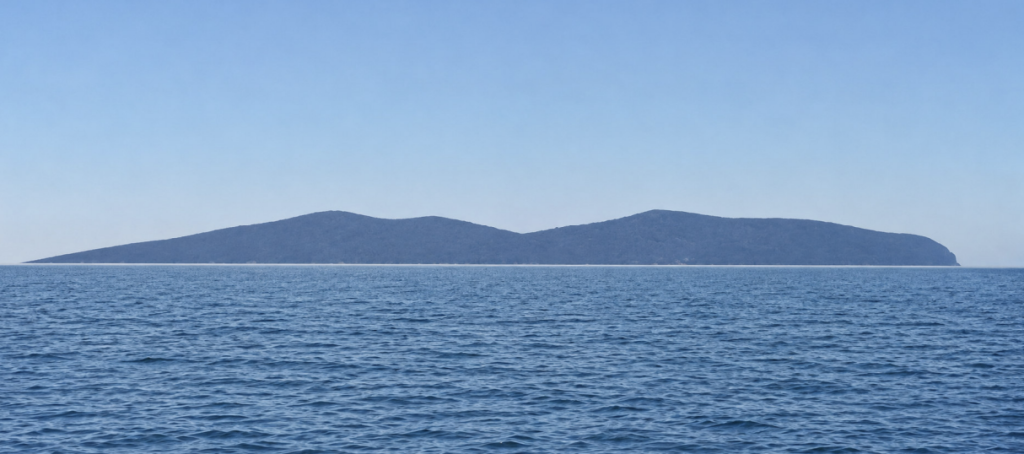
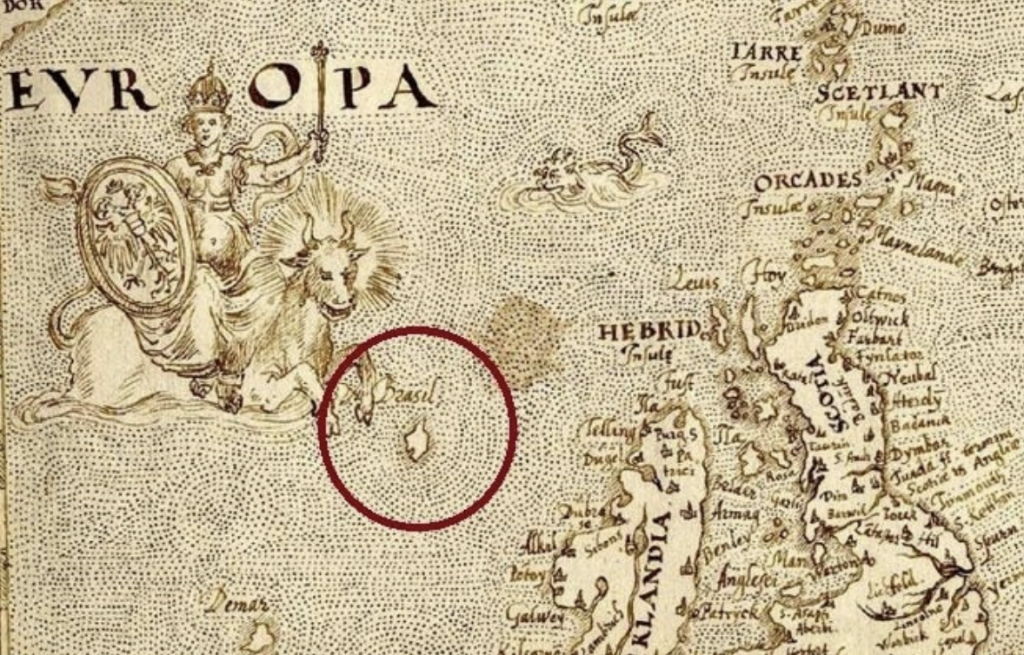
Hy-Brasil was recorded on maps as early as 1325, when Genoese cartographer Angelino Dalorto placed the island off the west coast of Ireland. On successive sailing charts, it appears southwest of Galway Bay. A Catalan map from 1480 mentions two islands, one being ‘De-Brasil’, which appears southwest of Ireland and the other located south of Greenland. A variety of maps records the island, but located in different places over the centuries. On some maps, it is split into two islands divided by a river running across the centre.
Christopher Columbus visited Galway in 1477 and supposedly heard stories of a land to the west which may have influenced his later voyage of discovery. At the time of his visit there were widespread stories and legends of lost islands, and indeed, a lost continent somewhere out west on the Atlantic.
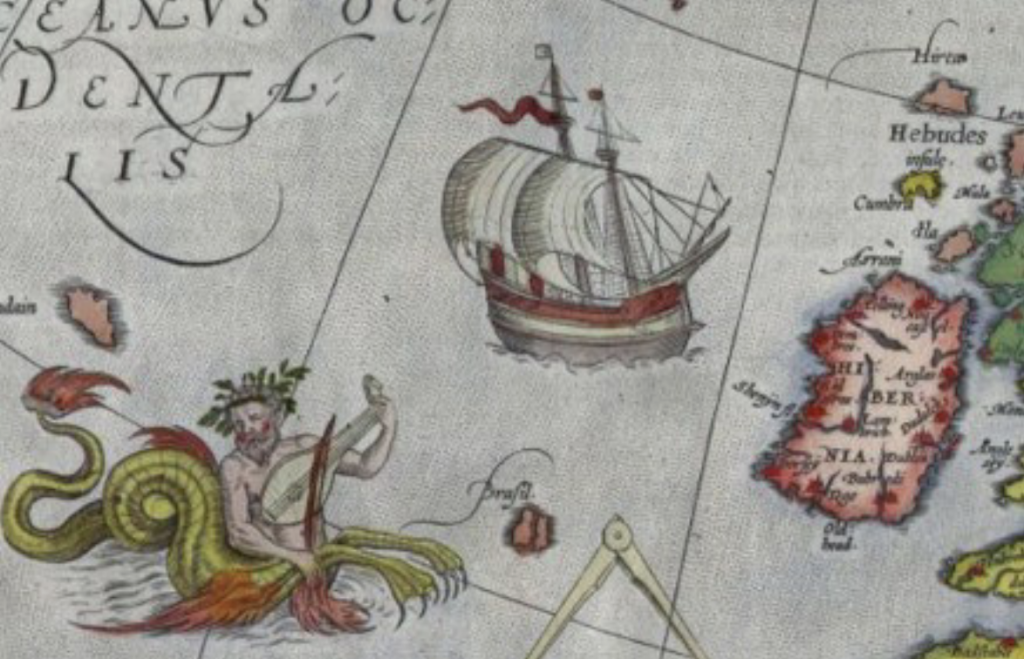
Tales of adventure encouraged sailors to seek out mysterious island following the maps. In fact two expeditions set off from Bristol to try and reach the island (1480 and 1481). The 1480, expedition was led by John Jay who departed from Bristol and arrived back in England two months later without success. In 1481, two ships, the Trinity and George, left from Bristol, but similar to the first attempt, this expedition also failed. It was said that other, ‘English gentlemen squandered their family fortunes on fruitless voyages’ to find the island. It is interesting that some years later, in 1497, Spanish diplomat, Pedro de Ayala, reported to the King and Queen of Spain, that John Cabot (15th century Italian navigator and explorer) said that men from Bristol had found Hy-Brasil. This would imply that someone from one of the Bristol expeditions, or maybe another Bristol ship had reached the fabled island. Cabot was a noted explorer and was famed for discovering Newfoundland.
One of the most notable visits to Hy-Brasil took place in 1674 when Captain John Nisbet of Killybegs, County Donegal supposedly landed there. Captain Nisbet and his crew were in familiar waters off the west coast of Ireland, when they became shrouded in fog. When the fog lifted, they found themselves near Hy-Brasil and were dangerously close to rocks. Nisbet decided to drop anchor while he checked their bearings. The boat was in three fathoms (18 feet) of water. He launched a long boat and four of his crew rowed ashore and visited the island. According to the story, they spent the day exploring the place and said that it was inhabited by large black rabbits. During the visit they encountered an old man or magician who gifted them with items of silver and gold. Another expedition followed, this one led by Captain Alexander Johnson who also claimed to have found Hy-Brasil. These accounts were published by Irish author Richard Head in a 1675 pamphlet. The author deliberately recorded the stories as ‘true history facts’.

In 1684, Roderick O’Flaherty (1629–1718), the celebrated historian said that the Aran Islanders, ‘often see the enchanted Isle of O’Brasil, with its lovely peaks and flowery meadows, but it is not always visible’. He said that it was west in the watery horizon and appears through a blanket of fog every seven years, located, ‘on the west side down from Aran, where goes the sun to its couch’. O’Flaherty mentioned the following extraordinary account in his book, A Chorographical Description of West or H-Iar Connaught (1684). He also wrote, ‘There is now living, Morogh O’Lee’, who imagined that ‘he was himself personally on O’Brasil for two days … in the Month of April 1668.’
Some Connemara and Aran folklore traditions refer to Hy-Brasil as Beag Árainn and mention that this was the island that O’Lee visited. According to the story O’Lee, a prominent member of his clan, was walking along the western shoreline one day when he was kidnapped by three men, strangers to him. He was taken to the enchanted island of Hy-Brasil. O’Lee was held there for two days during which time he acquired supernatural knowledge and medical cures that were recorded in a book. The book given to him as a reward for some favour he extended to the people living there. It supposedly contained the cure for every known illness. This would give him amazing healing power, but he was warned not to open the book for seven years.
O’Lee was brought back through Galway Bay and put ashore where Seapoint, Salthill is today. He opened the book after seven years and, although he had never practiced medicine, O’Lee became a gifted healer. Some people said that he made up the story himself to give a magical basis for his success as a ‘quack’. Book of O’Lee as it is now known forms an important part of the Royal Irish Academy collection. This large vellum manuscript dating from at least 1434 was written in Irish and Latin. While the book is in a good state of preservation, the first and last pages are badly frayed and discoloured by water stains. It was a complete medical dissertation containing treatments for most of the diseases that were known at that time.
The Finding of Hy-Brasil
Where Erin’s mountains face the magic west,
And over the waters the sunset’s golden fire
Flames on the edge of the world’s desire,
There lies the island of eternal rest.
So, mocked by glimpses of a glorious time,
Long have I gazed far into Eirë’s past;
But now at length on the enchanted strand,
And those evasive splendours, more sublime
Than dream, the potent fire-spell has been cast;
Lo! on Hy Brasil’s long-sought shores I stand.
The Aran Islands play a prominent role when it comes to sightings of Hy-Brasil. John Millington Synge claimed to have seen Hy-Brasil while staying on Inishmaan between 1898 and 1902. Synge was a playwright, poet, writer and collector of folklore; he was a key figure in the Irish Literary Revival. David Kiely in his biography of Synge wrote: ‘Synge’s own prepared imagination has seen the hills and trees arrange themselves into ancient doorways and spires and high turrets. Incredibly, he has seen Hy Brasil where it had no right to be: it is a mythical island said to lie to the west of Aran’.
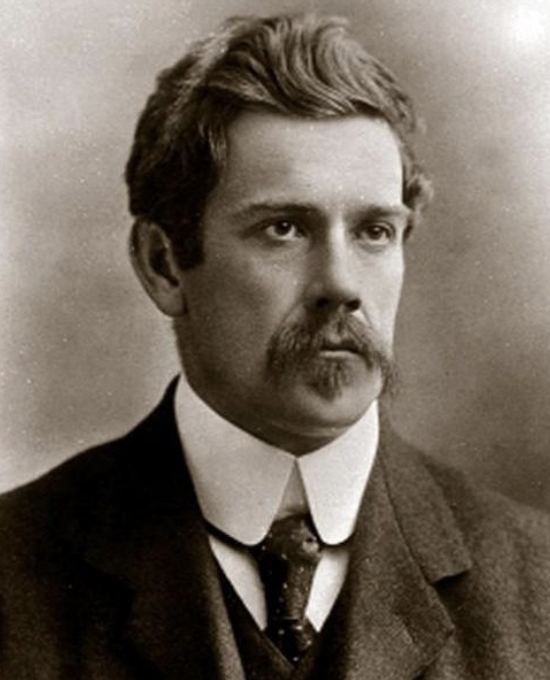
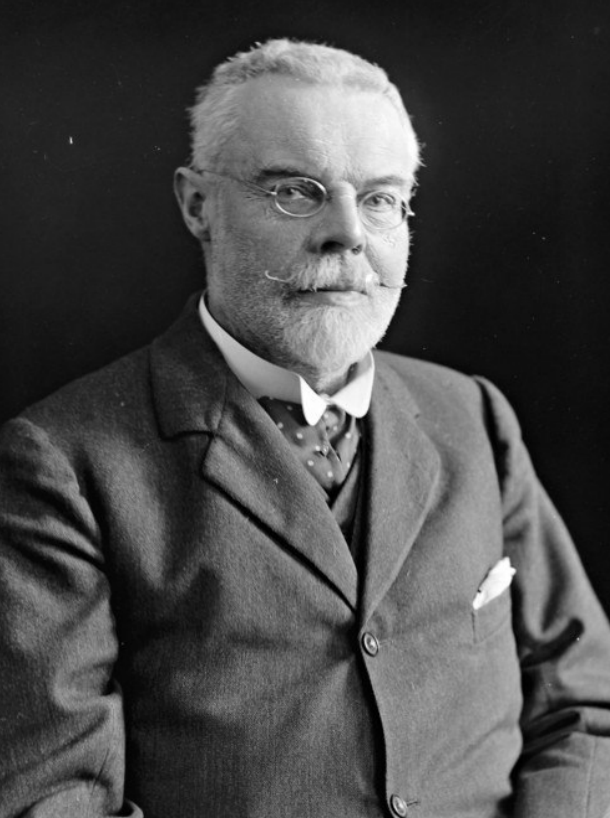
Thomas Johnson Westropp was an excellent self-styled antiquarian who completed a lot of work in the West of Ireland. In 1872, Westropp, then aged twelve, claimed he saw Hy-Brasil. He was in the company of his mother, brother and several friends, all of them were looking out over the Atlantic. He
said the evening was clear with a fine golden sunset. Just as the sun was going down, a dark island appeared far out to sea, but not on the horizon. It had two hills; one was wooded and between them on a low stretch of land he saw tall towers and curls of smoke. They all saw the island, one of his companions called out its ‘New York’. It seems that Westropp saw the island on three occasions and later wrote of his childhood memories, ‘I myself have seen the illusion some three times … and even made a rough coloured sketch after the last event in 1872’. The sketch is now missing.
On a visit to Connemara in 1945, Oliver St. John Gogerty (Irish poet and author) described the region as being in the ‘neighbourhood of Hy-Brasil’. He wrote, ‘What territory could be more worthy of lordly vision than this land … Far away rise the tumbling mountains diamonded by a flash of sunlight or merging into majesty in purple and gold. Beyond them the illimitable Atlantic with its special island seen once every seven years’.
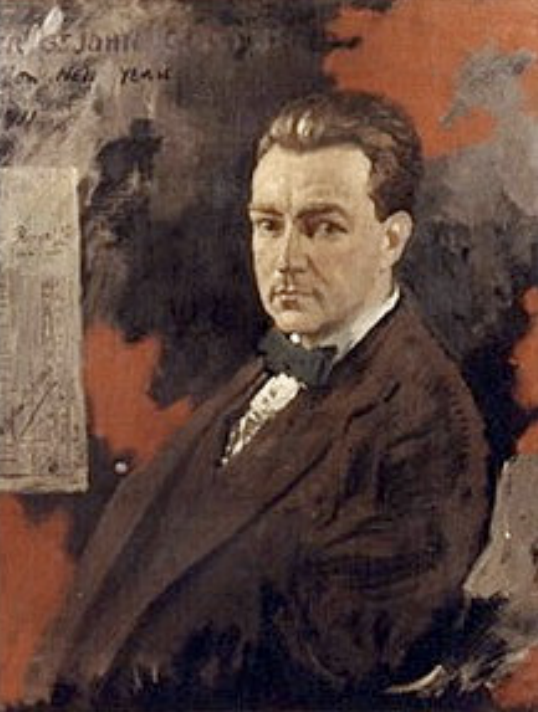
An 1846 report about Connaught stated that in this region there are mountains that pierce the clouds and valleys broad and deep as if a sea flowed out from each. There are also lonely romantic lakes corralled by grey banks and vehement streams that rise in the mist and pour down like a child running from a mysterious parent and men of gigantic nature inhabit this place. Close to shore there are ‘simple fishermen, dwellers on the sea and shore, full of scars and traditions, and stories of their own craft, of seal hunting and salmon catching, of Aran the holy, and Hy-Brasil the mirage of the ocean. It is a land where only the believer and the poet ought to inhabit – the very last place on earth for a scoffer, a sceptic, or a politician’.
There are many more sightings of Hy-Brasil; too many to mention here. If other stories emerge from these articles, please send them to Galway’s Own