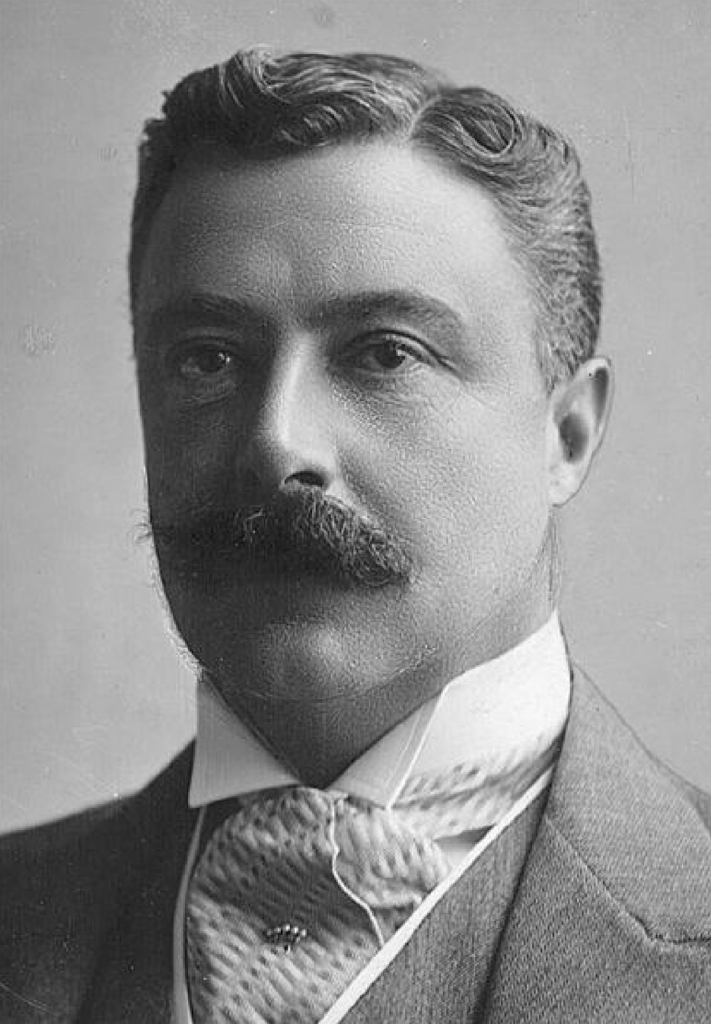
On Thursday 30 July 1903, King Edward VII and his wife, Queen Alexandra paid an official visit to Galway. Edward VII was born in Buckingham Palace on 9 November 1841. He was the eldest son of Queen Victoria and Prince Albert. Queen Victoria had strongly resented her pregnancy on Edward and this affected the relationship between mother and son for the rest of their lives. In 1863, Edward married Alexandra, the eldest daughter of the King of Denmark. Alexandra was an extremely beautiful woman; the public loved her, and she was sometimes referred to as the ‘Darling of the British Public’. She was in sense, the Princess Diana of her time and she was also noted for her style and fashion. Their page boy was William II, a young cousin of Edward and later to become the German Kaiser. Edward was crowned King of England in Westminster Abbey on 9 August 1902. He was the first monarch of the Royal House of Wettin or Saxony, Queen Victoria being the last of the House of Hanover.
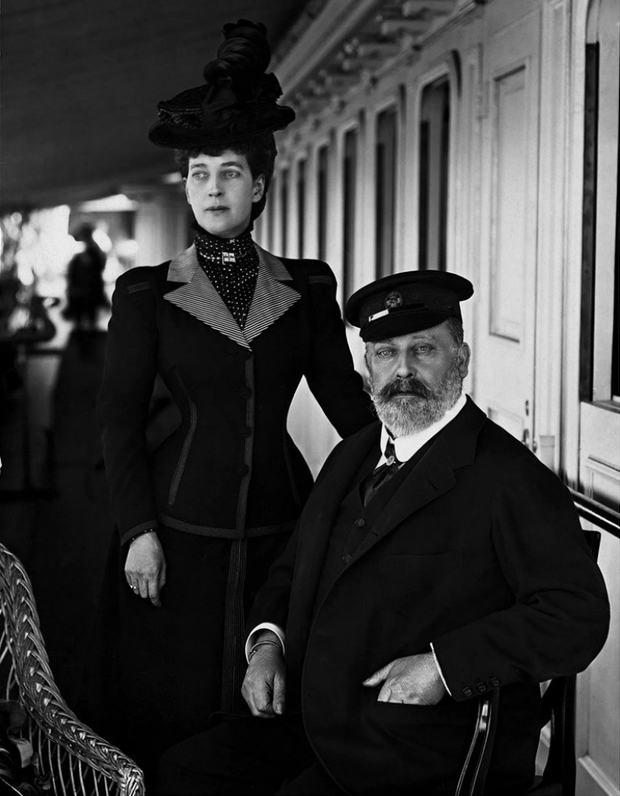
The 1903 visit was not his first time being in the west of Ireland, he had been here on a number of occasions as Prince of Wales. He was obviously impressed with these visits considering his return trip as king within a year of assuming the throne. His mother had visited Ireland some years earlier and received a rather cool reception from many people. This was surprising as she was known to many Irish as the ‘Famine Queen’, because of the lack of support during those terrible times. News of Edward’s visit was not welcomed by everyone as there were threats of protest from a number of quarters. The age-old differences of opinion between Unionists and Nationalists surfaced in the weeks leading up to the visit. His previous visits were mainly on fishing trips, but now he was planning the trip as king. Some believed that his motives were political, while others thought it was to gain popularity for the monarchy, which his mother had failed to achieve during her time in Ireland. Galway Urban Council struggled with the idea of Edward visiting the western capital. Nevertheless, those in favour of the royal visit won the vote to welcome the king to Galway.
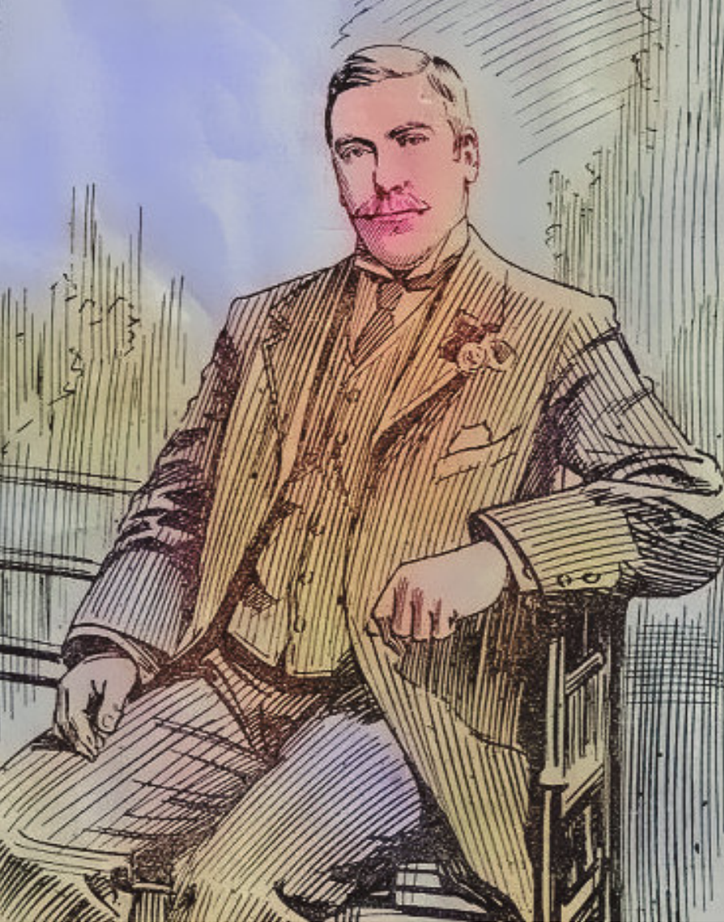
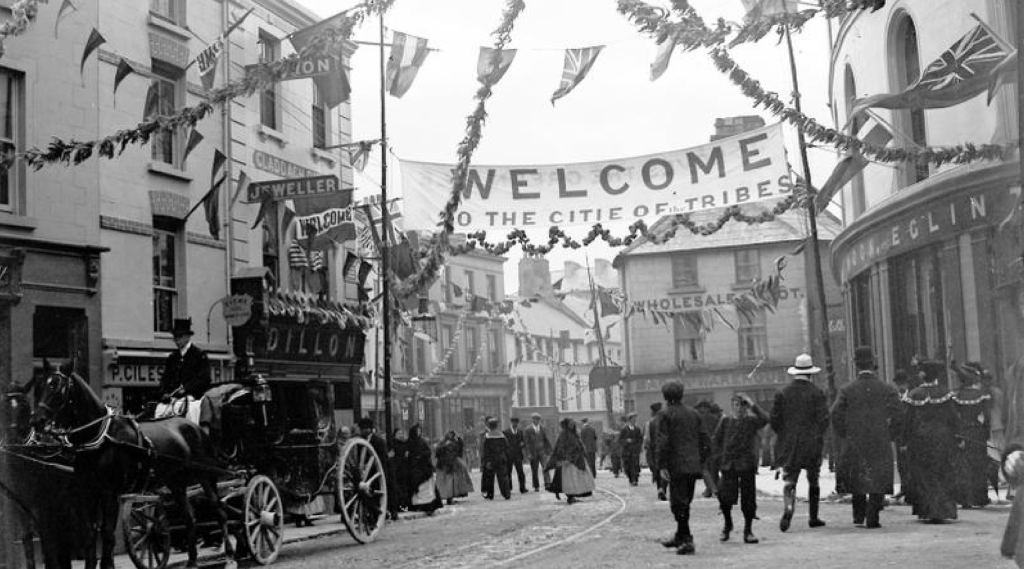
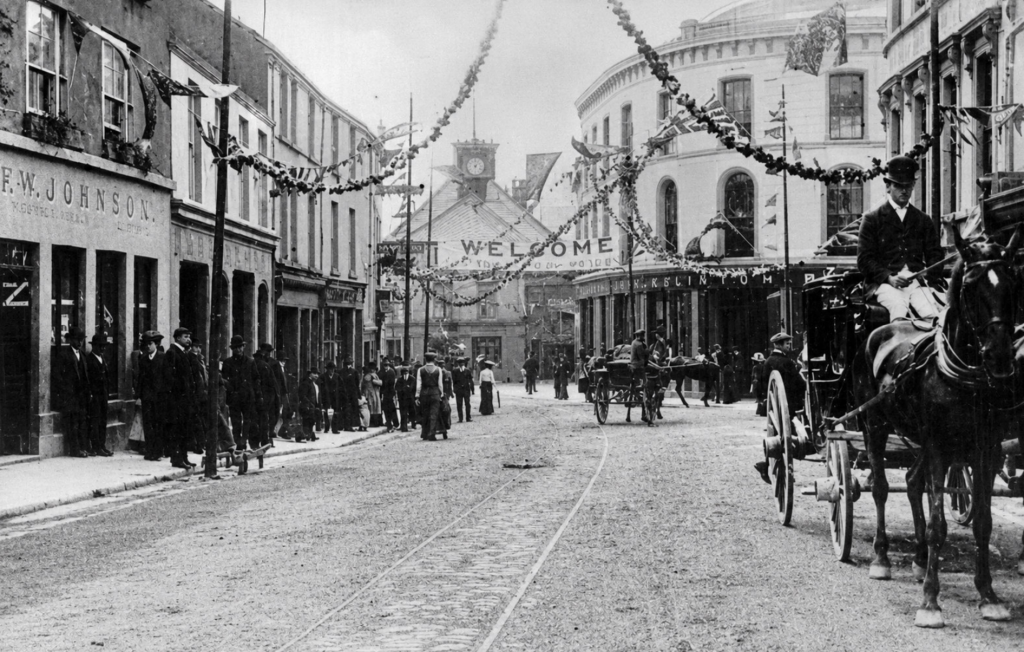
This decision was welcomed by James O’Donohue, Chairman of Galway Urban Council and preparations got under way to welcome the king and queen. A separate committee was formed to raise funds to decorate the town. This was known appropriately as the Decorations Committee and as funds became available work projects go underway. However, things still did not go as smoothly as expected because the planned visit also triggered an industrial dispute over wages among the labourers employed to decorate the streets. The strike was settled rather quickly, some say that it was over within as hour; and the work went ahead as planned. The entire route was richly decorated with Venetian poles, streamers and buntings. A banner proclaiming a welcome to the City of the Tribes was strung across the road between Dillon’s and Moon’s. The work was organised by Messrs Binns, Tighe and Murphy, and a team of workers and volunteers.
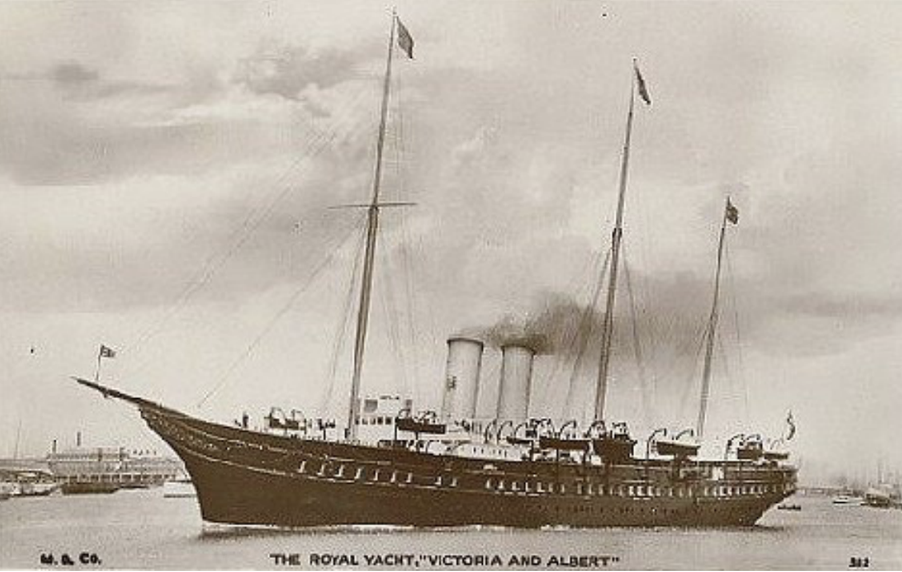
The king and his entourage arrived in Killary Harbour on the royal yacht, Victoria and Albert. The entire party travelled to Recess by motor cavalcade passing through a number of villages on the way including Tully and Letterfrack. They stopped for a time at Kylemore to visit the castle. Upon arrival at Recess they boarded the train and completed the journey to Galway by rail. There they were met at the railway station by J.M.A. Lewis the High Sheriff; Lord Clonbrock, the Lieutenant of the County; Joseph Glynn the Chairman of Galway County Council and James O’Donohue.
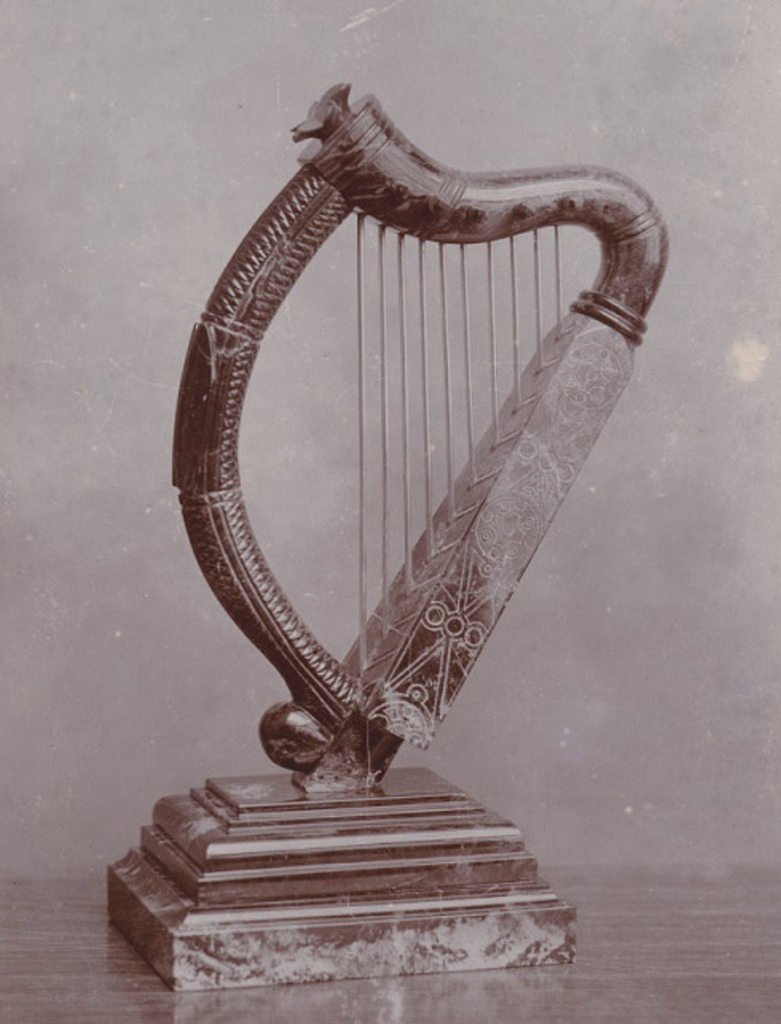
There were many more people in attendance leaving the entire area crowded. Many were anxious to secure a good vantage point from which to view proceedings. The Connaught Rangers arrived under the command of Major Bowlby and provided a Guard of Honour, while the regimental band played a number of tunes in acknowledgment of the occasion. A platform capable of holding over 500 people had been erected at Eyre Square. Stands were erected at the station to welcome the royal party and another at the docks to bid them farewell. After the various speakers had welcomed the royals to Galway, the king replied in a most grateful manner and thanked all those involved in the event and the people for their kindness and support. Dillon’s of Galway presented the king and queen with a Connemara Marble Inkstand and a replica of the Brian Boru Harp. Moons of Galway presented Queen Alexandra with a Claddagh Cloak. Incidentally, Griffin’s Bakery also played their part and supplied the royal party with bread and confectionary.
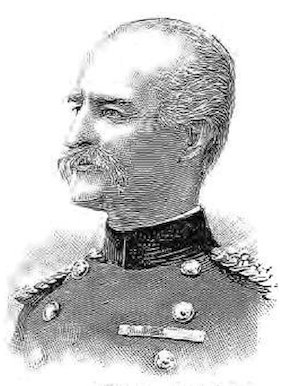
On conclusion of the various addresses at Eyre Square the royal procession lined up in planned order preparing for the parade through the streets of Galway. It moved off in the following order: Group I: Mounted R.I.C. Sergeant – F.B. Lopdell (County Police Inspector) – Colonel Neville Chamberlain (Police Inspector General) – Lord Lieutenant of Ireland – Princess Victoria – King Edward VII and Queen Alexandra. Group II: Countess of Gosford – Honourable Charlotte Knollys – Earl of Selborne – Viscount Churchill. Group III: Earl of Gosford – Admiral Sir H.F. Stephenson (Principal Naval A.D.C.) – Colonel A. Davidson – Captain G.L. Holford – Major-General Sir Gerald De Courcy Morton (Commander 7th Division). These were then followed by member of Galway Urban and County Councillors. Various other groups and dignitaries also lined out for the event.
The town was a blaze of colour and decorations hung from all the buildings. Thousands of people had made their way from the countryside to see the royal couple. All shops and businesses closed at one o’clock. Windows along the route were sold as viewing platforms for £1 to £5, depending on the position. There constant excitement and cheering along the richly decorated streets and as the parade passed by, people jostled for a view of the royals.
The route took them down through the town and around by the Claddagh Basin; and crossing over the bridge the parade moved towards the docks. Troops in full military uniform decorated with medals, regalia and ceremonial plumed helmets lined the route. The Claddagh people also turned out in style for the occasion. Once they reached the docks, the royals boarded the yacht as the next leg of their journey was to take them to the south of the country. However, there was a change of plan for some reason and the royal couple decided to spend the night in Galway. They planned to travel by train to Kenmare the following morning. Large crowds gathered in the streets on Friday morning to bid farewell to the royal couple as they made their way to the station.
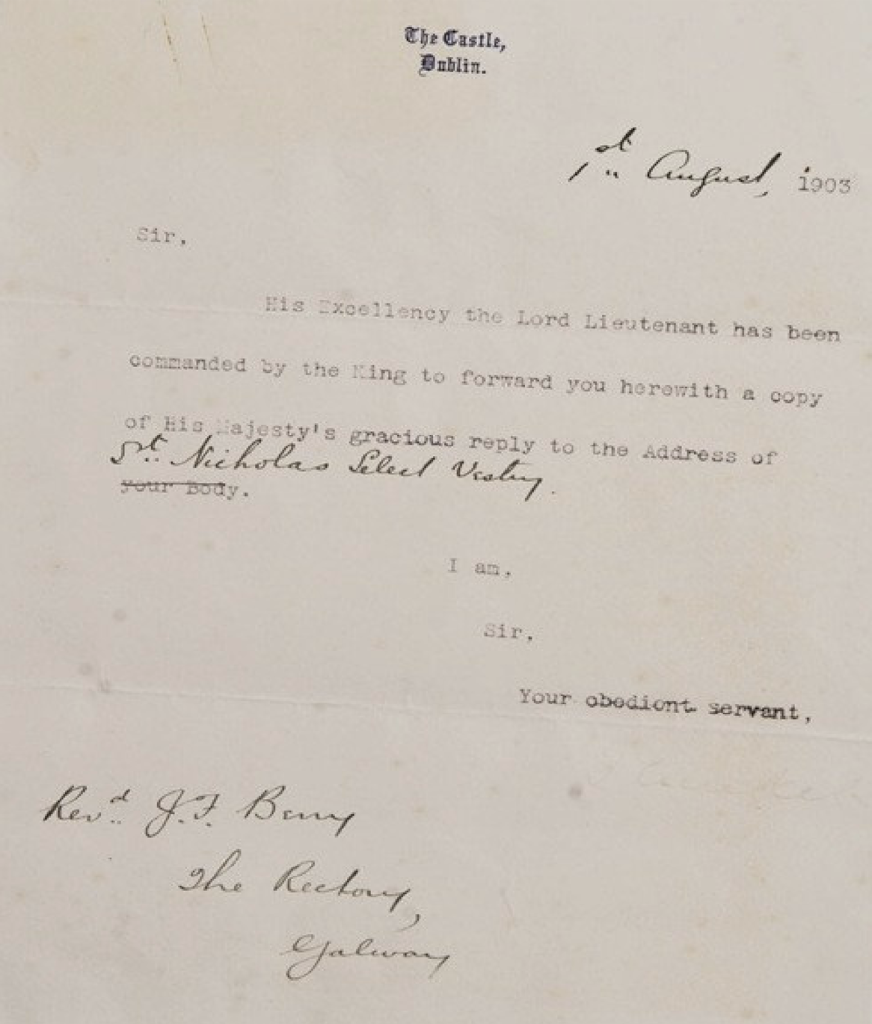
The visit was a deemed so successful that the organisers hoped it would become an annual event, however, with the political climate in Ireland – this was a bridge to far. James O’Donohue was knighted shortly after the visit in recognition of the welcome received by the king and queen.
King Edward VII died at Buckingham Palace after a short illness on 6 May 1910. The great achievement of Edward’s reign was the conclusion of the Entente Cordiale with France, which was largely brought about by his diplomacy and earned him the name, ‘Edward the Peacemaker’. In 1917, his son, King George V, changed the family name from Wettin or Saxony to Windsor, because of the anti-German fever which was sweeping Britain at the time over the Great War. The new name was taken from Windsor Castle as he felt it was a good English name. He was a cousin to the German Kaiser.