The story of the Great Famine is one of human misery and tragedy on a scale the likes of which had never been witnessed in Ireland. The eyewitness accounts make horrific reading even for the most hardened of hearts. The only salvation for many was the dangerous and sometimes appalling voyage that had to be endured by those trying to flee starvation, disease and death. About one-fifth of those who sailed from Irish shores during the famine perished en route. Sources indicate that in 1847 alone some 100,000 people set sail for British North America, with an estimated 20,000 of them either perishing on the ‘coffin ships’ or dying afterwards as a result of conditions on board. The remains of those who died during the voyages were consigned to the sea, with nothing to mark their final resting place.
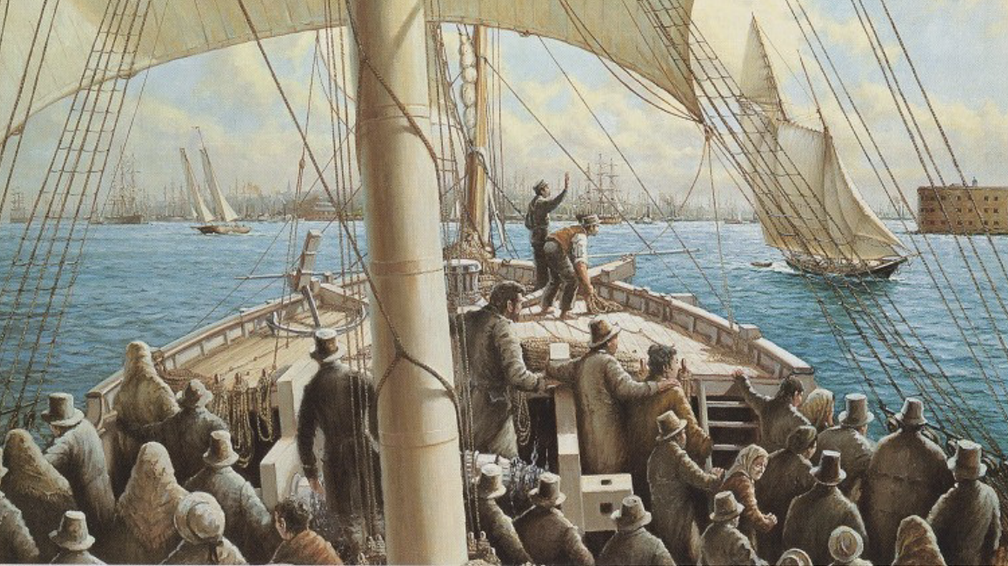
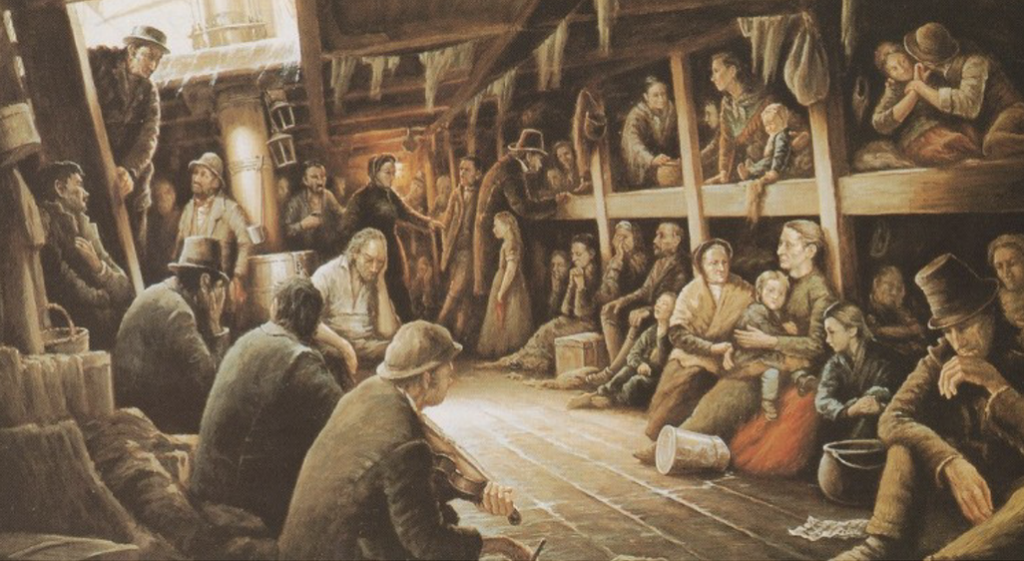
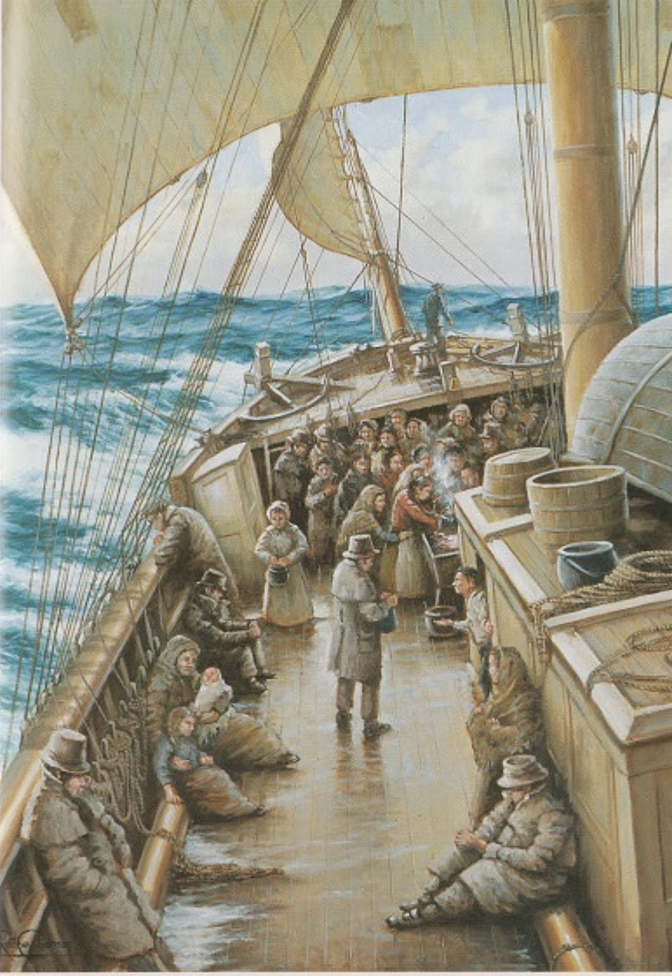
Some ship owners provided as little food and water as possible, working just inside the legal requirements, if indeed they obeyed the law at all. These ships were often overcrowded, disease-ridden, and people endured terrible hardships on the long sea voyages. In good conditions, the voyage to America would take about six to eight weeks, but during bad weather, such as storms and gales, the journey could take up to twelve weeks. Food was scarce, and at times emigrants had to supply their own. The situation for some emigrants was deplorable; after paying for the passage, £3 or £3-10s, they were often left with little or no money to purchase food. They then had to rely on the charity of fellow passengers. In some cases, passengers were thought of as little more than ballast.
Those who died during the voyage were consigned to a watery grave. There are horror stories of sharks following ships because of the plentiful supply of bodies. Ship operators frequently smuggled additional passengers on board, and as these people were not on the ship’s manifest, it’s impossible to determine the true death toll. Immigrants also cooked for themselves, and this was an ordeal in itself, with passengers waiting for hours to use the small stoves available on the open deck. People who were ill depended on the kindness of others or family members to help them. Fresh water was almost always in short supply, adding to the suffering.
Graphic accounts of individual suffering are, in every sense of the word, shocking, beyond words. Mothers watching their children die, in fear of holding them because of dreaded diseases; and watching the pitiful emaciated remains being dropped into the sea with sad indifference. Some years after the famine, Dr Curtis, who was a former ship’s surgeon from Dublin recording some memories, wrote: ‘The torments of hell might, in some degree, resemble the sufferings of the emigrants on these ships.’ It is estimated that over one hundred ships serviced Galway during the famine years; this research was carried out by Jacqueline O’Brien and me. The Famine – Celia Griffin Park on Grattan Road is the result of this work.
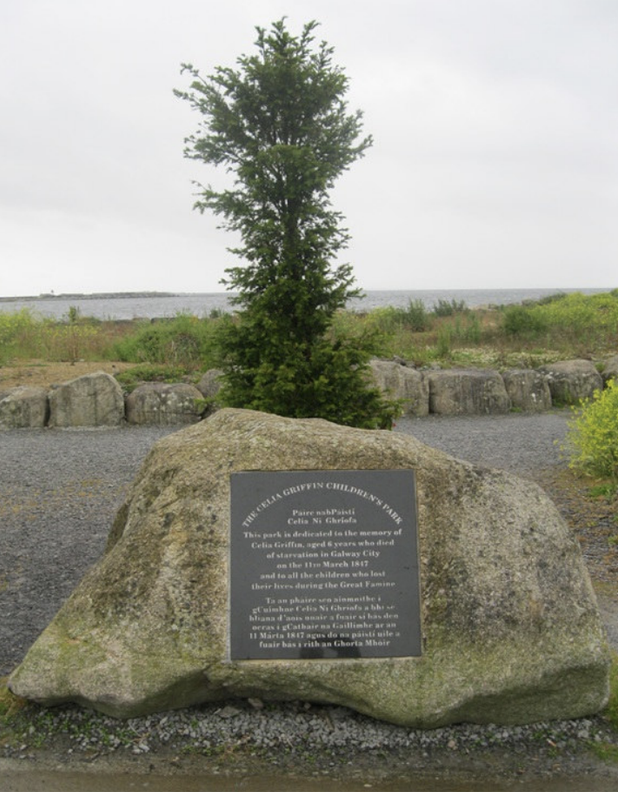
Celia Griffin has come to symbolise all the children who lost their lives in the Great Famine. Celia was born in the village of Corindulla, near Ross, in 1841. Her father was a tenant on the estate of Thomas Martin. Like so many others, for Celia and her family, the failure of the potato crop brought absolute disaster. The hardship, hunger and cold experienced by the people on the Martin estate defy description and challenge imagination. In 1845, the ‘unthinkable’, blight struck, and potato crops began to fail across the country. At four years of age, Celia would have little understanding of her parents’ concern, but from that time on, hunger was their constant companion. There were long evenings spent sitting on the dirt floor of their cottage listening to stories of the disaster sweeping across Ireland. There was little celebration during Christmas 1846; it was the last one that the Griffin family would spend together. As with thousands of others, the family took to the road leading to Galway City, walking over thirty miles in the hope of gaining some support. The winter weather was unequalled in living memory: harsh winds and unrelenting cold.
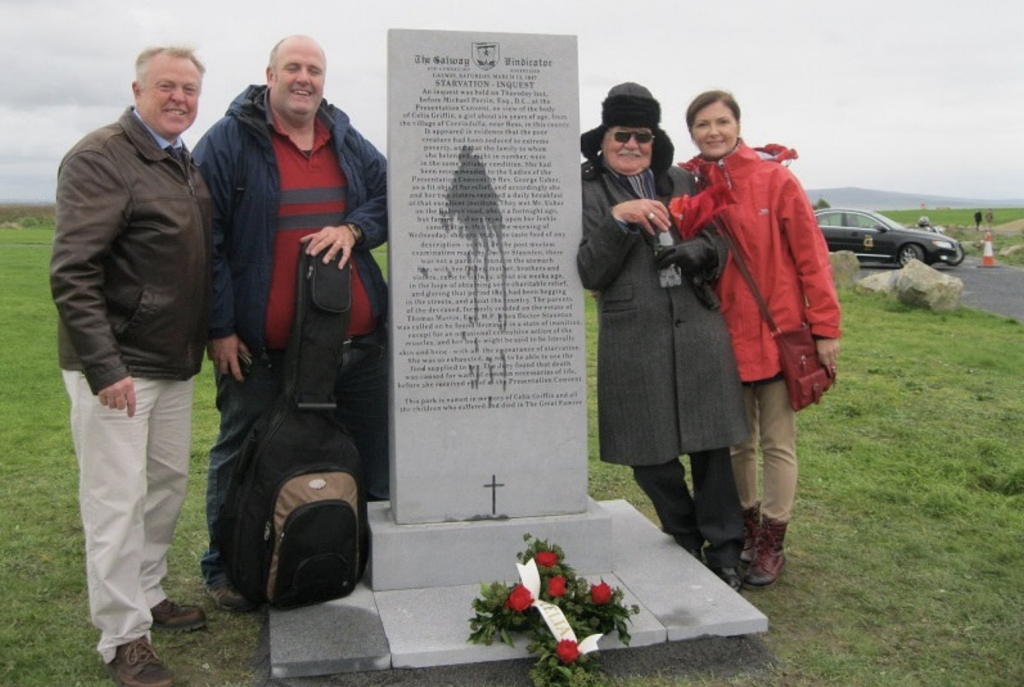
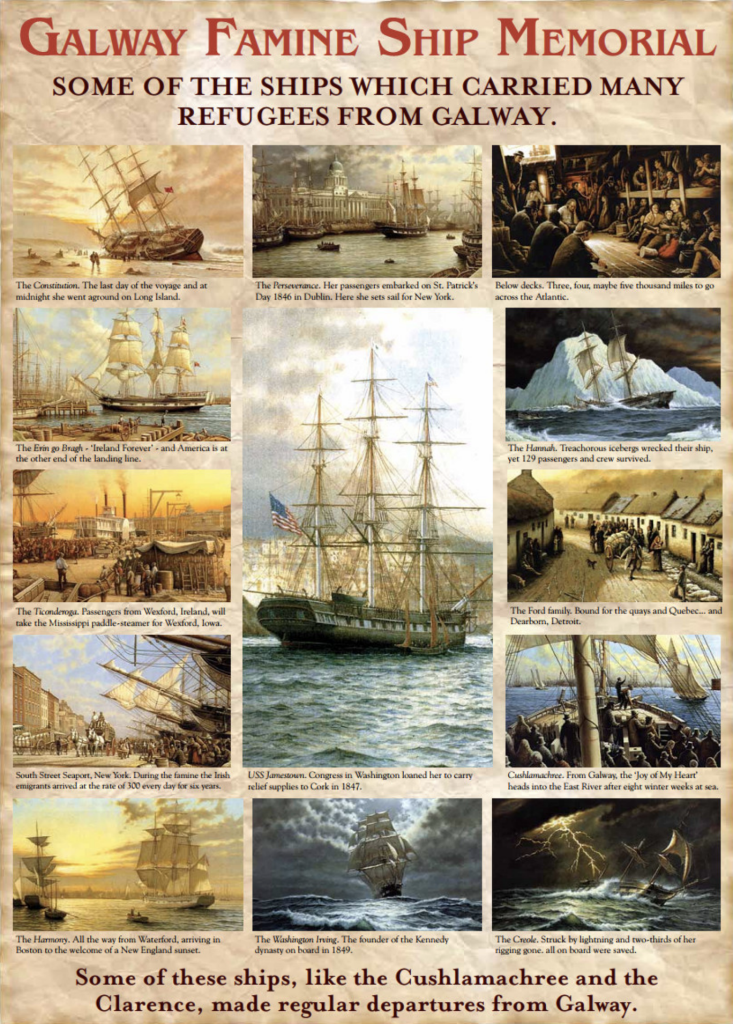
One can only imagine the suffering of little six-year-old Celia, frightened, destitute, famished and exhausted after the long walk. However, many city dwellers shunned these refugees, a situation born more out of fear of contracting disease rather than selfishness or indifference. The situation grew worse each day as more and more people were arriving in the town. This little girl survived the ravages of famine for almost six weeks, wandering the streets. How long Celia was in the care of her parents or what became of them is unknown; what is certain is that she collapsed during the second week of March 1847 (Black 47). She was taken along with her two sisters to the Presentation Convent where the nuns attempted to help her. However, it was too late, and she succumbed to starvation after a few days. An inquest into her death was held on Thursday, 11 March 1847.
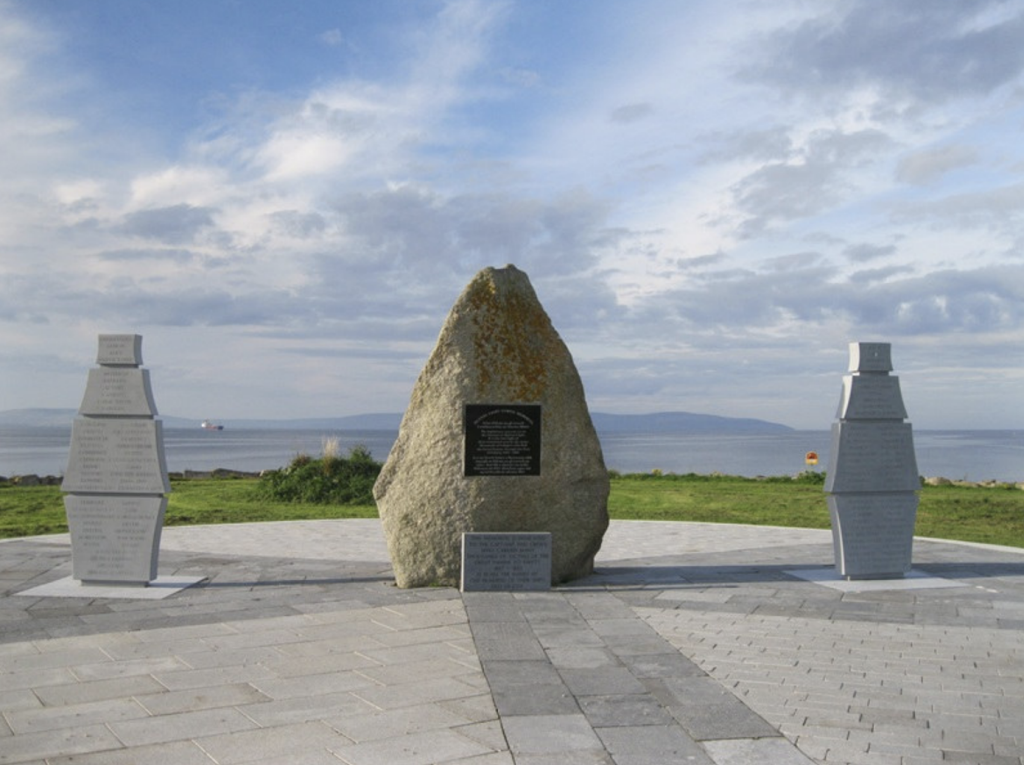
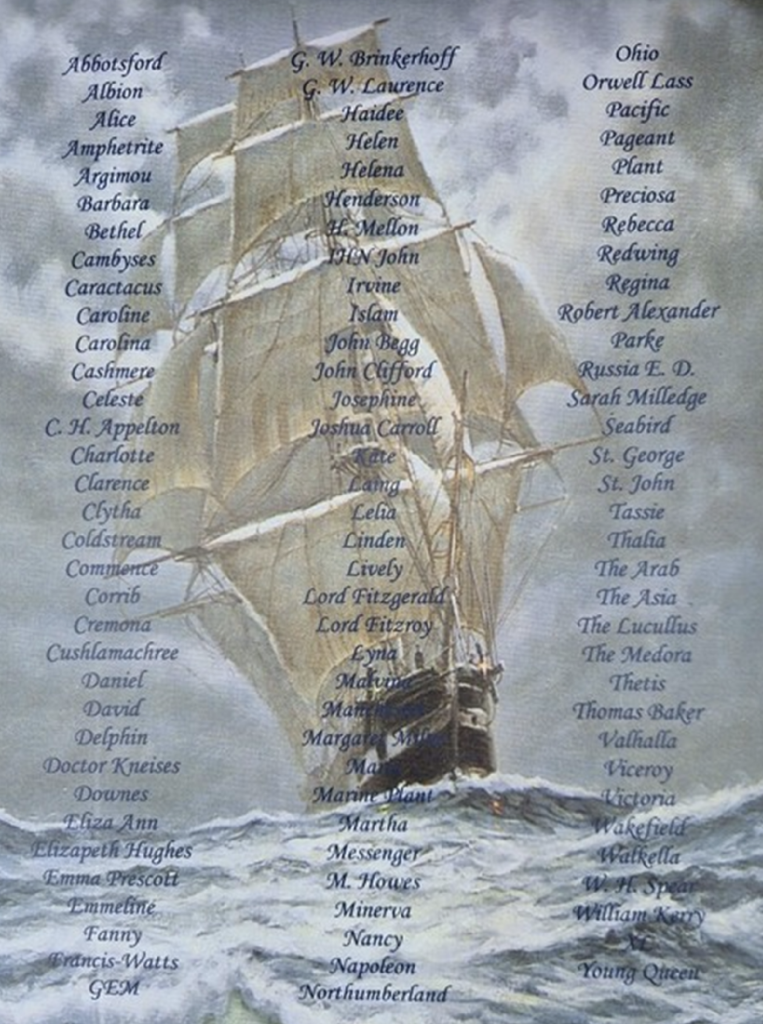
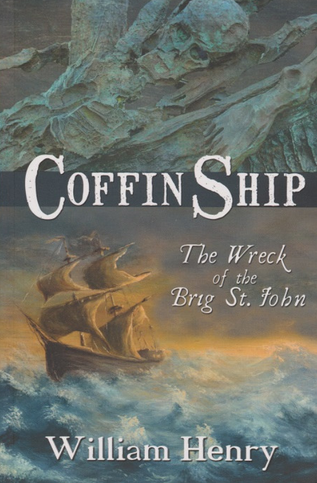
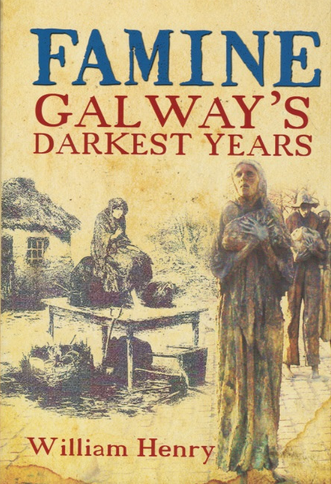
These stories are recorded in two books: Coffin Ships (2009) – Famine Galway’s Darkest Days (2011) (Mercier Press). Following the publication of these books, we felt it was important to remember Celia Griffin and all those who were lost off Coffin Ships. We met with the late Mark Kennedy, and thus a campaign began to have a park dedicated to Celia Griffin and the Coffin Ship victims. It was a small committee, but Mark left no stone unturned in fundraising that went on for some four years. Our dream of a famine park eventually became a reality with the generous financial support of members of the public and Galway City Council. The plan for the park was to have a stone dedicated to Celia near one entrance and the details of her inquest on another stone at another entrance. The Coffin Ship was erected on a platform overlooking Galway Bay. It consists of three stones, one large one in the centre and two other ‘Sail Stones’ on either side, recording the names of the 100 ships that serviced Galway during the famine, 50 names on each stone.
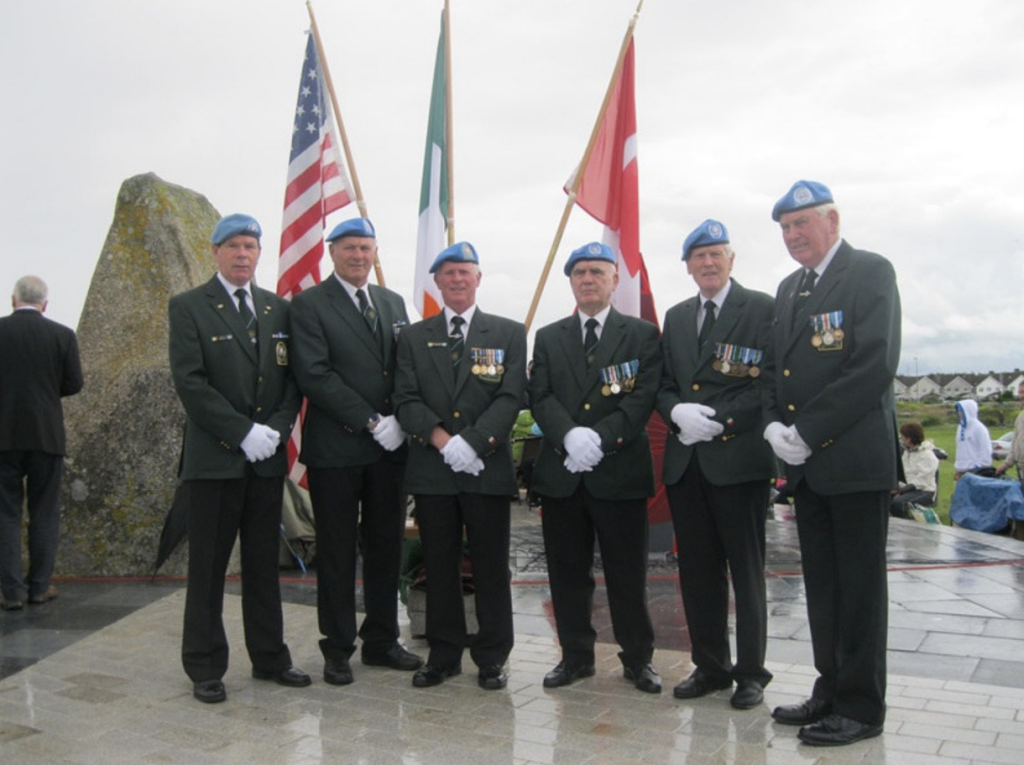
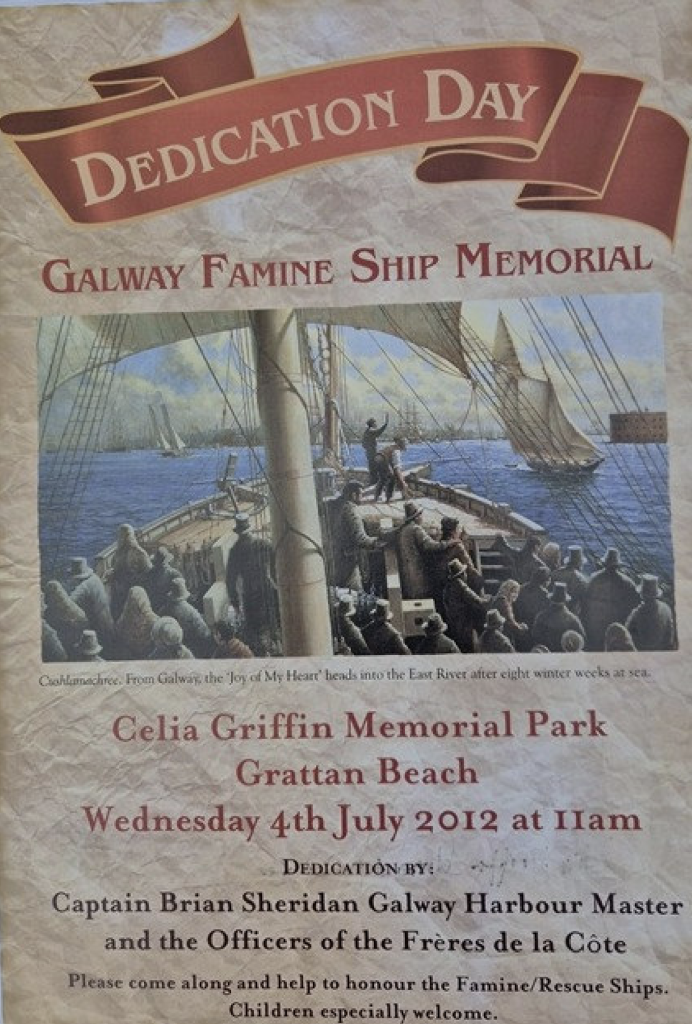
The famine monuments and park were dedicated on 4 July 2012 by Captain Brian Sheridan, Galway Harbour Master and Officers of the Freres de la Cote. The unveiling of the monument was also Galway’s tribute to Celia Griffin and the many thousands of children like her who perished in the famine. Don Stiffe composed a tribute to Celia in his song, Song for Celia, which he performed that day. The Mervue Youth Choir sang, Hard Times Come Again No More and Going Home. There was also a Guard of Honour by United Nations Veterans. The dedication was followed by a reception in the Claddagh Hall. A poster recording the names of the 100 ships was presented to the Claddagh Hall, Galway City Museum and another to Skibbereen Heritage Centre.