Sunday night 6 January 1839 will be forever known as the Night of the Big Wind. It was a night that brought havoc across Galway; and, indeed, throughout the country. This was the most devastating storm ever recorded in Irish history. In the early afternoon the air temperature began to change, but people were not overly concerned as it was winter and this was seasonal. As darkness fell over the gas-lit streets of the city, people were making their way home from evening devotions. The windows of the little houses twinkled with candle-light as people honoured ‘Twelfth Night’ the feast of the Epiphany, or Little Christmas as it is sometimes called. Children were soon tucked away in bed and adults sat by their respective firesides to discuss topics and news of the day. At about 8.30 p.m. a gale began blowing from the southwest. The whistle of the wind at doorways and windows didn’t really alarm people at first as they were living in proximity to the sea and were used to strong winds and even storms. However, this was different; and with each passing hour the fury of the howling wind increased and soon the doors and windows of houses began to rattle. Inside, people prayed and sprinkled holy water hoping they might be spared the devastation of the storm. By 11.00 p.m., the wind was raging with all the force of a terrible hurricane. The powerful gusts began ripping slates from the roofs of houses and hurled them great distances crashing down into the streets and lanes of the town. The masonry supporting chimney stacks and the parapets of many buildings could not withstand the violence of the storm and began to crumple. This resulted in chimneys and roofs collapsing into the streets. Slates were crashing through the windows of houses also causing widespread panic. People were huddled together in their humble dwellings, many afraid to remain, but too terrified to move. To leave their homes could mean being swept away by the violent force of the wind; to stay was risking death inside a collapsed house. The terror was such that many people felt it was the end of the world. The slates and masonry continued to fly in ‘rapid succession’ in all directions. As roofs were carried away, men, women and children screamed and cried as they scurried for shelter, many in a state of nudity. There are accounts of people being unable to stand and trying to crawl along the ground trying to find safety. Eleven people lost their lives in the city that night and many more were seriously injured.
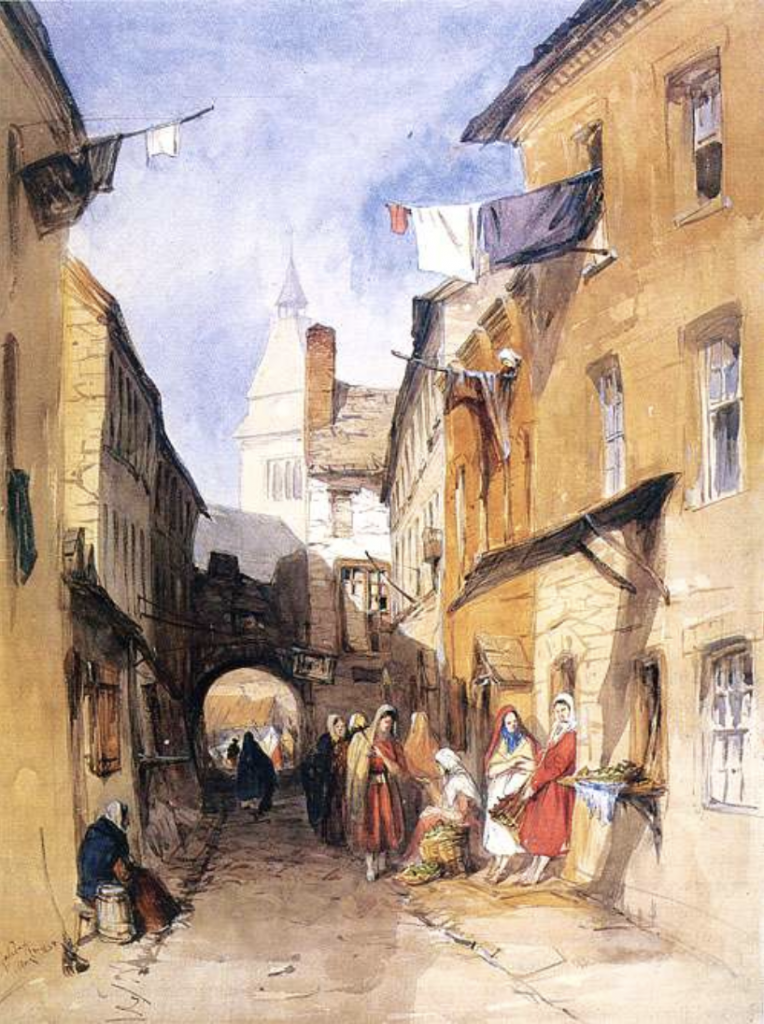
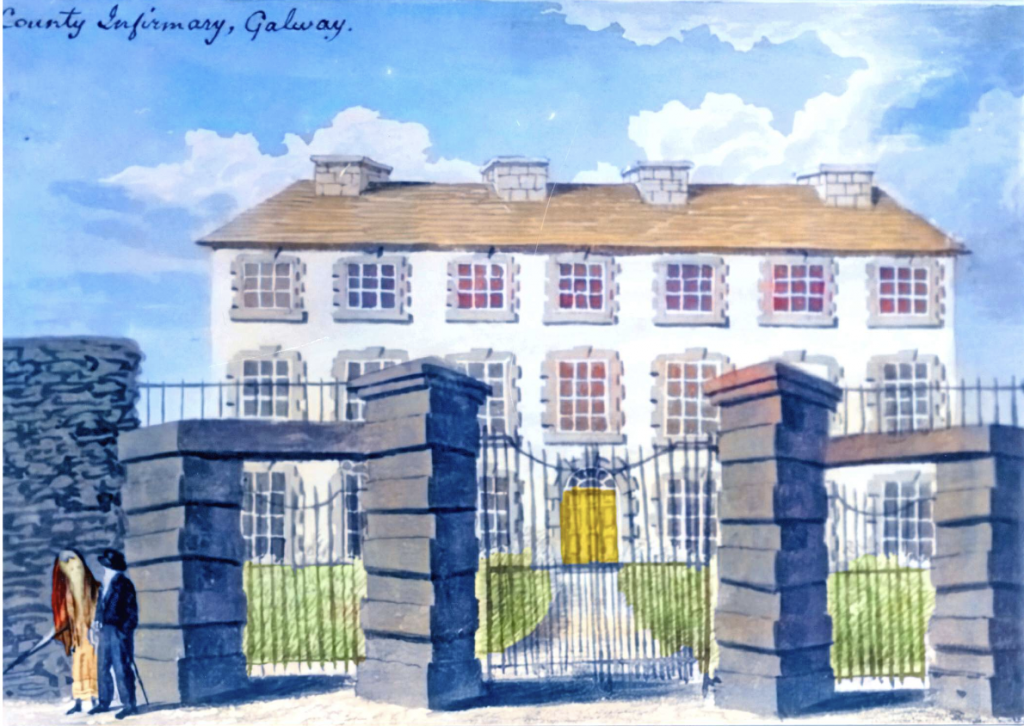
In Mainguard Street, Catherine Reid and her sister a Mrs Callanan were killed when their house collapsed on top of them; they were buried alive in the rubble. Another woman, Mrs. Gorman, lost her life in Eyre Street. A Mrs Shaughnessy seeking shelter in Shop Street was killed by falling masonry. Jim Healy of Lombard Street was killed after being struck by a stone from a chimney stack, while Ann Morris and Mary Keane were both killed by flying slates. Hundreds more were injured resulting in the deaths of four other people on the dreadful night. The storm raged until about 5 a.m. when it began to die down, but by this time the devastation was widespread across the city. The sight that greeted people as the morning sky brightened resembled a ‘sacked town’. People could be forgiven for thinking that huge cannons had been used to bombard and destroy the city. Every building bore evidence of the great calamity. Many were completely stripped of slates and glass; in some cases houses and entire streets were destroyed. The streets and lanes were covered in broken glass, slates and masonry. Even the strongly-built County Courthouse had not escaped, all its windows were smashed, and the roof was destroyed. Some people sought refuge in the Galway County Infirmary on Prospect Hill, but this building was also left without a window or roof. However, one lower section had escaped the worst of the storm and remained almost undamaged. Many of the injured were taken to this section and were cared for by Doctor Blake a local physician. He did exceptional work under the circumstances, performing operations, including amputations in an effort to save lives. In some cases, he was forced to use whiskey as an anaesthetic to treat wounds. Although four of his patients later died, he did manage to save many others.
While conditions on land were horrendous, the situation for those at sea was even worse. Three boats sailed out from Galway Docks on the day of the storm, destined for Carraroe and Rosmuck. They were caught out in the raging sea and no trace of the twenty-three people on board these vessels was ever found; all were presumed drowned. Most of the fishing vessels at Long Walk and Galway Docks were ‘battered’ against the quay walls and were either sunk or reduced to driftwood. Seven coastal steamers which broke their moorings were driven out to sea at first and then carried back by the powerful raging waves and smashed on the rocks along Forthill, Renmore and Ballyloughane. Scarcely a house in Salthill escaped damage. The entire western seaboard and midlands experienced the worst of the hurricane. Scenes of devastation also greeted people throughout the countryside. Fire was always a danger with open hearths and thatched roofs, but now there was an enormous wind to fan the flames. Some 103 houses were destroyed by fire in Loughrea alone, while 20 dwellings in Oranmore suffered the same fate. Many thatched houses along the seafront were also destroyed and the contents of barns were strewn for miles around. ‘Providence did not spare the mighty!’ as many of the gentry also suffered when their homes fell victim to the storm. The great manor houses of Castlehackett, Furbo, Tyrone and Cregg Castle were all damaged. The occupants of Ross House in Connemara gathered in the basement in total terror. This was the home of the Martin family. Before retreating to the cellar, Thomas Martin, listening to the raging winds outside, looked up at the vaulted ceiling and commented, ‘If Ross falls, not a house in Ireland will stand’. Ross did survive, but the evidence of the violent storm was everywhere when they emerged the following morning. Off-white frothy foam covered much of the lawn, blown in from the sea many miles distant. Thousands of trees fell that night, over 130,000 alone on two estates in Mayo. Almost every tree in Garbally Park, County Galway fell, many of them were well rooted and hundreds of years old. Thousands of birds were killed, ripped from their little nests and smashed off every object in the path of the storm.
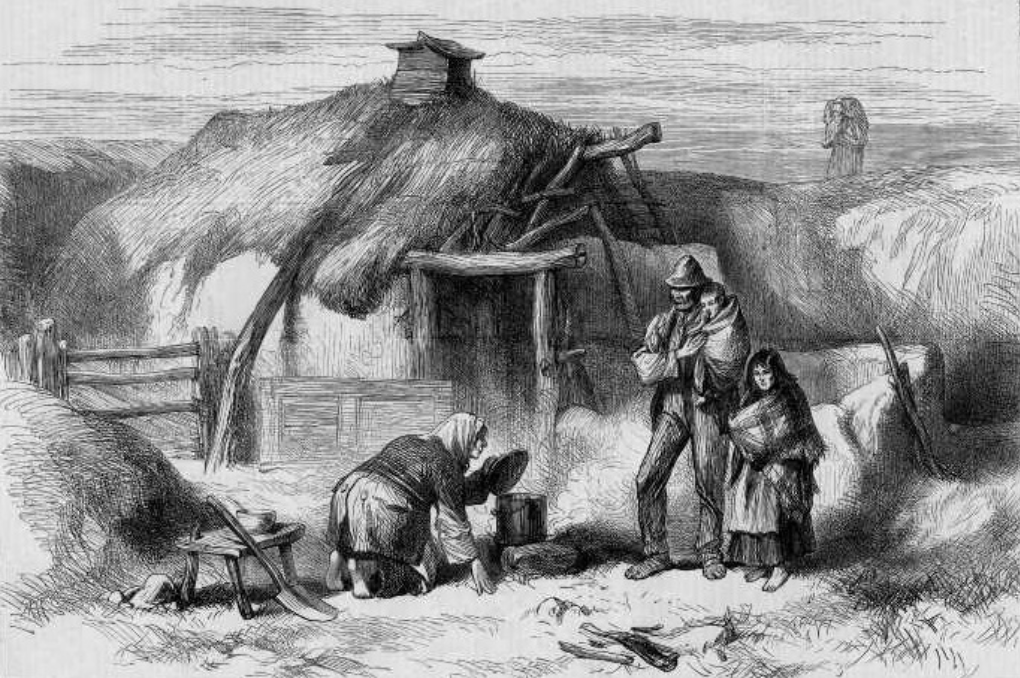
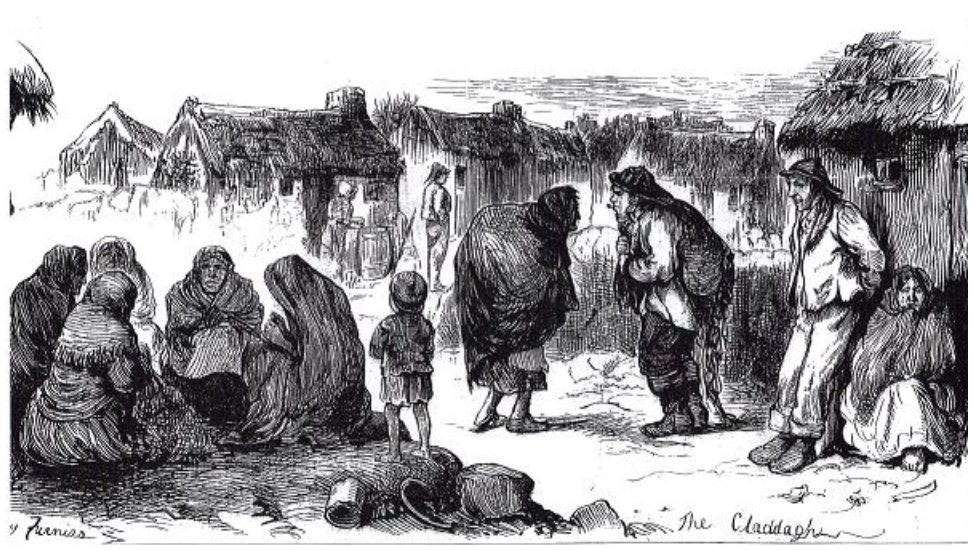
Churches all over the diocese suffered untold damage. St Patrick’s Church in Forster Street, had its roof torn off as did houses in the avenues and streets nearby. Needless to say thousands of people were left homeless. In the countryside, the storm ended the era of the mud cabin forever, as people began to rebuild their homes with stone. These people had always been used to hard times, hunger, disease and poverty, but the storm brought additional suffering. Throughout Ireland the death toll of that dreadful night was estimated between three and eight hundred. In Galway, things could have been worse had a spring tide accompanied the hurricane as was sometimes the case at that time of year. The Night of the Big Wind was the worst known natural disaster to hit Galway and lived on in folk memory well into the twentieth century. Of course, it created much employment as it took years to repair the destruction.
Perhaps the most unlikely beneficiaries of the Night of the Big Wind were those old enough to remember the storm when the Old Age Pensions Act was enacted in January 1909. The Act offered the first ever weekly pension to those over seventy years of age. However, it transpired that few births were registered in Ireland before 1865. Because of this the Irish Pension Committee decreed that if someone’s age had ‘Gone astray’, they would be eligible for a pension if they could confirm that they were ‘Fine and Hardy’ on the Night of the Big Wind.