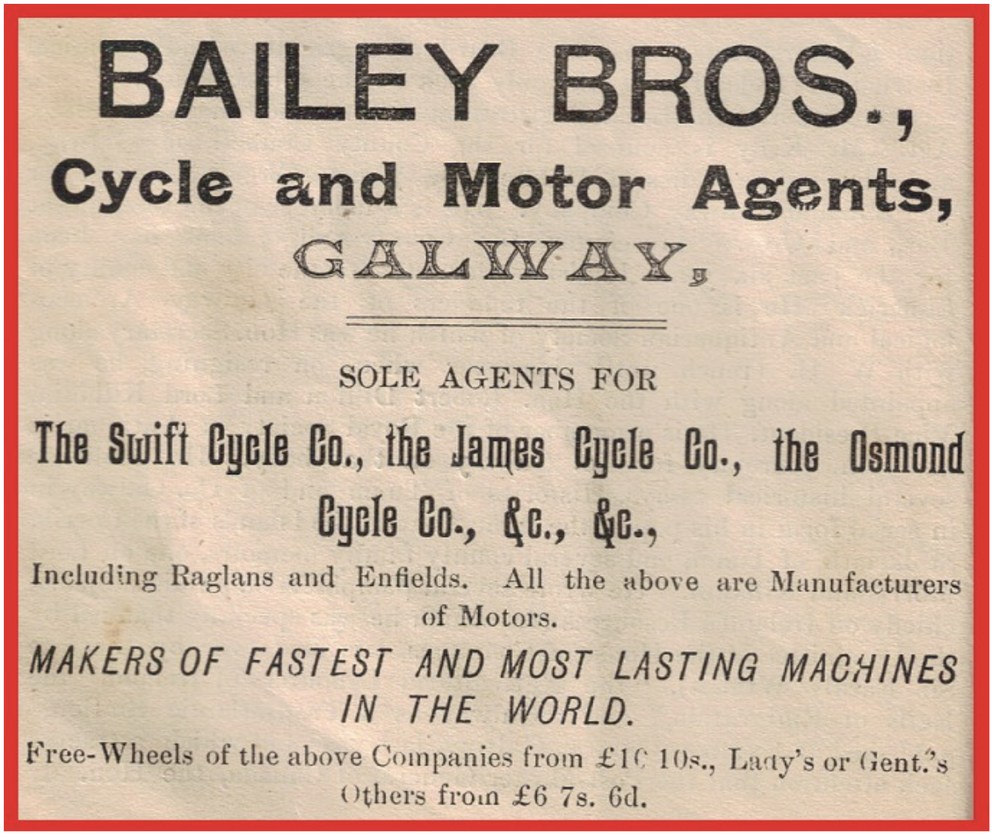
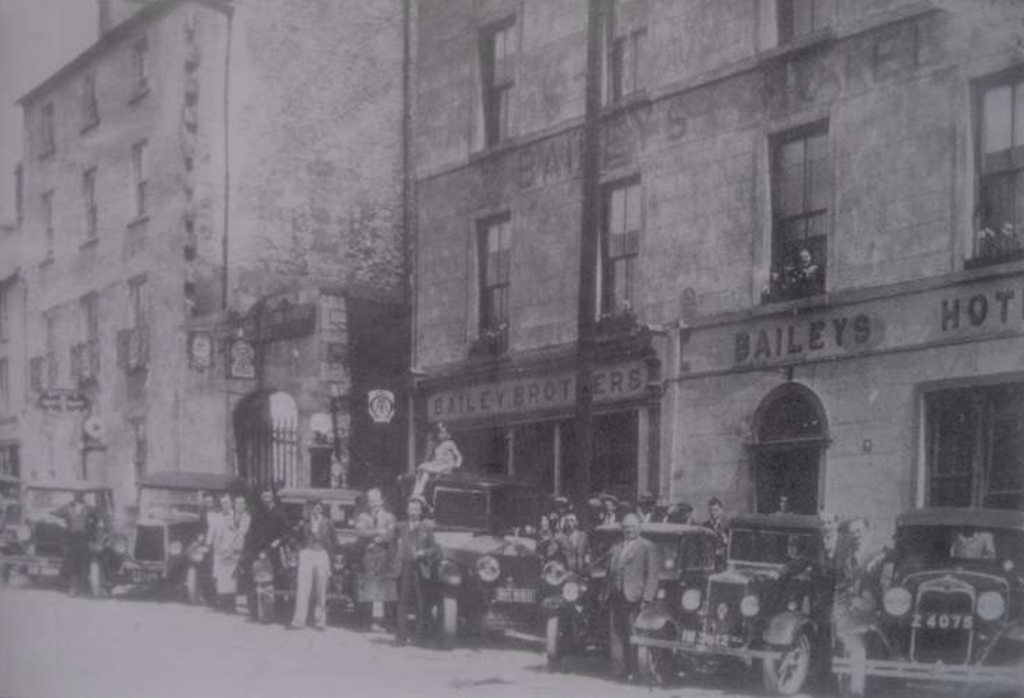
John Henry Bailey was born in 1840 and had the distinction of being the first man to own a bicycle in Galway. He set up a business selling the first motorcars (Morris) and bicycles (Raleigh and Swift) in Eyre Square, where Odeon House is located today. He was a very active man being an Auctioneer, Phoenix Brewery Agent, Poor Rates Collector and one of the first members of the Corrib Boat Club. John Henry Bailey had two sons, Frank and Harry. When he died on the 8th of November 1904, Harry replaced him as a Rate Collector and Frank took over the other business.
Frank and Harry were both enthusiastic cyclists and were prize winners at many races. Frank seems to have been the most daring when it came to usual feats. During the bitter cold winter of 1904, the River Corrib was frozen from Woodquay to the Friar’s Cut. Frank mounted his bicycle on the ice at Steamer’s Quay and cycled to Menlo Castle; and then cycled back to Woodquay. However, his most remembered exploit was when he told his friends that he was going to race the Galway – Clifden passenger train. The fifty-mile race took place in August 1906 and started in Clifden. The train was supposed to take one hour-fifty-two minutes, but it could take longer, sometimes two and a half hours because unscheduled hold-ups.
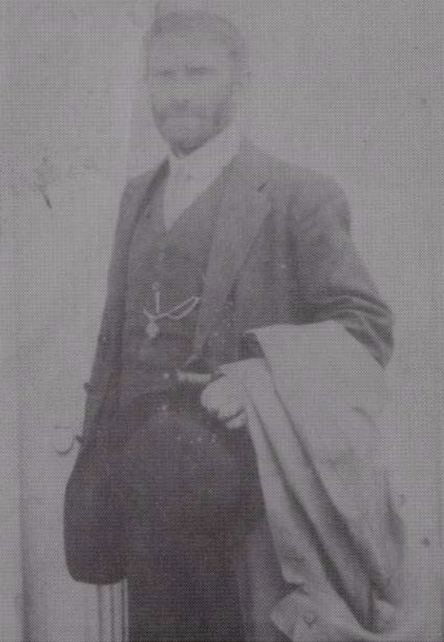
Although being an accomplished cyclist, people believed that a race against the train could not be won. It was a highly unusual challenge, but Frank felt he was ready for the gruelling race. One must remember the road conditions in Connemara were notorious bad with plenty of potholes. It was fifty miles of mostly barren exposed surfaced roads with an average speed of 20 miles per hour. There was no back-up team and a puncture could take over five minutes to repair. There were no real weather forecast to help chose the best day, all he could hope for was a good tailwind into Galway. Remember that the bicycles of that period were nothing like the state-of-the-art racing styles of today. Nevertheless, nothing was going to prevent Frank from rising to the challenge, except an act of God. As news of the race spread people waited anxiously for the event.
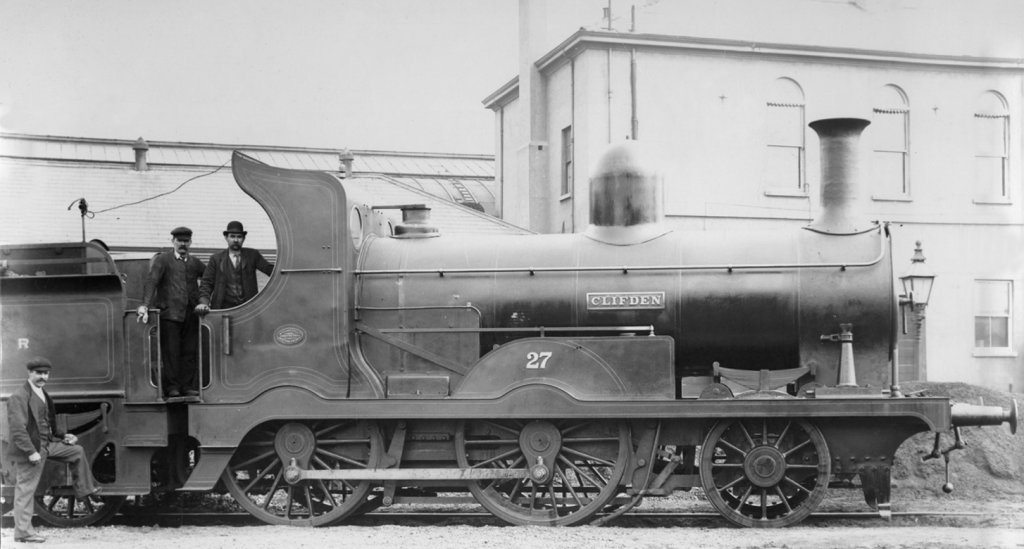
The evening before the race, Bailey took the train to Clifden and got a good night’s rest. The following morning, the 6th of August 1906, he made his way to the Clifden railway station where a large crowd had gathered, and they began cheering for him even before the race had started. The morning was dry and there was a good strong north-west wind, which favoured him. As soon as the train whistle sounded and began pulling out of the station, Bailey took off on his bicycle to the sound of support from the very excited crowd. Bailey surged ahead, but immediately came under pressure about two miles outside Clifden when the train went under a bridge, before he crossed over it about thirty seconds later. Nevertheless, Bailey peddled on with great urgency. The race was also unusual in that he couldn’t see the train along most of the route only catching a glimpse of it from time to time. When this occurred the train driver sounded the whistle which urged Bailey on with more determination.
He caught up with the train as Recess Station and as he cycled past the passengers cheered and waved excitedly for him. Local people had gathered there also to see the ‘crazy’ man from Galway who thought he could beat the train. It was a gradual climb to the next stop at Maam Cross, but he held onto his lead. However, his body was aching from the brutal road conditions, and he even began to have doubts about his own ability to win what to most was an impossible race. Nevertheless, he was still ahead of the train at Maam Cross. There he took a quick rest and ran into Peacocks (pub and restaurant), where Mrs Peacock made him a well-deserved cup of tea and sandwich. As the train reached Maam Cross, Bailey ran out and mounted his bicycle. He hit the road to Galway to the sound of another cheering crowd that had gathered outside Peacocks.
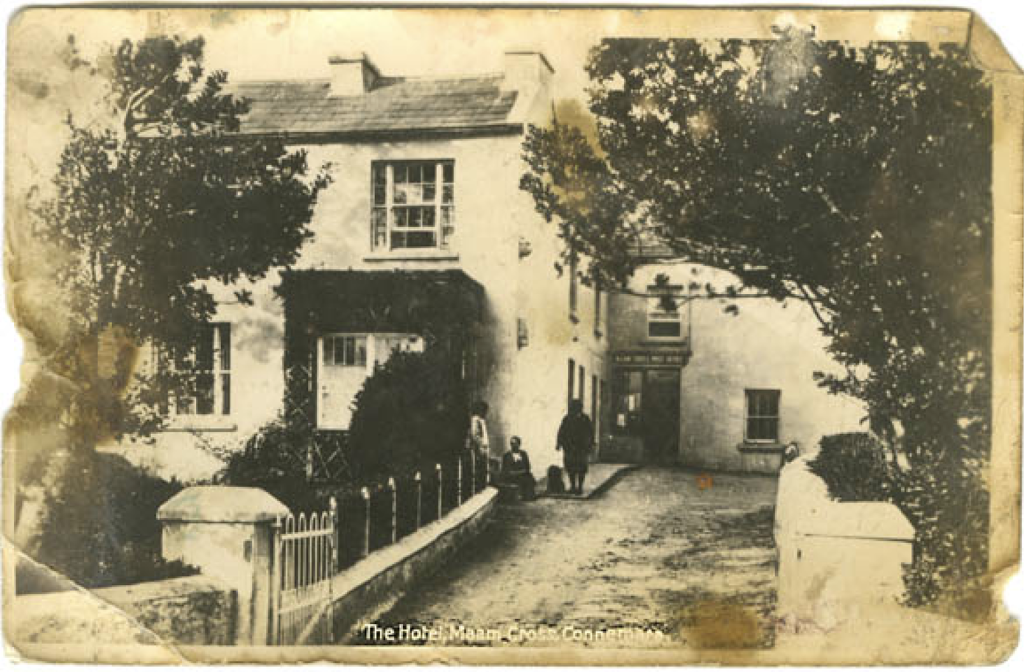
The next leg of the race was to Oughterard and the rough road and hills were not encouraging. He had somewhat lost his momentum, he was cold and stiff, and had eaten more than he should have given the circumstances. He could soon see that the train was ahead of him, and knew he was losing ground. Although Bailey regained his energy after a few miles, he was unable to catch the train before reaching Oughterard. It was about a mile ahead of him at this point. The road into Oughterard was down-hill, and he peddled as never before into the village. The main street in Oughterard was crowded with cheering supporters which lifted his spirit and determination, and knowing that some stretches of road to Galway were now tarred renewed his confidence. Most of the road between Oughterard and Roscahill was level and catching occasional glimpses of the train, Bailey knew he was gaining the lost ground. He was neck and neck with the train at Roscahill, but lost several hundred yards on the road to Moycullen. He could see the smoke of the train through the trees and peddled on faster, and he caught up with the train at Moycullen. At this stage, but felt the wind was turning somewhat against him.
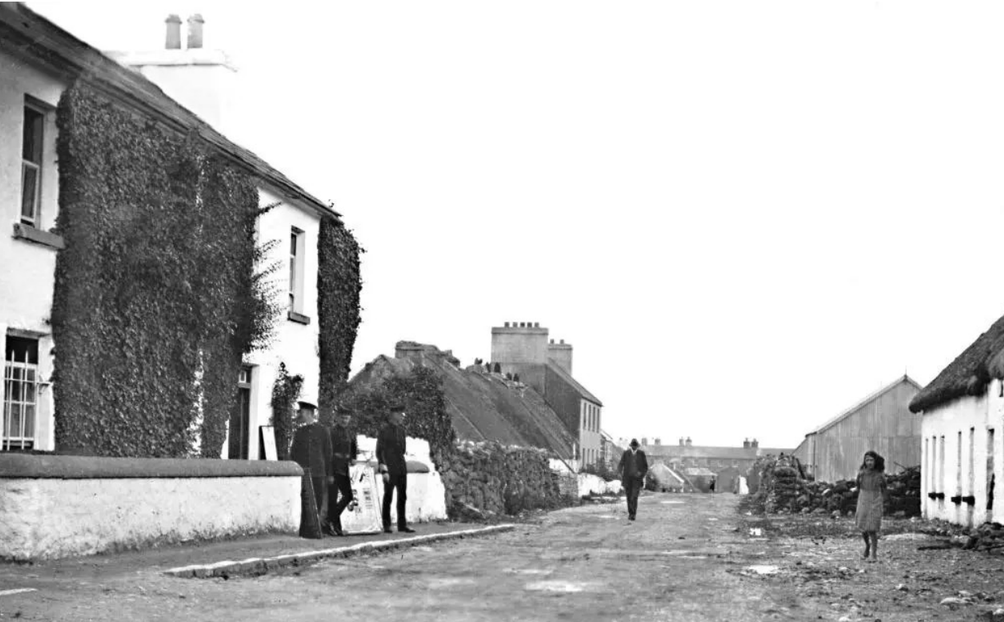
His muscles were sore, and the tiredness was almost overwhelming, but still he peddled on. As Bailey got closer to Galway he was met by other cyclists and crowds of friends and well-wishers who turned out to cheer him on towards the finish. He was delighted and this totally energised him, and he began picking up speed going through Newcastle and around by University Road. Crossing the Salmon Weir Bridge, he could see the train reaching the railway bridge over the River Corrib. His tired but determined legs propelled him through Eglinton Street. Bailey peddled on passed the large cheering crowds around Eyre Square and raced feverishly towards the Galway Railway Station. Amazingly, he got there just thirty seconds ahead of the train and won the race. The crowd surged around him and carried him shoulder-high around Eyre Square. It was a feat remembered in Galway for many years.