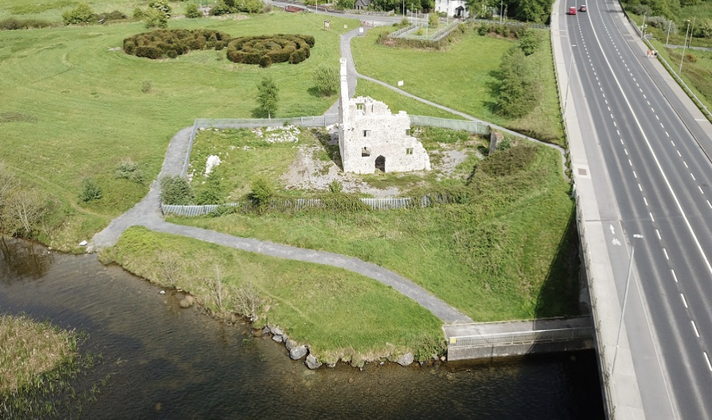
Terryland Castle has a long and interesting history and is one of the best-known features along the River Corrib. Most sources indicate that the castle was originally built by Ulick De Burgo during the late fourteenth or early fifteenth century; others mention a date between 1300 and 1336. William Burke and his son John was in residence there in 1555. In 1560, the Earl of Thomond marched into Connaught to attack Murrough ‘of the Battle-axes’ O’Flaherty. The citizens of Galway made their way to Terryland to defend the castle as there was a danger that it might be attacked by Thomond. He was given permission to cross the river at the nearby fording point on his homeward journey. By 1574, Dominick Lynch was mentioned as the owner.
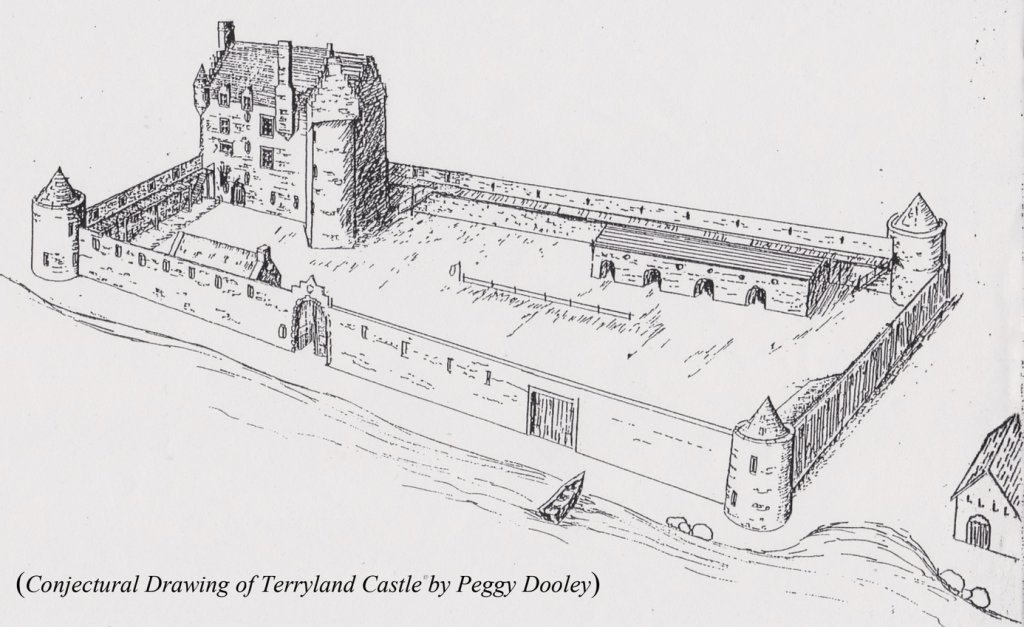
The present two-story castle has been dated to the seventeenth century and was described as a ‘fortified rural house’. Most of the remaining south section has been reduced to its foundation and may have been part of the original De Burgo castle. It seems that portions of the older castle were incorporated into the present structure with possible evidence of more than one phase of construction along the west wall. The north gable is steeply pitched and supports three fine diamond shaped chimneys. The doorway was flanked by four twin-lighted mullioned windows; two are at ground level. There are traces of other features evident inside. Although in a ruined state, it’s a hugely important castle, rich in history and folklore. In 1575, the Annals of the Four Masters mention the ‘ford’ at Terryland as being the most convenient place to cross the river; and undoubtedly an important area to control. They said that the river crossing was protected by the Clanricarde family in Terryland Castle.
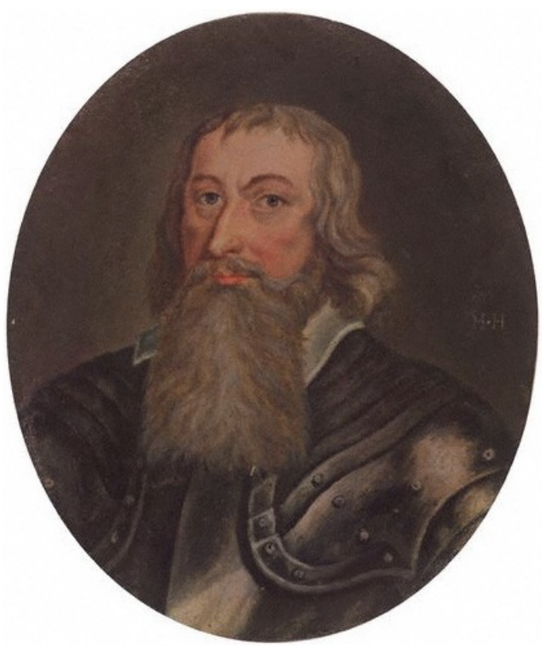
When the 1641 Rebellion broke out, the Earl of Clanricade placed a strong garrison there under the command of Lieutenant Denis O’Daly. This man was described as a brave officer who commanded three companies of soldiers and thirty musketeers. The troops and the people of the city were loyal to Charles I, who was at war with the Parliamentarians under Oliver Cromwell. On 7 August 1642, Parliamentarian Commander, Alexander Lord Forbes arrived in Galway Bay with a fleet of seventeen ships. Forbes was ruthless and began burning the surrounding villages to try and force the city to surrender. He also requested Clanricade to hand over the castle to him. Clanricade refused, but did invite Forbes to meet with him at Terryland. Clanricade later stated that while entertaining Forbes at Terryland, the Parliamentarians were busy burning houses and indiscriminately killing innocent men, women and children around the countryside. In fact, Clanricade mentions that he witnessed some of these atrocities from the castle windows. After failing to gain entry to the city, Forbes sailed away in September of that year leaving a trail of destruction and murder behind him. In August 1647, Lord Digby, the Royalist Secretary of State visited Clanricade to discuss the worsening situation regarding the Cromwellian War and the effects it would have in Ireland.
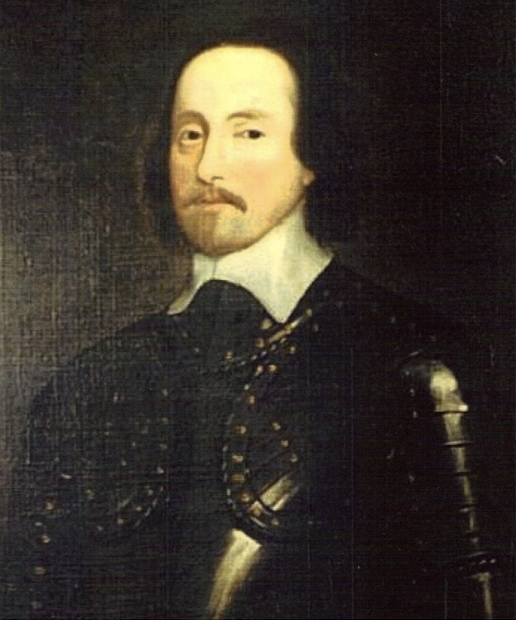
As the war wore on the situation deteriorated to such an extent that the royalists decided to seek support from the Duke of Lorraine in France. Lorraine sent his ambassador Stephen de Henin to Galway. He arrived on 26 February 1651 and met with Clanricade in Terryland Castle. It was there that negotiations took place over the following months. Some sources mention that these talks resulted in the city being mortgaged to Lorraine in a bid to secure his financial support to continue the war against the Cromwellains. It was suggested that in a bid to impress Lorraine, the authorities had the famous 1651 Pictorial Map of Galway designed and created in the castle. It is an incredibly detailed map and one of the finest ever produced in Europe. (However, there is little evidence to support this claim as the map wasn’t printed until the reign of Charles II).
The Cromwellian armies swept across Ireland and finally reached the gates of Galway in August 1651. They were under the command of Sir Charles Coote. The city refused to surrender, and it soon came under siege. Terryland Castle was occupied by soldiers of the Earl of Westmeath, who were supporting Clanricade. However, when the Cromwellians made their appearance, Clanricade and his men evacuated the castle and made their way into the city by boat. They left behind much-needed munitions, provisions and arms. The Irish officers were appalled at Terryland Castle being allowed to fall into enemy hands without any resistance. One of them felt that it would have been better to destroy the castle rather than allow Coote take possession of the stronghold. In fact, he called it treason to leave the castle and challenged Clanricade, asking him why he didn’t stand and fight rather than take this ‘shameful flight?’ Clanricade responded, saying that he didn’t want his home to be reduced to ashes as he hoped to regain possession of it at some future date.
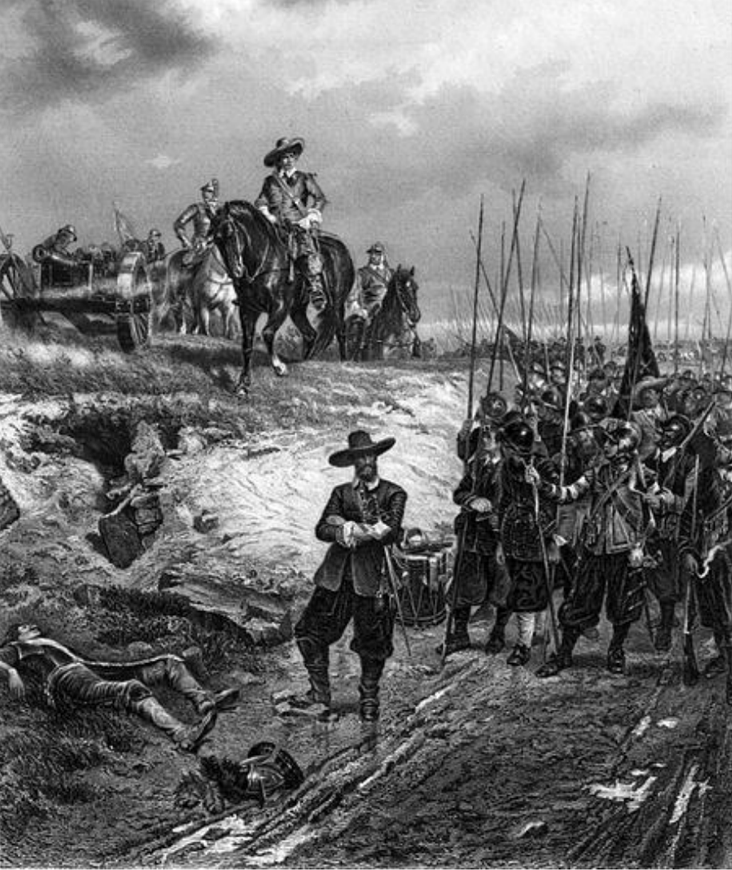
The city eventually surrendered in April 1652 after a nine-month siege. Coote took possession of Terryland Castle and lived there during this period, which is an indication of its prominence. He was a ruthless man and forced great hardship on the people of Galway. He became Mayor of Galway in 1658. He entertained many guests at the castle, among them Colonel Sadleir, the Cromwellian Governor of Galway. In 1660, Coote wrote to Charles II, who was exiled in Brussels, inviting him to return and be crowned King in Ireland. Times had certainly changed and so had Coote, as he was now showing strong royalist tendencies. Clanricade died in 1659 carrying with him sad memories of his lost home in Terryland. Shortly after the Restoration of the Monarchy in 1660, Charles II requested Coote to hand Terryland Castle over to Clanricade’s
widow. After obeying the royal command, Coote left Terryland and never returned. He died of Smallpox in London on 18 December 1661.
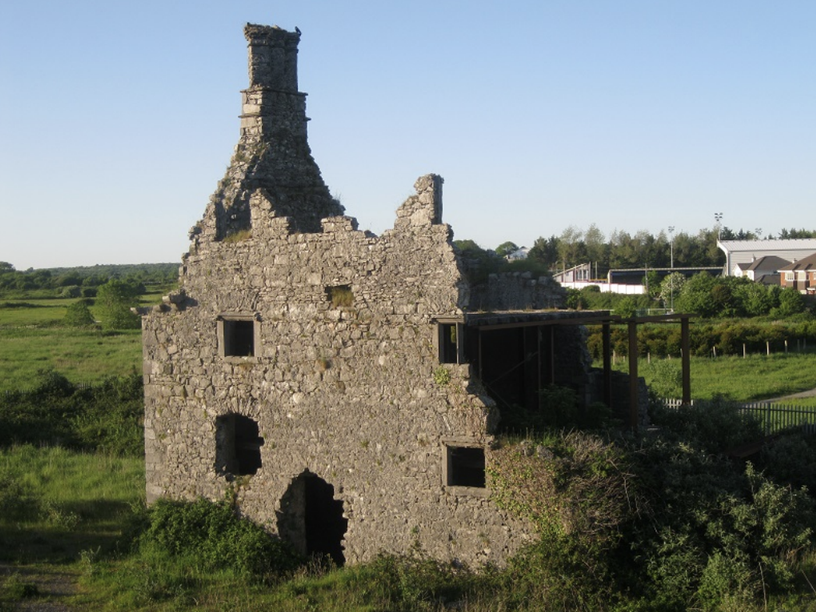
The end came for Terryland Castle in 1691 during the second siege of Galway. This time the city was under attack by the Williamite (William of Orange) forces. By this period the castle was owned by Lord Bophin (son of Clanricade). The castle was occupied by French Musketeers; they were supporting Clanricade and the Jacobite army of James II against the Williamites. On 19 July 1691, Terryland Castle came under attack from a strong party of Williamite troops. Under heavy and sustained fire the garrison soon realised that there was
little hope of defending the castle against an overwhelming enemy. They decided to evacuate the castle and move into the city, but before leaving the Musketeers burnt the castle rather than let it fall into enemy hands. It was a sad end for this truly historic castle and the last moments were thus recorded: ‘This ancient, castellated mansion, the residence of Lord Bophin, son of Lord Clanricade, and, from time immemorial, the residences of his ancestors, was soon enveloped in lurid sheets of flame and immense clouds of smoke ascended from the burning mass, which indicated to the inhabitants of the country for miles around, that the siege of Galway had begun’. The city surrendered on 21 July 1691 and this signalled dark days ahead for Galway.
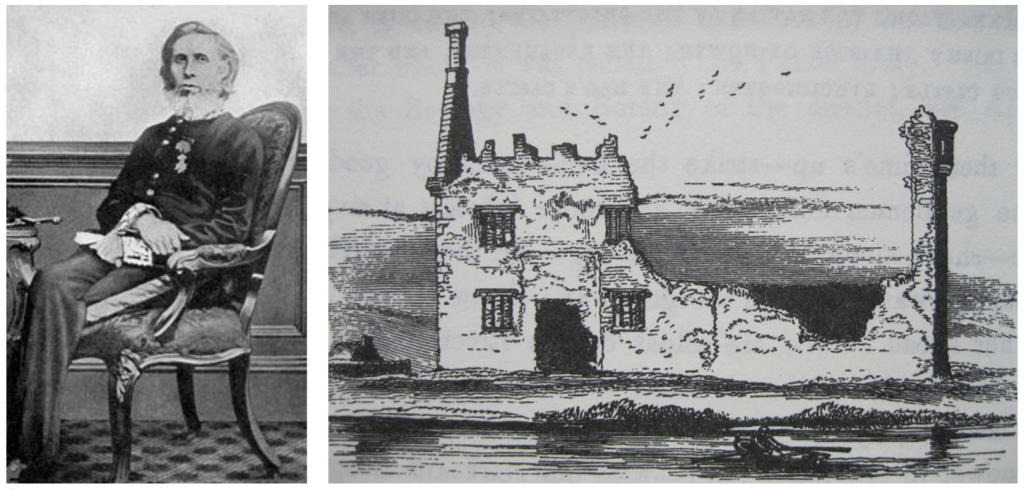
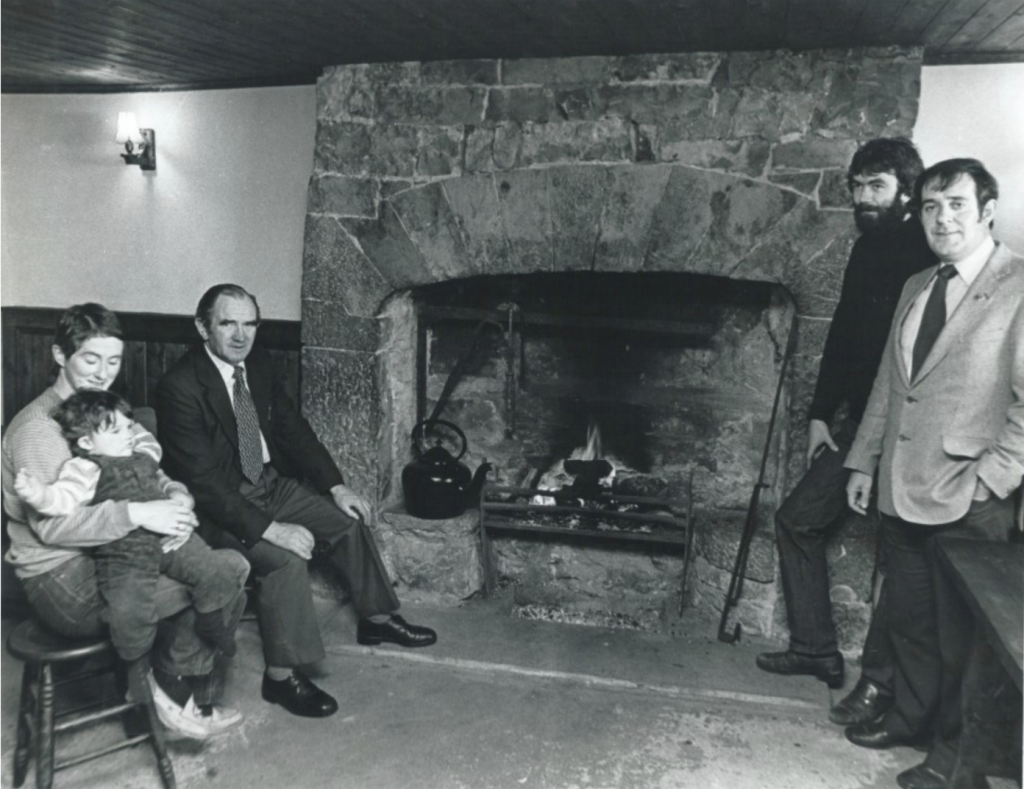
The ruins of the castle still stand as a reminder of a great and historic past. During the 1860s, Sir William Wilde visited the castle when writing his book, Wilde’s Lough Corrib. He recorded it as being one of the earliest locations of the Earls of Clanricade. He mentioned the river crossing and said the name of the area originated from this fording place – Tir Oillen (Ford of Oillen). He also said that the castle was erected to protect the river crossing from the O’Flaherty clan, who held much of the power in Iar Connacht. It was at Terryland Castle that the infamous O’Flaherty Rent was paid. Wilde mentioned that some carved stones from the castle had been removed and incorporated in houses in Bohermore. One of these items was a large stone fireplace, which found a new home in a house that would later become the famous Hogan’s Bar in Bohermore. Richard and Bridie Hackett, née Hogan were delighted to discover such a treasure on their premises and immediately highlighted its presence to the various historical societies.
A number of skeletal remains were discovered during excavations near the castle in recent years. Many people today hardly notice this old ruined castle; and most have no idea of the important role it played in the history of Galway. There is no doubt that Terryland Castle was one of the most important castles in Connacht with its wealth of history and, indeed, folklore. Thankfully, funding was provided by Galway City Council through the efforts of Councillor Frank Fahy to have some preservation work carried out to secure the castle. This really is an excellent project, and thanks to all concerned for the foresight in having this important work carried out.