Most sources indicate that the original Terryland Castle was built by Ulick De Burgo during the late fourteenth or early fifteenth century. The De Burgo (Burke) family were founders of the early town of Galway. They were one of the most powerful Anglo-Norman families in Ireland. The Castle was constructed at an important fording point on the river. The remains of the present castle have been dated to the seventeenth century. It was then owned by Sir Ulick Burke, Earl of Clanricade and many important guests from around Ireland and, indeed, Europe were entertained in the castle.
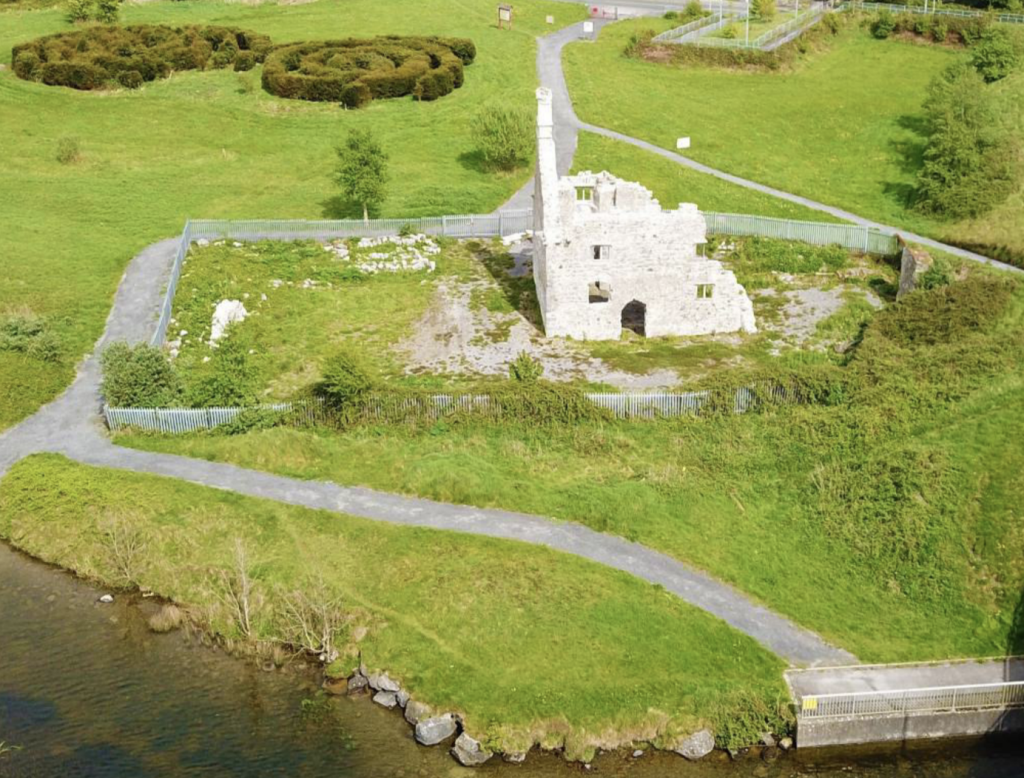
In 1651, the castle fell to the army of Oliver Cromwell. Galway was placed under siege. Clanricade and his men evacuated the castle and made their way into the city. It was then occupied by the Cromwellian Commander, Sir Charles Coote. Shortly after the Restoration of the Monarchy in 1660, King Charles II ordered Coote to hand Terryland Castle back to the Clanricade family.
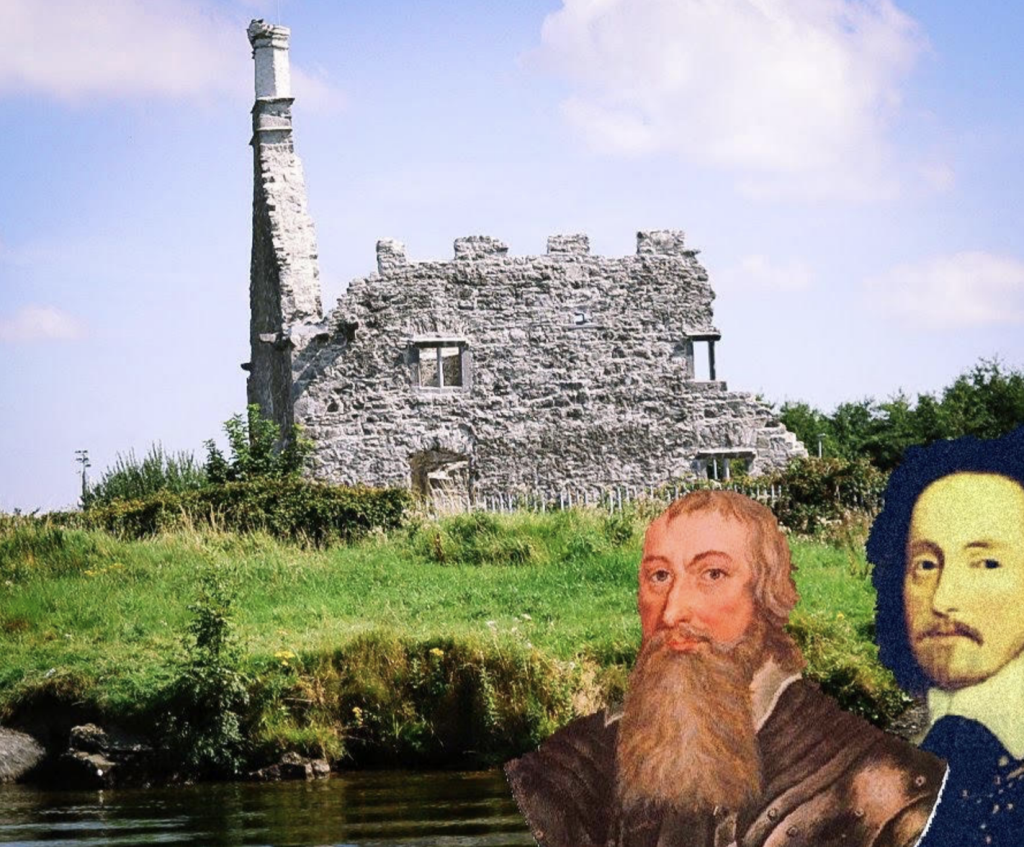
In July 1691, the castle was attacked again, this time by the army of William of Orange (Williamites). Clanricade placed the castle under the protection of a unit of French Musketeers who were supporting the Irish army of James II. Under heavy and sustained fire, the garrison soon realised there was little hope of defending their position against the Williamites. The Musketeers burnt the castle rather than let it fall into enemy hands and made their way down-river into the city. The castle has been a ruin since that time. It is interesting that a number of skeletons were found during excavations carried out to the rear of the castle in recent years. It is believed that these were the remains of English soldiers killed during the skirmish with French and Irish troops in the castle in 1691.
There are many stories associated with the castle; one of the most infamous is the tale of the ‘O’Flaherty Rent’. This account involves the local O’Flaherty chief swearing allegiance to the King of England. By doing so most of the native Irish population were able to hold onto their land; it was part of a ‘submit and re-grant policy’. O’Flaherty took the oath and his land was re-granted to him. However, he was obliged to pay an annual rent to an overlord appointed by the royal authorities, which was De Burgo of Terryland Castle in this particular case.
O’Flaherty had no intention of paying. One story mentions that when Henry VIII heard of their submission, he supposedly said, it wasn’t worth the paper it was written on as they didn’t give hostages as security. Some three years passed without the rent being paid and De Burgo became annoyed. He sent his son to the O’Flaherty stronghold at Aughnanure Castle near Oughterard to collect the money. Upon arrival the young man was admitted to the castle. He had arrived during a banquet and was invited to join the feast. The young man was delighted with the rich food and wine laid out before him. The hall echoed to the sound of the finest musicians and singers of the day. De Burgo was seated in a place of honour, close to his host, the O’Flaherty chief.
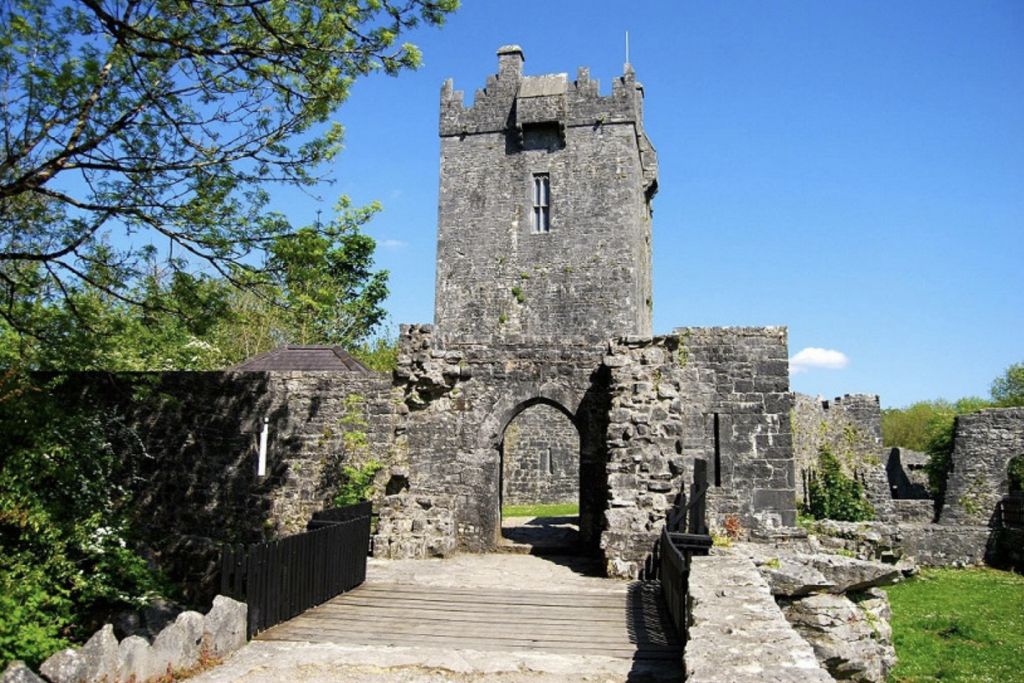
At some point during the banquet, De Burgo requested the rent that was owed to his father. The O’Flaherty chief was insulted and said, ‘If its payment ye want, ye will have it’. The young man was pleased with himself until his host, rather than produce the money, pulled a leaver under the table, which was used to remove unwelcomed guests quickly. De Burgo disappeared from the hall, falling through the trap-door, known as the ‘Flag Stone of Treachery’. De Burgo landed in a shallow river beneath the banqueting hall and O’Flaherty sent his men down after him. They killed the stunned young man; cut off his head and placed it in a sack. O’Flaherty and his men then rode through the night until they reached Terryland Castle. As they crossed the river on that bright moon-lit night, a sentry at the castle called out asking the purpose of their business. O’Flaherty identified himself; and threw the sack over the wall landing at the feet of the sentry and said, ‘Give this to your master and tell him it’s the O’Flaherty Rent, paid in full with interest and arrears’.
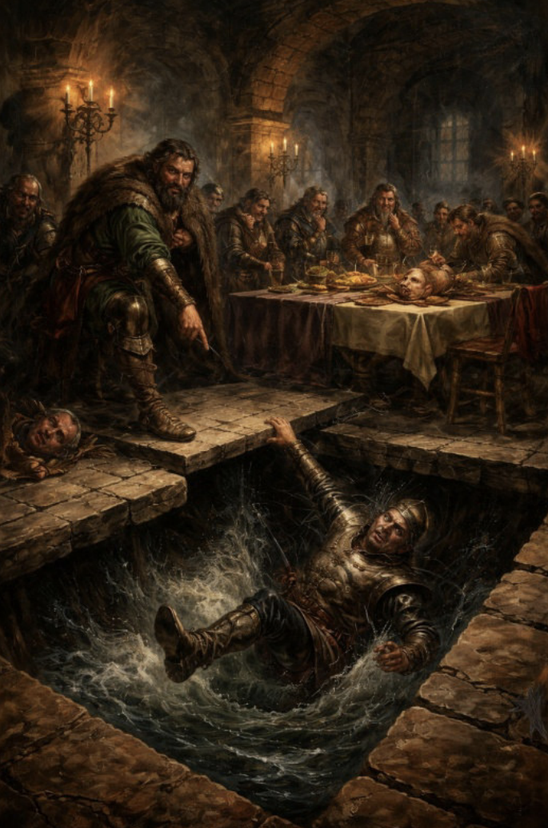
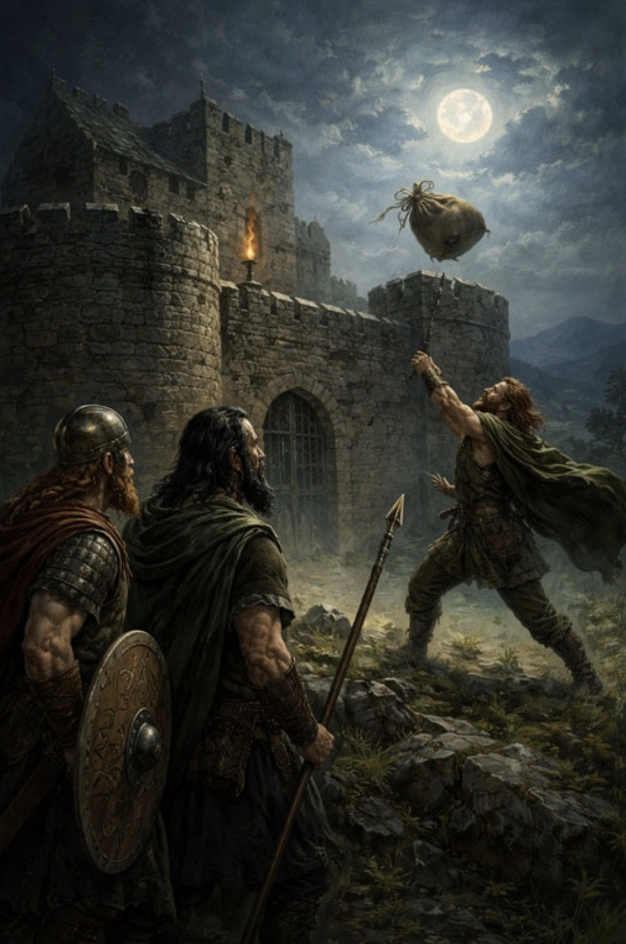
O’Flaherty and his men then rode back to Aughnanure. Meanwhile, the guard took the sack to his master and informed him that it was the rent from O’Flaherty. De Burgo was pleased thinking that he was paid at last, but wondered why his son hadn’t brought the rent himself. He didn’t have to think about this for very long. Upon opening the sack, he cried out in horror at the sight of the blood-stained head of his son. According to the story, De Burgo became extremely fearful for his own safety and moved away from Terryland and never returned.
The O’Flaherty clan were notorious and ruled much of Connemara during this period. They were feared throughout Connacht and certainly earned their reputation in the story of the ‘O’Flaherty Rent’. According to another legend there was a plaque erected over the Great West Gate leading into the city of Galway with the following inscription:
“From the Ferocious O’Flaherties Good Lord Deliver Us”.