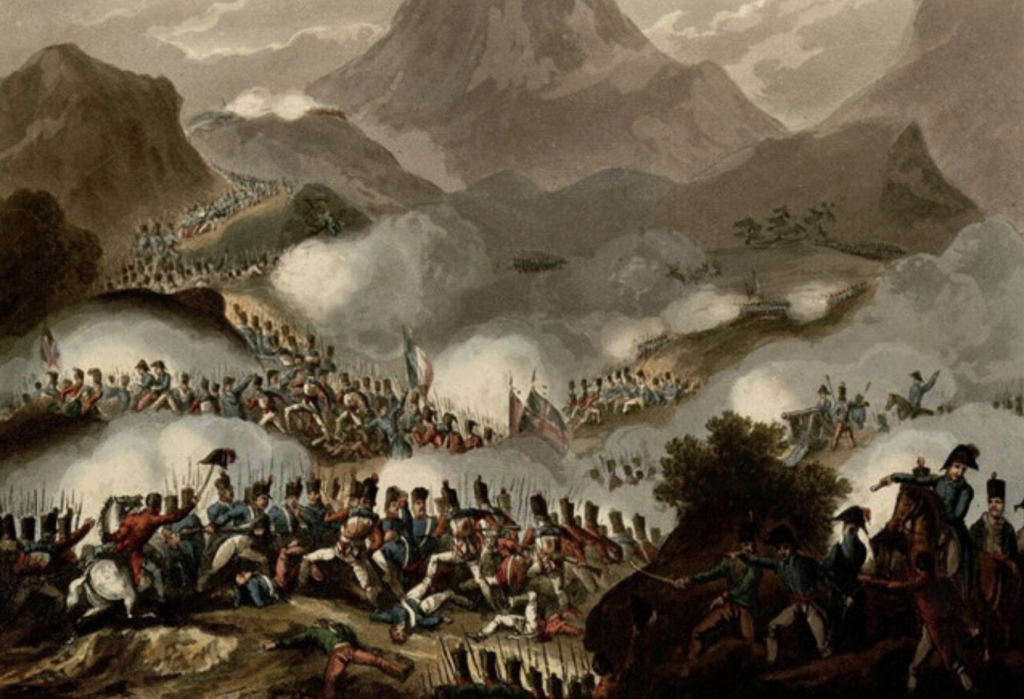
Time and again the Connaught Rangers proved themselves one of the toughest regiments in the Peninsular campaign. However, they are not always given credit as an Irish regiment. In some books they are referred to as the 88th English, rather than the 88th Connaught Rangers. French losses in Portugal had changed things somewhat and forced them back into Spain with the allies following them closely. While the British, Portuguese and Spanish experienced some victories in 1811, they were far from controlling the situation or fully defeating the French. In order to do so, they would have to take the French held border-lying fortresses at Ciudad Rodrigo and Badajoz. Wellington’s advance. into Spain depended on these fortifications being eliminated. The beginning of 1812 saw the British massing before Ciudad Rodrigo, but it was going to prove difficult to take. Ciudad Rodrigo is a small cathedral city in the Province of Salamanca in western Spain.
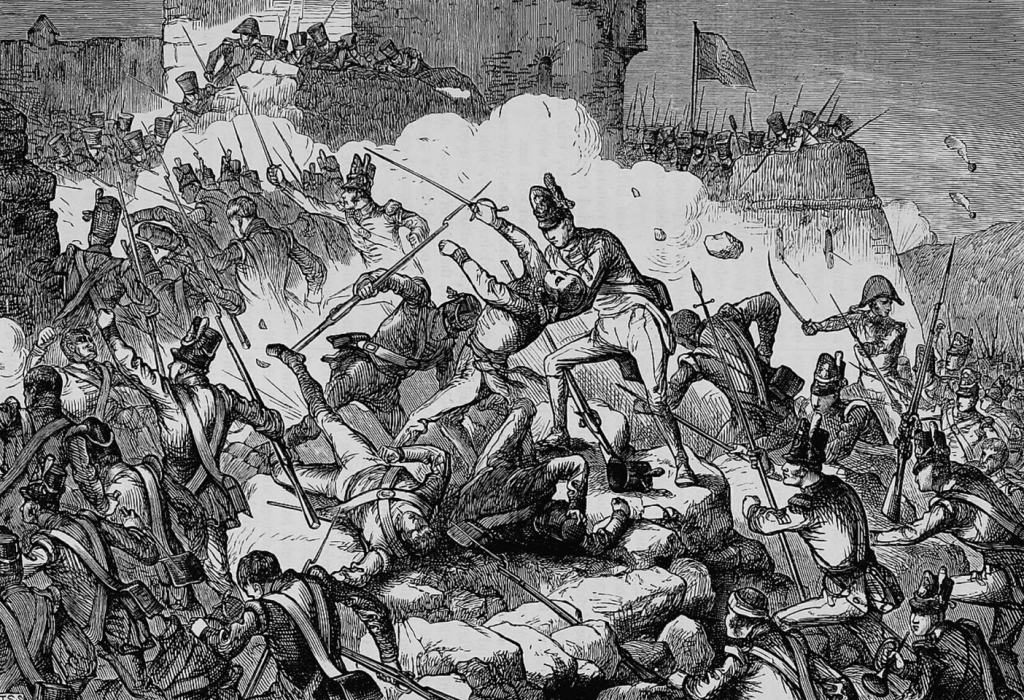
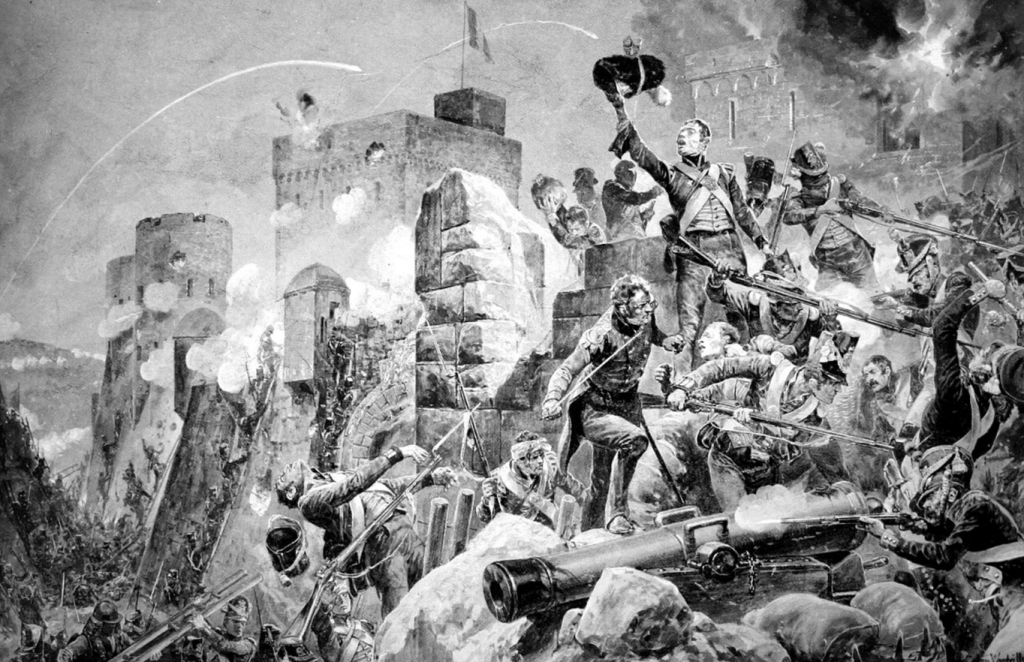
The storming of Cuidad Rogrigo took place on 19 January 1812. The town had formidable defences, but during the siege some breaches had been made in the walls. However, it would still prove difficult and costly to successfully force a French retreat or surrender. A young Ranger officer, Lieutenant William Mackie, volunteered to lead a party of the 88th through the main breach in the walls of the fortress. This meant almost certain death for these men as they were assured a ‘hot’ reception from the French. Twenty Connaught Rangers volunteered for the initial attack, after which, the entire Third Division would be thrown into the assault. Prior to the attack, General Picton addressed the 88th and began by saying, ‘Rangers of Connaught! It is not my intention to expend any powder this evening. We’ll do this business with the cold iron’, it would be a full bayonet charge. The men were lined up in grim silence awaiting the order to advance, then at a signal, they rushed forward through a hail of iron grapeshot towards their objective. The whole division were soon involved the attack, and despite appalling losses, they continued to swarm towards the breached wall. During the action, a magazine ‘dump’ exploded killing some 300 French and British soldiers.
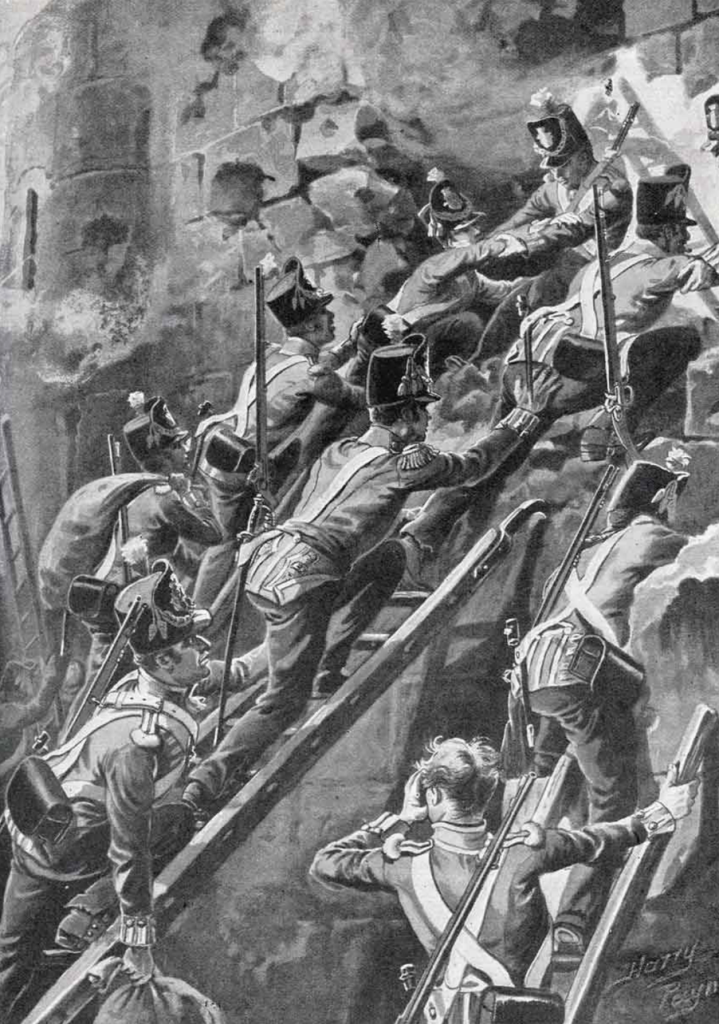
The French were holding the breach with a single 24 Pounder cannon. The five man crew ‘raked’ the British lines with terrifying fire leaving many more dead and wounded. This gun emplacement would have to be taken if the siege was to be successful. The challenge was taken up by three rangers, Sergeant Pat Brazil, and two others named, Kelly and Swan. There was a deep entrenchment between them and the French position. Brazil ordered Kelly and Swan to down their muskets and armed only with bayonets; the three men leaped across the trench and threw themselves onto the French gun crew and slaughtered them in minutes. Swan lost an arm with a powerful sabre stroke in the murderous hand to hand combat which took place. There was huge cheering from their comrades when the breach was carried. At one stage during the battle, Lieutenant Mackie went missing. Later, when the cavalry returned from action, Mackie was among them, covered in blood and dust, his horse trotted slowly from fatigue and there was nothing left of his sabre, but the hilt. It seems that after the infantry attack had ceased, he joined the cavalry in their action; it was said that not even the chilling sights he witnessed could ‘damp his daring spirit’.
The Rangers next action was at Badajoz, the capital of the Province of Badajoz in the autonomous community of Extremadura in Spain. The town is situated close to the Portuguese border, on the left bank of the River Guadiana. The storming of Badajoz took place on 6 April 1812 and in a ‘murderous attack’ by the Rangers and their colleagues, they took the fortress loosing many men in the process. One of the Connaught Ranger officers involved in this action was Robert O’Hara of Raheen House, near Gort. He was of the same family as the O’Hara’s of Lenaboy Castle on Taylor’s Hill. There is a memorial to him in St. Nicholas Collegiate Church in Galway, which records all of his battle honours, including Badajoz. The men who arrived before Badajoz were already battle hardened troops; they had fought bitterly for every inch of ground and the war was a long way from over. It was reported that the Band of the Connaught Rangers accompanied their comrades and played a number of tunes as the storming of the fortress was taking place, one of the tunes being Mavourneen Deelish (A traditional Irish phrase of endearment meaning ‘My Dearest Darling’).
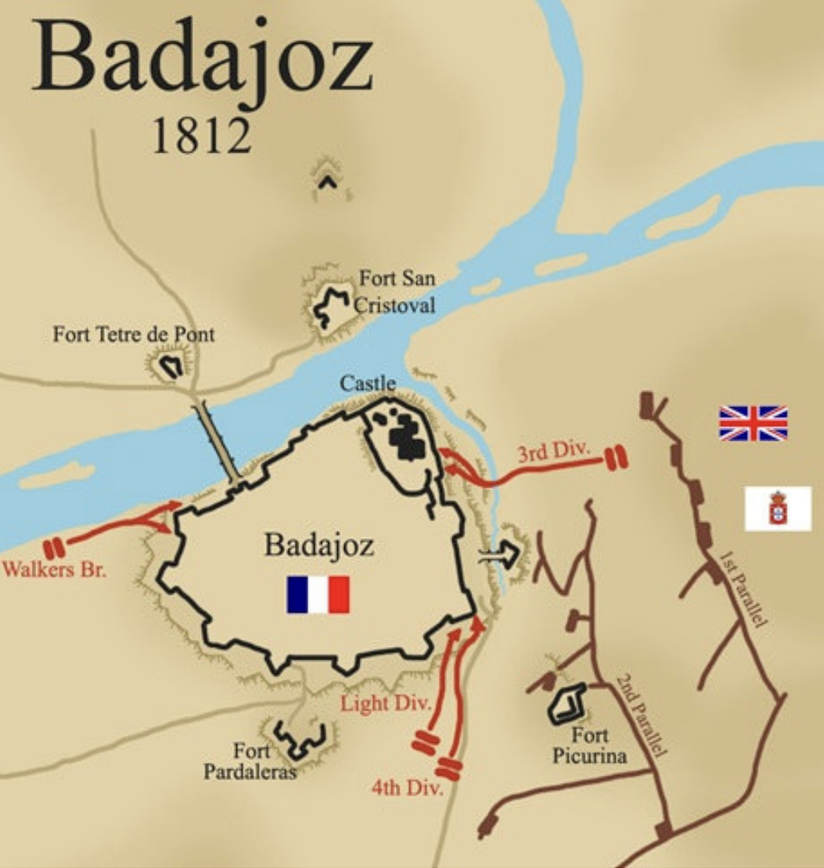
The successful assault on Badajoz was followed by mass looting and disorder in the town as British troops began drinking. This resulted in brutal attacks on civilians of all ages, many were murdered some raped, or both. Homes were broken into and property vandalised and stolen. It was almost three days before order was restored. One officer described the atrocious behaviour, ‘The infuriated soldiery resembled a pack of hell hounds vomited up from infernal regions for the extirpation of mankind rather than what they were but twelve short hours previously – a well-organised, brave, disciplined and obedient British Army’. Despite this callous disregard from human life or the rights of civilians during the ‘sacking of Badajoz’, certain historians defended the British soldier’s conduct, by arguing that the aftermath could not have been avoided considering the ferociousness of the battle. Some stop just short of saying that these men were justified in their crimes because of what they had suffered during the siege. However, these people tend to forget that there was slaughter on both sides; and Badajoz was defended by 5,000 French troops, who were ‘under attack’ by over 20,000 British troops. Many of the people murdered in Badajoz were Spanish, under occupation and not enemy combatants. These were the very same people that the British were supposed to be liberating? These were war crimes and should be remembered as such. With regard to the Rangers in Badajoz, apart from drinking, they don’t appear to have been involved in the mayhem.
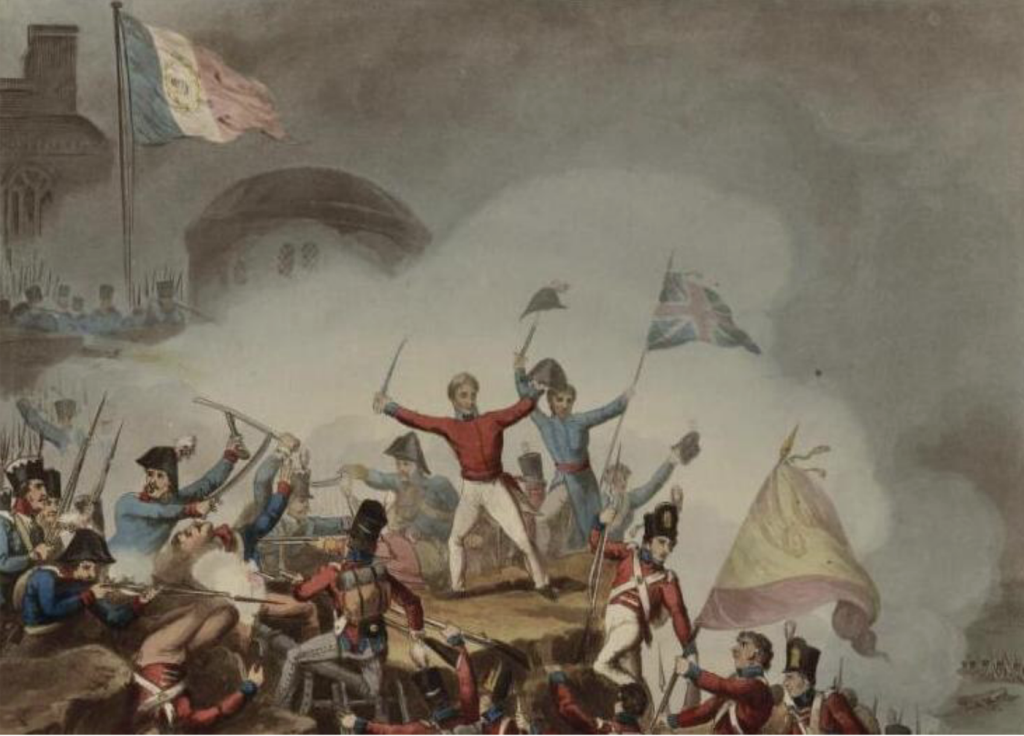
One of the battle honours withheld from the Rangers during the campaign was the Pyrenees. The Battle of the Pyrenees was actually a series of engagements fought during a French offensive that was launched by Marshal Soult on 25 July 1813. Its purpose was to relieve the French garrisons that were under siege at Pamplona and San Sebastián. After initial success the offensive stalled in the face of determined Allied resistance and Soult abandoned his attacks on 30 July. During the battle, the 88th Connaughts lay behind a low ditch waiting for the French advance which was sure to come. One record states that ‘They came on in gallant style, headed by their brave officer, who was most conspicuous, being several paces in front of his men’. When they were within firing range, both sides engaged, but after a short time the French fled from the field leaving many dead and wounded behind, including their commanding officer. His outstanding courage was admired by the allies resulting in Captain Robert Nickle of the Rangers rushing forward to the bleeding French officer, to render him assistance. Nickle tied a white handkerchief to the point of his sword and holding the weapon in the air, he walked towards the French lines. He spoke with the enemy soldiers and assured them that they could remove their wounded officer from the field in safety. The French soldiers, unarmed, returned and carried their commander over to their lines. While it was described as a great act of gallantry, it was obviously frowned upon by the British senior
command as the Rangers were not allowed to wear the service badge or colours of the Pyrenees action after the war. However, in 1911, the British high command granted the Connaught Rangers the battle honours of the Pyrenees.