Pat McPhilbin is a creature of the night. For nearly four decades he has ensured that when the sun rises on the streets of Galway, the lives of its citizens will be brighter and cleaner for his largely unseen presence.
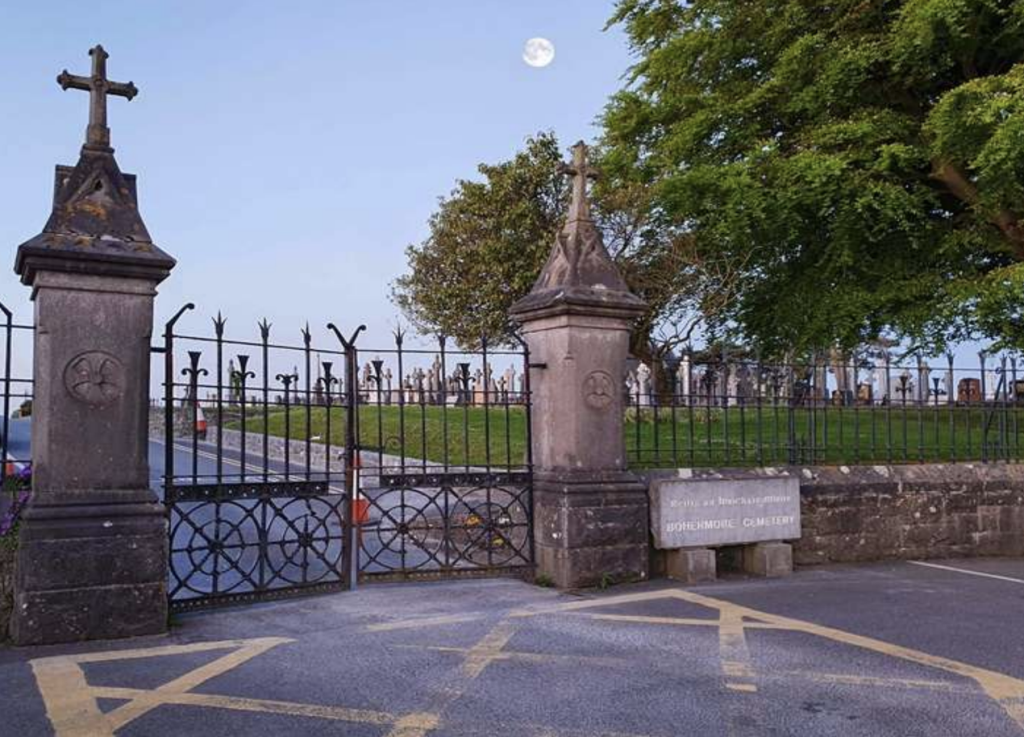
Pat used to start his workday at the gate of the New Cemetery, Bohermore, up by the Huntsman Hotel, at 4:45 am every morning. Similar to most Galwegians, Pat is lively and affable company when he’s in the land of the living. But he’s equally at home in the deathly quiet of the night among those citizens who rest in peace.
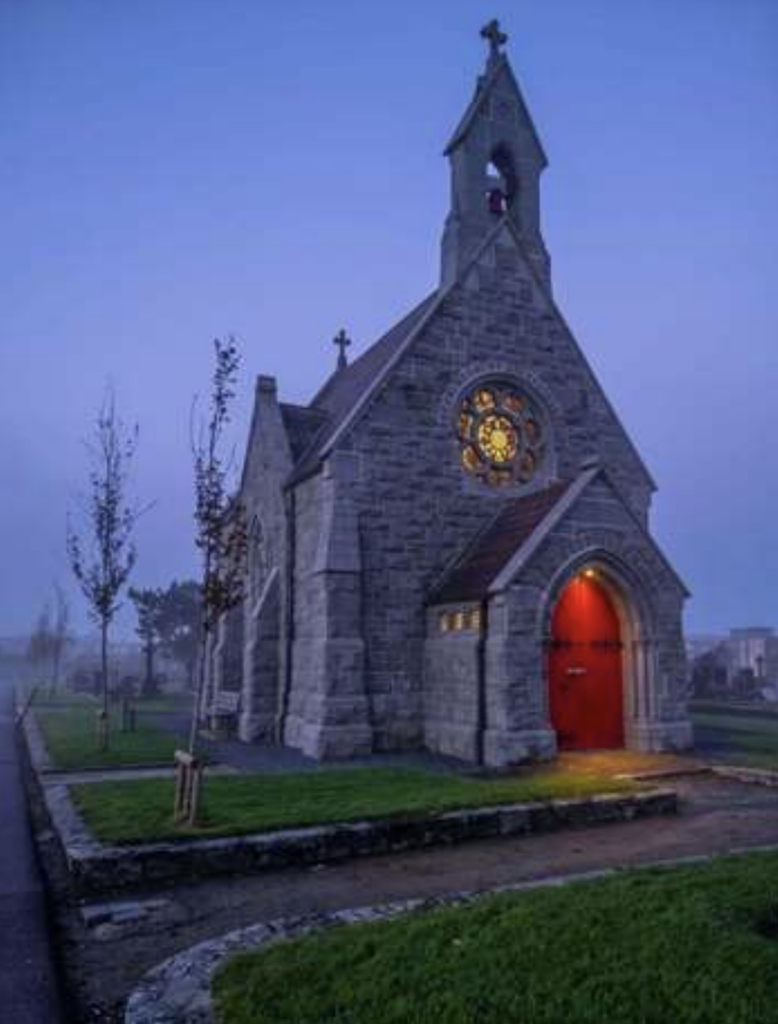
The New Cemetery, for outsiders not yet adjusted to the more medieval notion of Galway time, is 146 years old. It now holds over 100,000 souls. That’s a fair few more than the still-vertical townspeople (86,910 at last count), who make quite the mess each night down nearer the city; Pat’s job for the last for 37 and a half years—before retiring on May 27 this year—was cleaning the streets of Galway of their all-too-human debris.
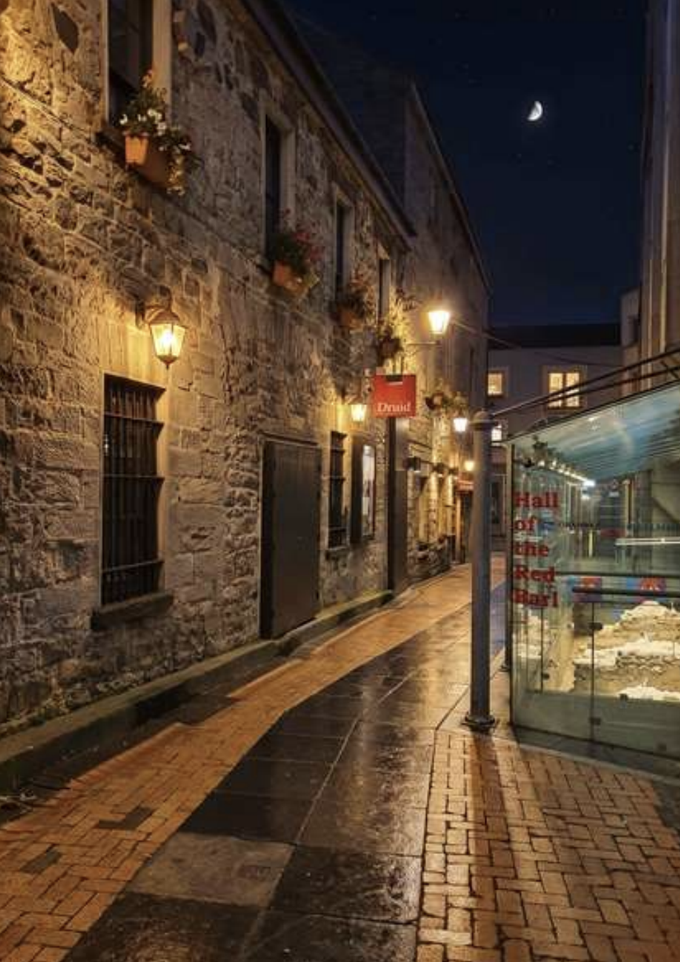
During those years Pat became convinced that certain residents of Galway’s cemeteries would also take the odd stroll around town in the wee hours. Working through the night, Pat came to recognize the many shades at play at night in the City of the Tribes.
And as anyone who knows their history will tell you, Galway is a city full of ghosts.
In Mairtin Ó’Cadhain’s great yarn, Créna Cille, the dead spend day and night gossiping about each other in a Connemara graveyard; in Pat McPhilbin’s world, the modern-day shades get out and about among the living much more. Listening to his tales of the night is hugely entertaining; but it’d scare the living daylights out of you at times.
“There was an old man who used to walk his dog by the New Cemetery early each morning, and we’d chat now and then,” says Pat. “He told me the dog took a real turn one morning, with the hair on his back stood on end, and him barking wildly at a gravestone—going mad he was.”
He then recounts a similar hair-raising incident that Pat himself felt when two black shadows passed over him as he sat praying alone at the back of Galway Cathedral; the energy around him changed, and the hair on the back of his neck stood up. When he mentioned this to Galway’s Own editor, Willie Henry, the local historian remarked “Of course there’d be ghosts everywhere on that land. Sure, wasn’t it the site of the old gaol before it was ever holy ground?”
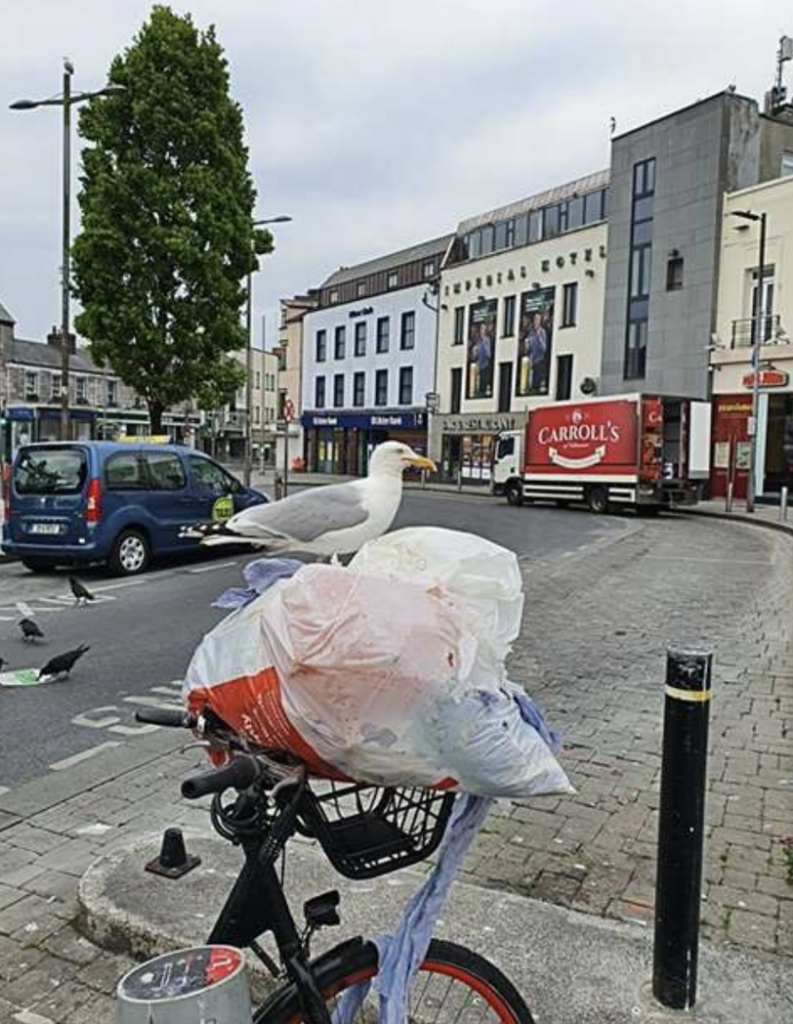
After gathering at the New Cemetery, Pat and his 11-man Litter Management Unit of Galway City Council would move down past Bohermore Road, along Prospect Hill, where the litter of the night before would blow through the streets and the work would begin. They’d sweep clean the eastern outskirts of the City Centre and then move into the LMU’s main battleground of litter and human detritus, Eyre Square. There, they’d clean the full square, including taxi ranks, where seagulls would arrive before the crew to claim any edible human droppings before the sweepers did their work.
The bane of any Galway street cleaner’s life are the seagulls. “They are great timekeepers,” acknowledges Pat. One of the winged demons took the breakfast sandwich right out of his hands one morning. But another time, he recalls, a wealthy guest of the old Great Southern Hotel presented Pat and his crew the remains of a mighty fry-up which had been barely touched. “Those were the days when you wouldn’t waste food,” he recalls.
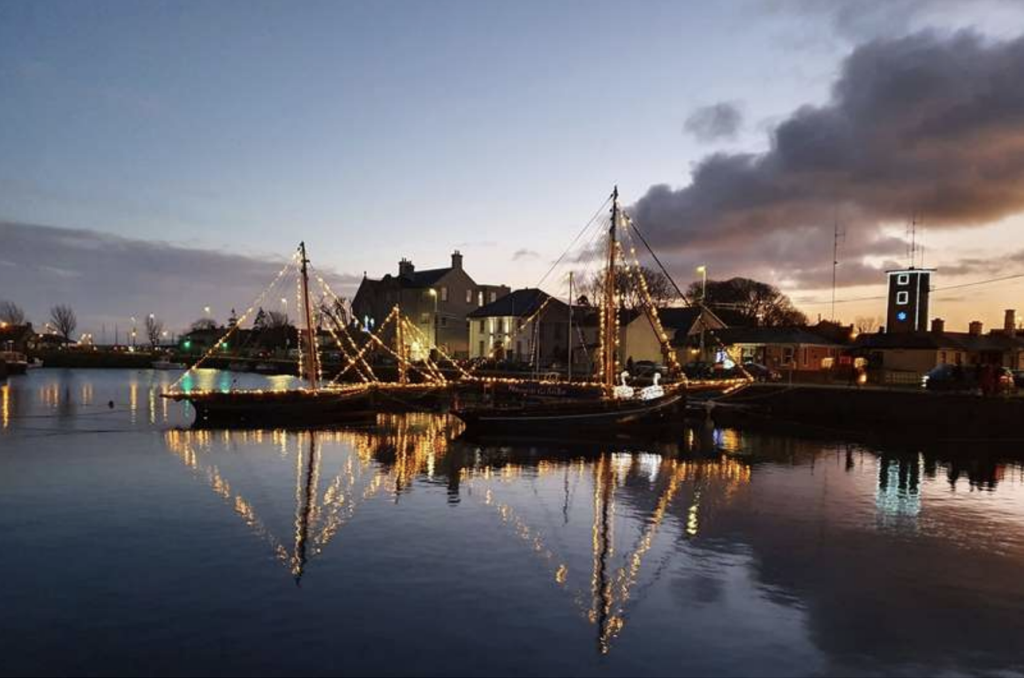
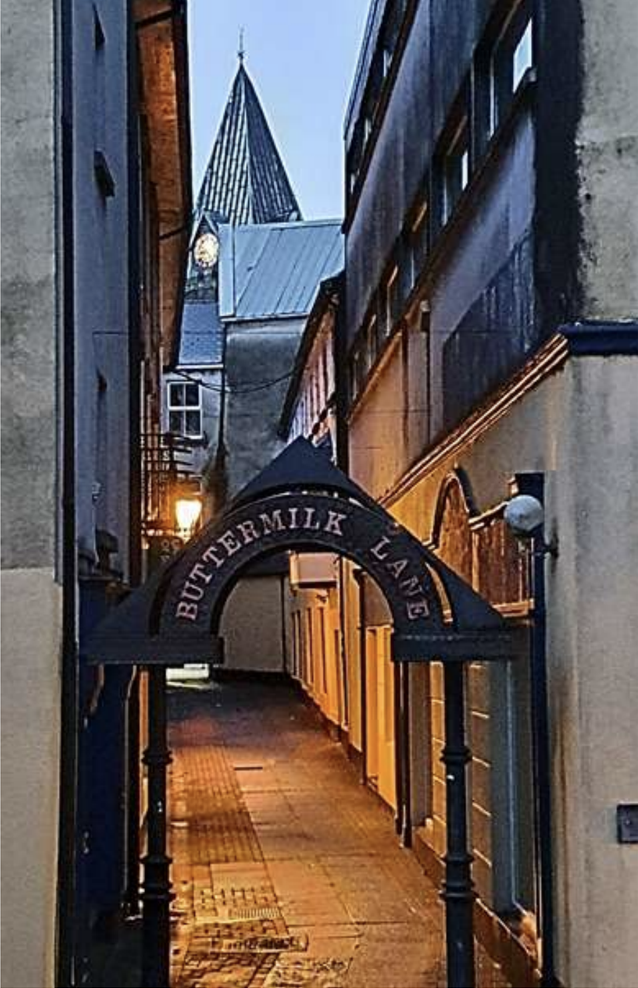
From Eyre Square they’d proceed down toward the Latin Quarter, where the waft of vinegar on discarded chip bags would be followed by the fishy aroma drifting down the River Corrib from the fisheries. The crew moved through Woodquay, before the salt air of the Claddagh would herald the end of another shift at 9:30 a.m. Another working day spent serving the city he dearly loves: The McPhilbins have long served their hometown. Pat’s forefathers were firefighters and Galway Corporation employees. “This city,” says Pat, “is in my DNA.”
Although Pat has a nod and a greeting for everyone, there was little time for idle chatter on the job. Pat’s crew had to clean certain streets before the buses started clogging them up, and the daily commute began in earnest. We timed everything to within 5 minutes, says Pat, “it was like a military operation, implemented with great precision daily.” Times have changed, and the notion of time itself has changed so much, even from his parents’ time, Pat reflects.
“Yes, those were different times, my parents’ time” he muses. “There was something almost Dickensian about Galway back then: In my father’s house growing up, they had no clock, and if my grandfather had an early start, he would give the town crier a shilling to tap on his window. My grandmother would occasionally stick her head outside to peer at the clock on St Nicholas’ Collegiate Church.” Pat’s favorite parts of Galway are still around Bowling Green, where his father hailed from, and where he grew up.
He recalls, as a child, standing in Sally Long’s Bar staring at the donkey that would be brought in out of the rain. Nowadays, a Harley-Davison is proudly mounted in the bikers’ bar that Sally Long’s has become. “The inevitability of change is something we all learn to live with, I suppose,” says Pat. But he has used his time working on the streets to not only observe such change but to document it in photography as well.
The narrator of Ivan Klima’s novel about Prague before the fall of the Iron Curtain, Love and Garbage, muses that when he took the job of cleaning that city’s streets, he “thought that I would gain an unlikely view of the world.” Pat admits he had no such expectations. Having taken the position as a stopgap measure between other jobs, he decided he’d give it a week or two.
After a week, he realized that he’d fallen in love with the work. He loved the sense of purpose the job gave him and the camaraderie of the crew. He also loved the solitude of the work; loved moving through the streets of his city, cleansing them, readying them for the workday ahead. And… he did end up getting a most unexpected view of human nature from cleaning the streets of his hometown.
He considered the streets his university of life, where he took an alternative degree in Sociology without ever setting foot into the University of Galway. Michael D. may have lost a diligent student in this bargain, but Galway gained a wonderful worker and a real ambassador for the City of the Tribes.
Pat had happily stumbled into his calling, and onto his life’s path. Spend half an hour with Pat McPhilbin and you’ll not just hear great Galway stories, but you’ll view photos that illuminate them as well. Photography grew into a passion that Pat managed to combine with his job. As he moved through the city in the early- morning hours, Pat would note sites worth revisiting later to capture in colour when the black shadows of night had lifted at the end of his shift.
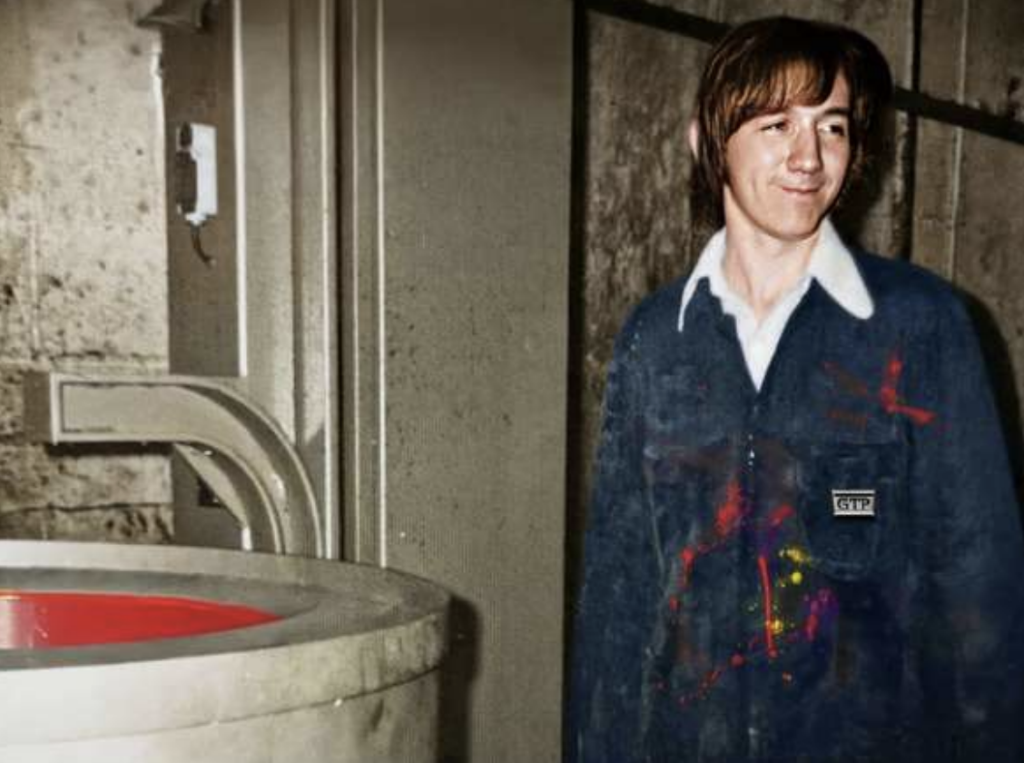
Pat’s photographic eye for colour and composition first blossomed in an earlier job. In his teens he became a qualified colorist at Galway Textile Printers, overseeing the washing, spinning, and weaving of materials with intricate patterns. These would be sent to London for tailoring, and for many years Pat would see those designs with his colours on fashionable women walking around town.
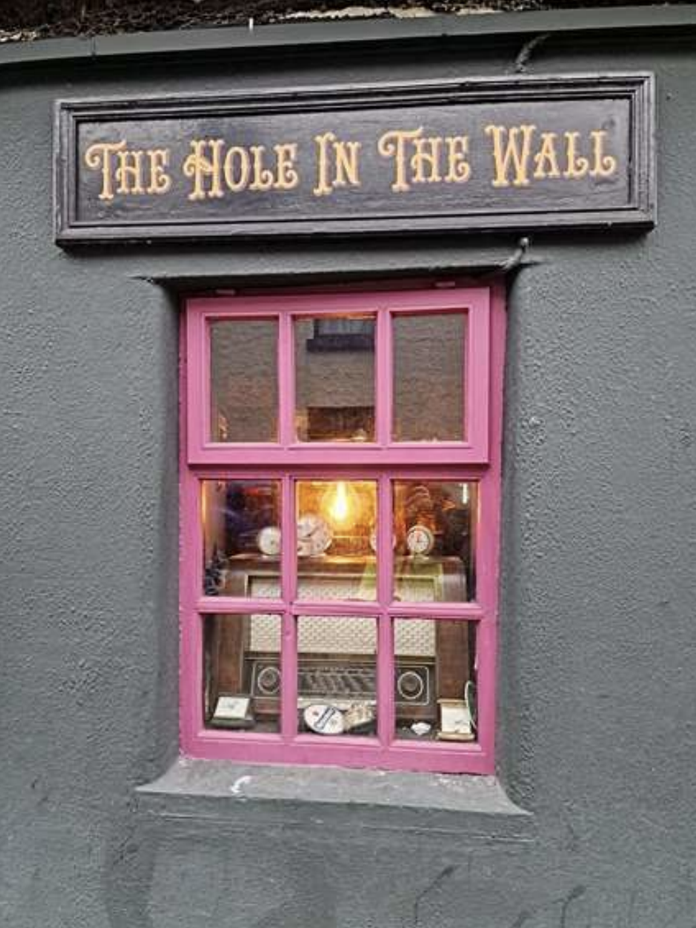
Pat started his working life in the old Lydon’s Bakery at a very young age, and amazingly, on his last day sweeping the streets of Galway last May, he realized he had finished his round right outside the very same building. A working life’s circle had been completed.
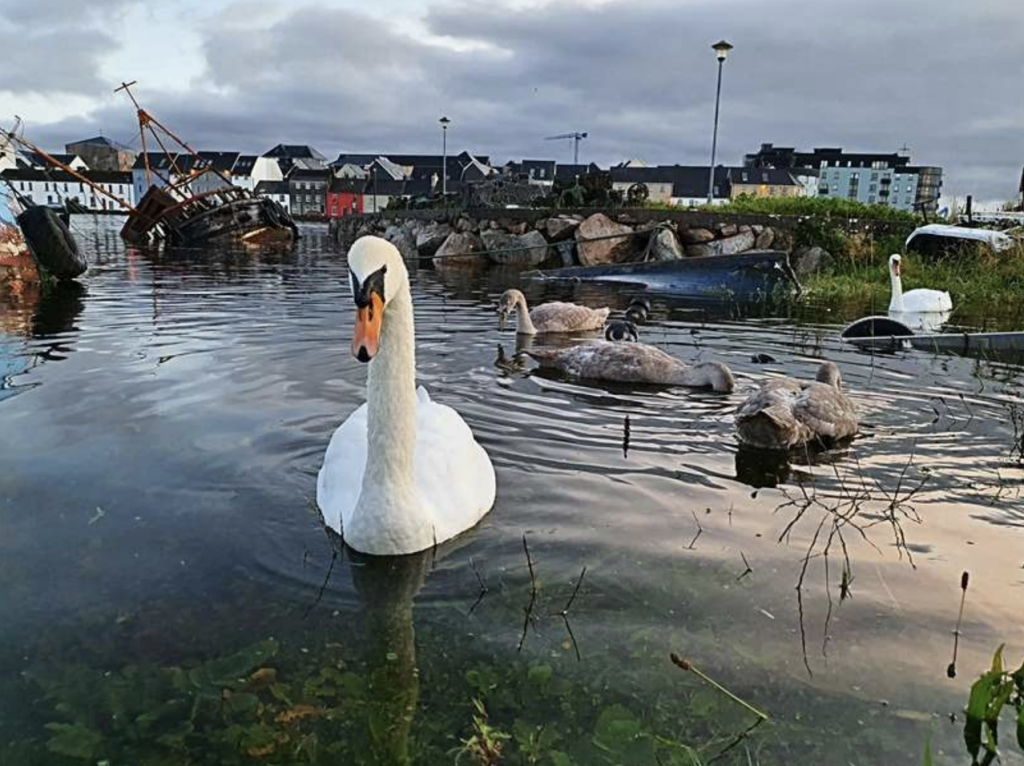
“How times change,” he reflects. “When I started out with the council, we used to have one transit van; we had over 100 when I left. Up to 1996, we were still using a wheelbarrow, two steel bins, a brush, and a shovel, would you believe?”
During that time, Pat also became a keen observer of the social changes happening all around him. Once the crew were moving, he would put his classical music on the headphones and happily sweep the streets to the glorious movements of Strauss’s Blue Danube.
“It was quiet in the late 1980s,” he recalls, you had silent streets at night which would bring up some very deep thoughts once you got into your routine. You’d be prayerful, thinking about the night ending and the new day dawning.”
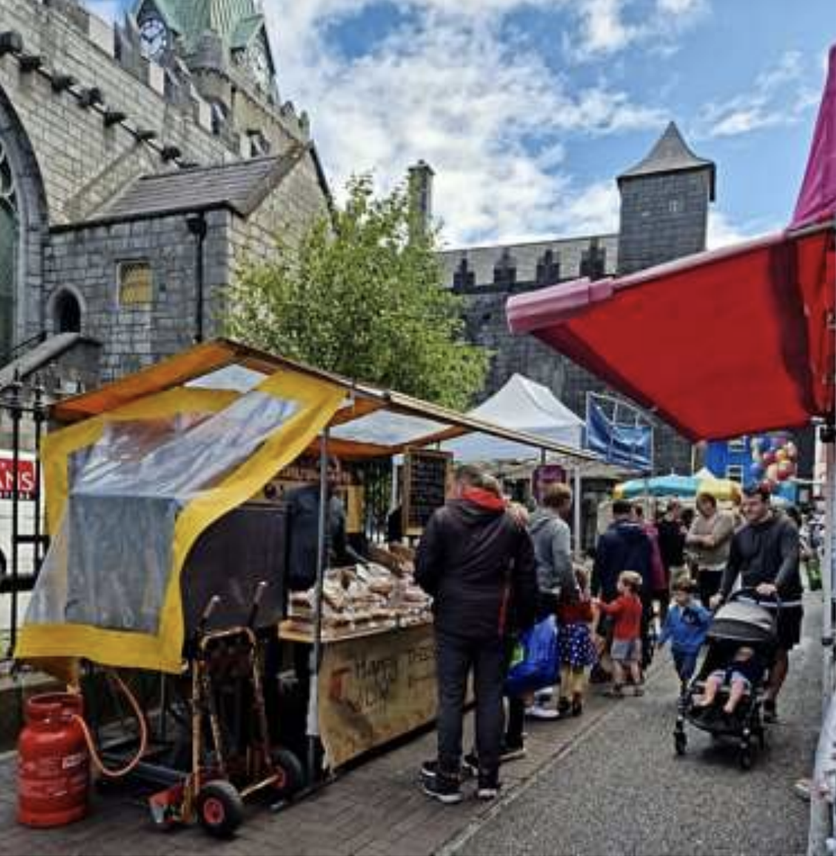
“Then came the noise. The 1990s were busy,” he says, “and you’d be on your toes, as cement trucks went rushing by to building sites around Galway, well before dawn.”
He recalls those Celtic Tiger years and the changes they brought: “You’d be emptying almost-full bottles of Jack Daniels down the drain. People lost the run of themselves, I suppose, with the amount of money slushing around.” He once found a wallet with over €1,000 in it. He knew the owner and took it round to his house after his shift.
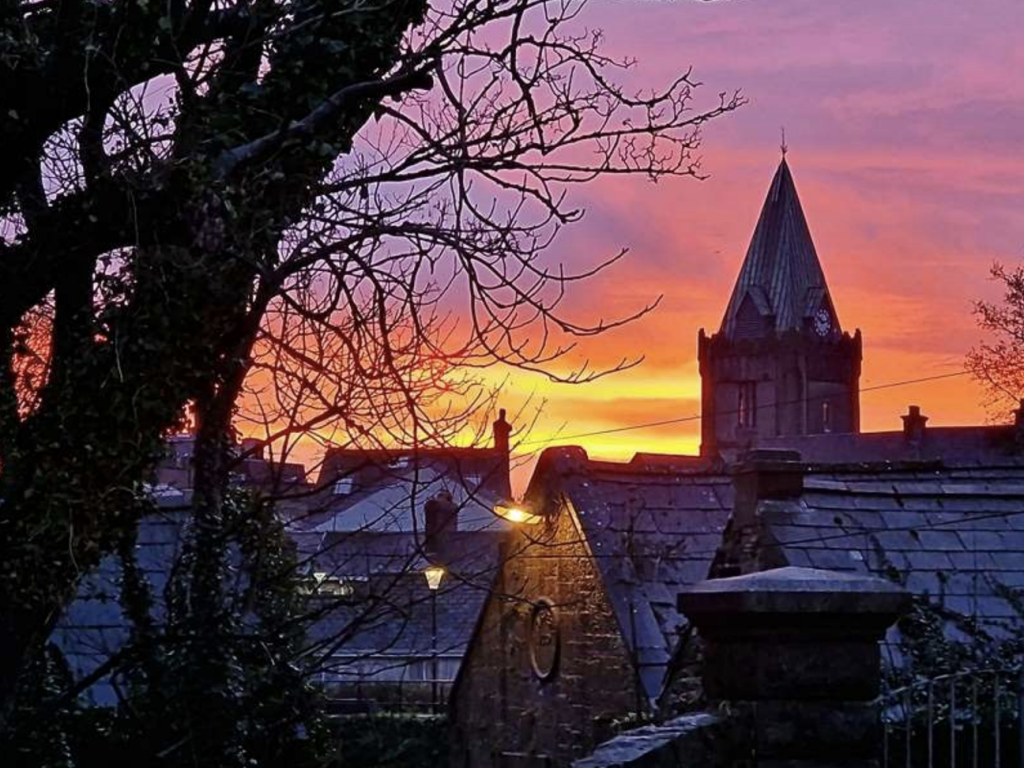
He witnessed the easy-come, easy-go spending in the hundreds of discarded jumpers they’d collect each year the morning after Christmas Jumper Day. He watched the culture change: his mother was bewildered by the news that people now sat outside and drank coffee in the morning and even bottled water— IMAGINE THAT: paying for water in this rain-tormented town!
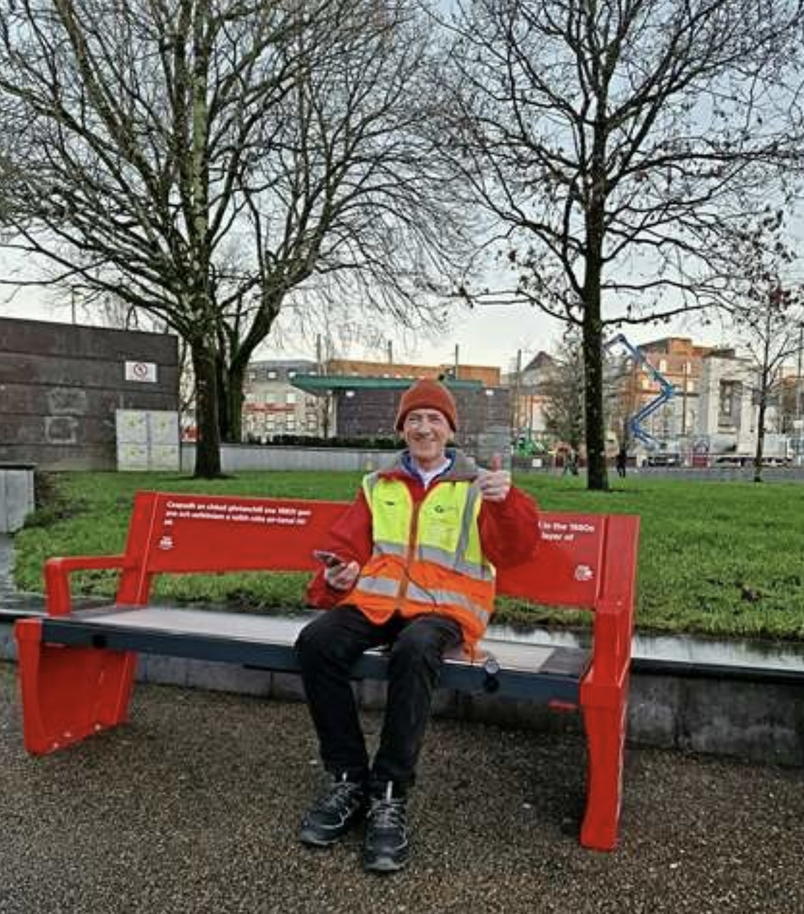
Then came the bust, then the slow recovery, and then, of course, came Covid-19. “The pandemic really changed the social life of the city”, says Pat. “Not being able to greet people close-up was very strange.” Galway must be one of the most sociable places on Earth, and the very notion of “social distancing” was a contradiction in terms for most of its citizens. He remembers feeling very isolated one particular day feeling the pain of people, especially the elderly, who would be forced to keep their distance on the street.
“We all really need a good chat, now and again,” says Pat. And then he had a moment of communion with a black Labrador dog that lifted his spirits. “He seemed to come out of nowhere on Nun’s Island; I’ve often wondered where his owner was? That lovely dog, smiling up at me with his tongue hanging out and his tail wagging really saved my sanity that day,” recalls Pat. “I says to him, ‘you and me can talk all day, can’t we, boy?’”
Galway was a real ghost town in those pandemic days: Pat recalls a funeral in the Protestant Church downtown (St. Nicholas’). He stopped in to just pay his respects from afar. “There were six people dressed in black and it could have been a scene from a medieval church, just the six of them in black, standing there to give the poor soul a sendoff from this world, where they probably knew hundreds.”
Once on the way home from school, he ventured into St. Nicholas’ Protestant church. The door was open and Pat went in for a look around. He found it a bit scary, as it was a whole new experience for him. However, now as an adult, it is one of his favourate places to visit, especially at Christmas.
This was something that wouldn’t have been done in his mother’s time; another sign of how things change.
“But no, I went in there as a mark of respect for the recently departed,” he says.
Pat, as noted earlier, has a real affinity with Galway’s people, the living and the dead. He was often comforted on winter’s nights on the job, thinking that the wind howling through the streets was the sound of Galway ghosts come to keep him company. They’ follow him now and then, like the shade that crossed his path in Flood Street one dark morning, then disappeared. Pat is at home around the ghosts of Galway. “They are probably at home around me too,” he adds, “I’m a bit of a loner.”
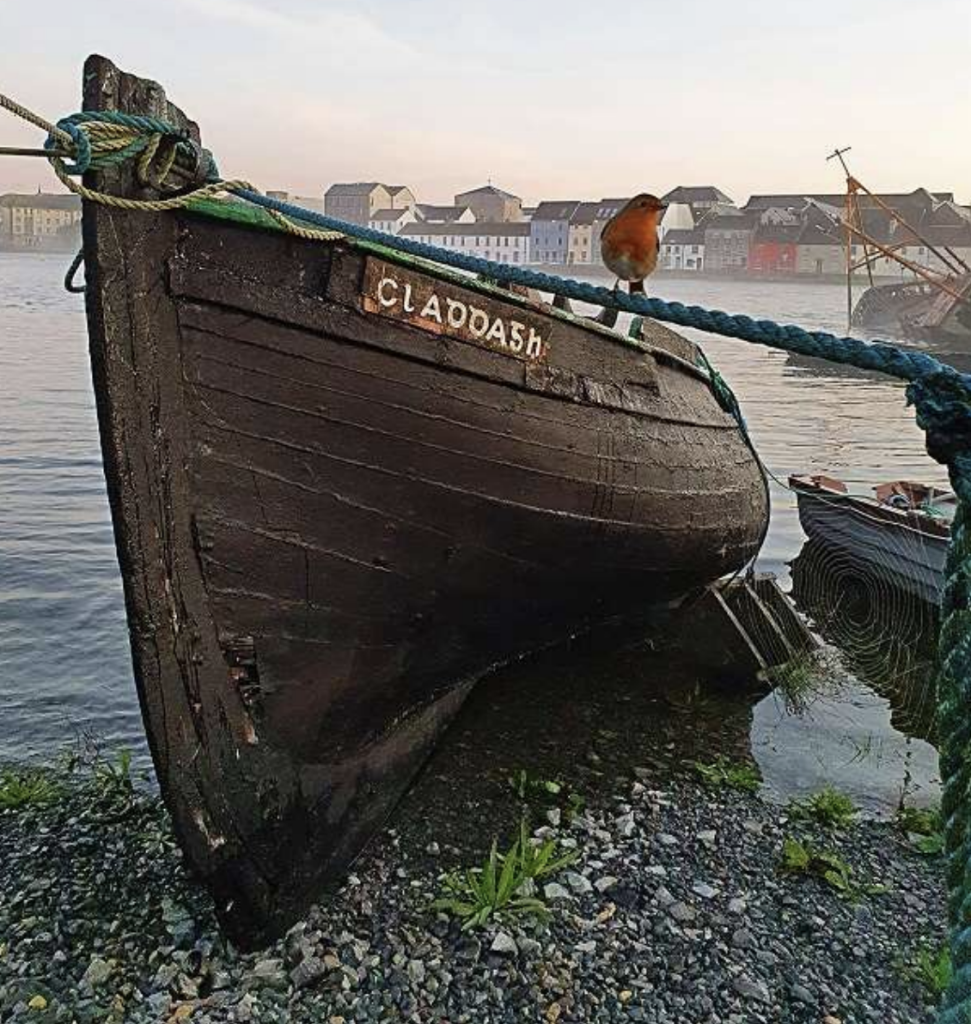
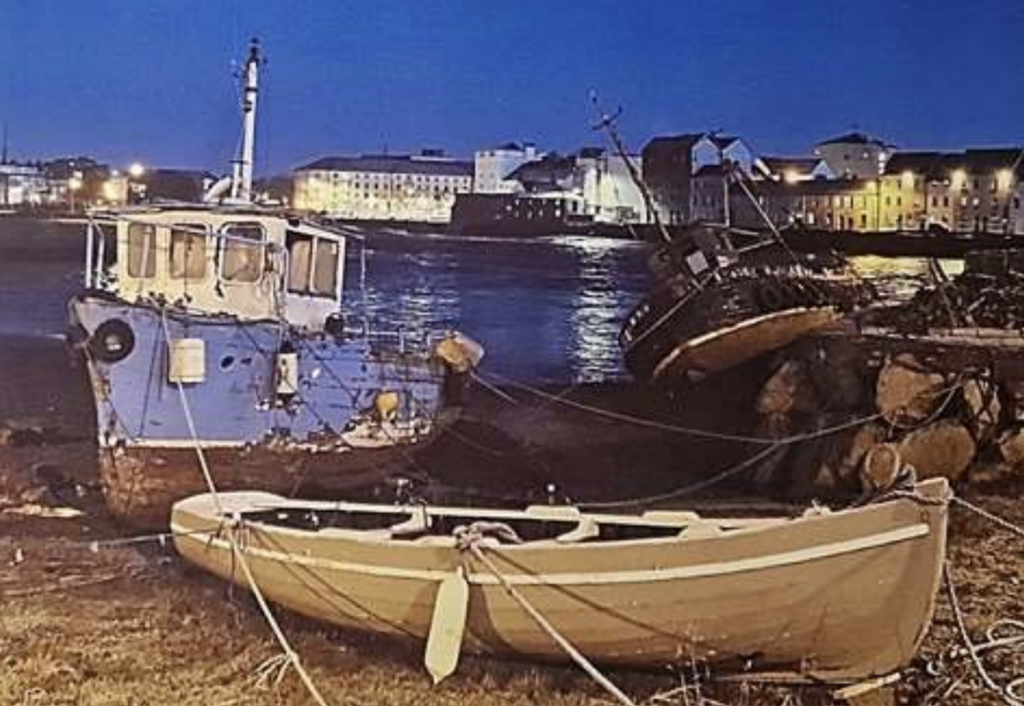
He even captured one ghost in a photo he took of an old blue boat in the Claddagh. A Captain’s outline, a sailor with a skipper’s cap appeared in the window of the cabin in one of several photos he developed, but, strangely, in none of the others.
The dead are all around us, particularly in a medieval town like Galway, he believes. He almost joined them one Christmas, when he was taking shelter from a fierce storm in a taxi rank near the Christmas Markets. A huge blast of wind pulled the Christmas tree right out of its moorings and onto the top of one of the huts. Pat watched the whole show in horror: “If there’d been anyone in that hut, they wouldn’t have been celebrated Christmas among the living again.”
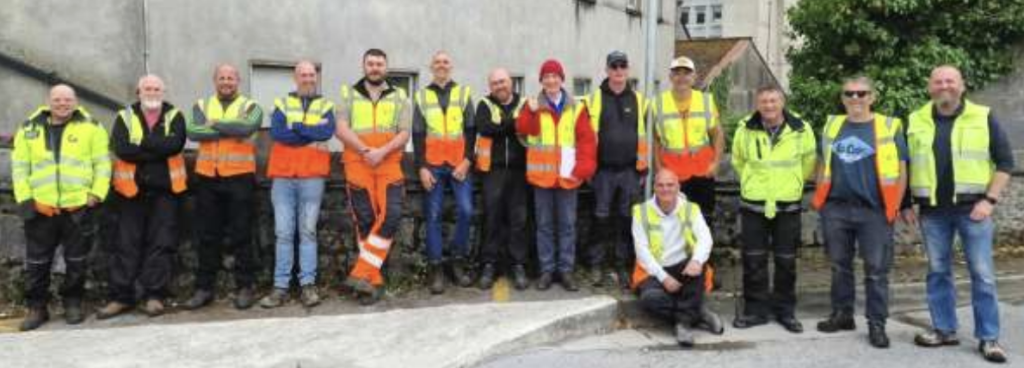
In addition to the above group of the ‘Litter Management Unit’ – The following people are also members of this crew and carry out their duty with utmost efficiency and dedication (Past & Present): Jim O’Connor (General Foreman) – Dennis Callaghan – Brian Kelly – Michael Costello – John Dunleavy – Patsy Flaherty – Martin Lee – Christy Dolan – Joe Langan – Peter Condon – Tom Molloy – Tom Lydon – Noel Monahan – Pat Mc Philbin – Johnny Stiffe – Tom Hynes – Joe Fahy – Derek Griffin – Kevin Joyce – Stephen Joyce – Paul Bradley – Kenneth Maloney – Conor Harlow – Kevin o’ Brien – Brian D’Arcy – John Paul Stiffe – J.J Greaney – Joe Keane – Ger Murphy – Andrew Flaherty – Timo Busch – Willie Kelly – Kevin O’ Brien Parks – Joe Dolphin – Peader Brown – Liam Connelley – Jim Cooke – Paul Daly – Eamon Daniels – Tom Greaney – Brian Hession – Brian Inbush – David Kearns – Brian Mannion – Martin Mc Donagh – Colin Mc Donagh – Kieran Mc Manus – Martin Mc Grath – Patrick Mc Morrow – Michael John Murphy – Dave O’ Brien – Seamus Conroy – Regi Silva – Vincent Fahy – Trevor Sherry – Tony Mc Philbin – Tom Ward – Andrew Morgan – Gerry Daly – Stephen Manogue – Paddy Burke – Brian Madden – Mark O’ Reilly – Colm Seoighe – Donal Colins.
(Deceased Crew Members RIP: Colm Connelly – Tom Riddell – John Joe Corcoran – Jimmy Mulkerrins – Frank Daly).
Just a note on the Litter Management Unit’, this crew are out from the early hours of the morning – every morning, ensuring that the streets of the city are clean and cleared of rubbish from the previous night. Its an on-going battle to remove litter left behind by night revelers and of course seagulls ripping refuse open, looking for an early morning breakfast. This work is carried out every morning, including Christmas Eve – Morning, Easter Sunday and St Patrick’s Day. The streets are a hive every morning; the Crew are to be commended for having this work completed when business and shops open.
Christmas time is special for Pat. The season, he feels, brings out the best in Galway people. He recalls a lovely woman who always had the crew in for tea and Christmas cake in Woodquay before she died a few years ago. After her passing, Pat would light a candle for her every Christmas in the Cathedral, in fond memory of her kindness.
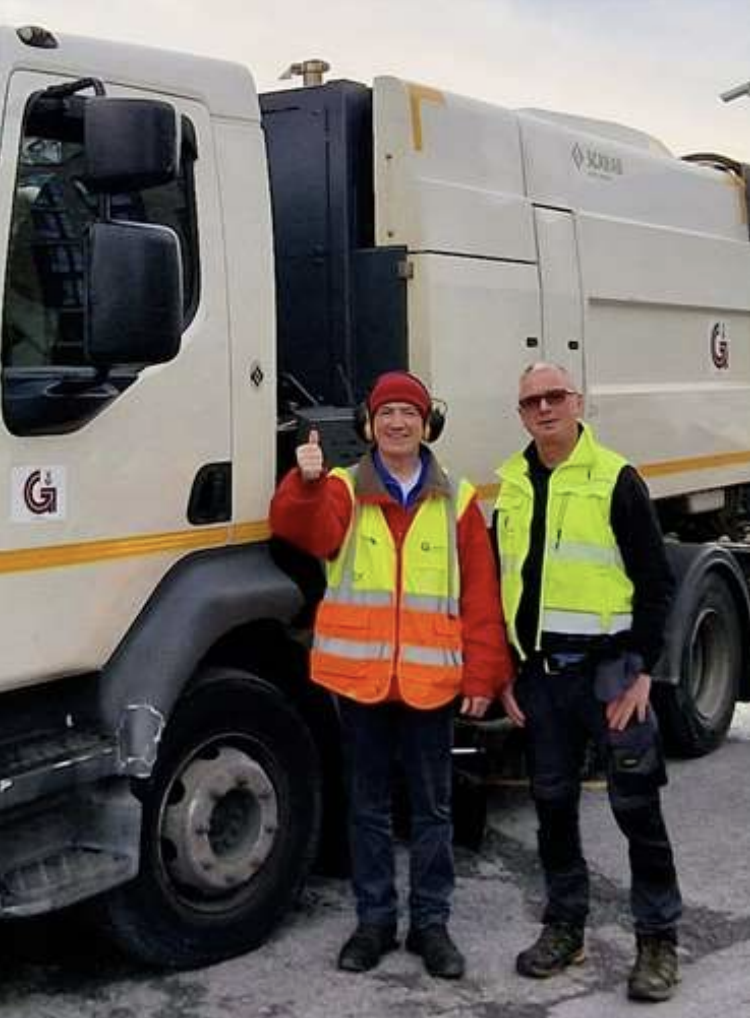
Pat loved the quiet of Christmas morning, when traffic would be light around the city streets and people would walk to mass. For 32 seasons, he worked the a.m. shifts on Christmas Eve, Christmas Day, and St. Stephen’s Day. On Christmas morning, he would sit in the church, enjoying the sight of Galwegians in all their Christmas finery, and say a quiet prayer of thanks for another year among the living in his beloved hometown.
Memories rise up in him, when he recalls his working life. Certain smells will evoke the past.
That unmistakable fruity, spicy aroma he associates with the shop on Middle Street selling Christmas cakes. Pat has always loved the early-morning smell of baking bread, since his first job working in Lydon’s Bakery as a teenager.
The smell of the sea air: He remembers a time in Salthill when he and his crew were chased by a huge wave and what seemed like a field of water filled with seaweed which they just about managed to outrun. “I knew then that climate change was real and coming to us fast across the Atlantic,” he says.
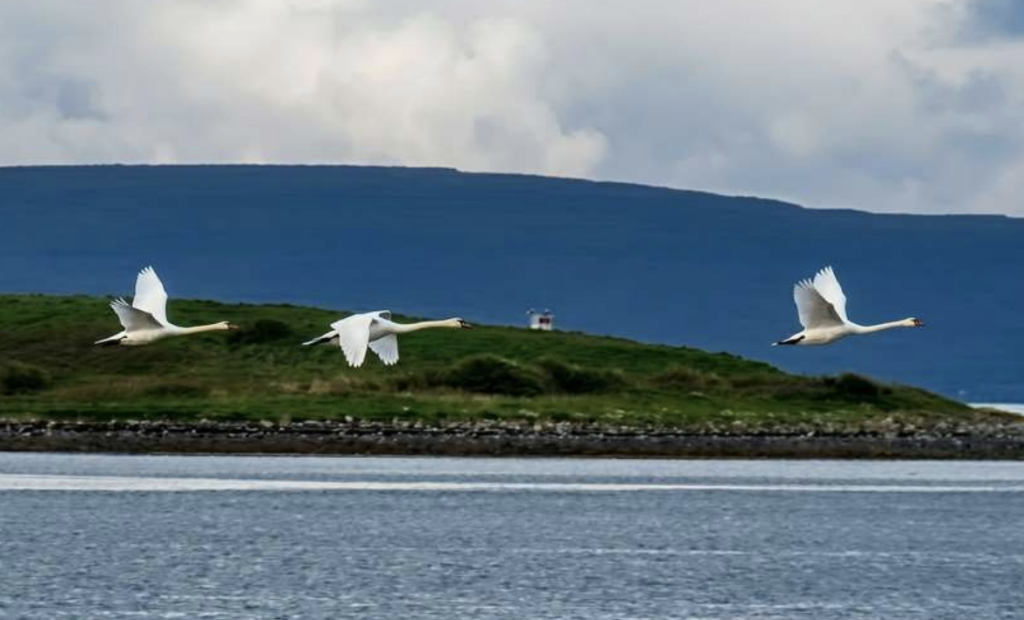
Pat’s favorite time of year is autumn, when the leaves come tumbling down. The leaves add much labour to the pick-up for street sweepers, but the season is the perfect time to be outdoors with the cooler air and that lovely change of light in the west of Ireland. He embraced the dark of fall and winter while cleansing the streets.
The hero of Ivan Klima’s Love and Garbage reflects at the end of the book: It occurred to me that I put on that orange vest for a time because I was longing for a cleansing. Man longs for a cleansing but instead starts cleaning up his surroundings.
For Pat, the salt air and the breeze off the bay would always feel like a cleansing of the mind and the soul at the end of a shift cleaning up the surrounds of Galway. He relates to me a Galway epiphany, a moment of real grace.
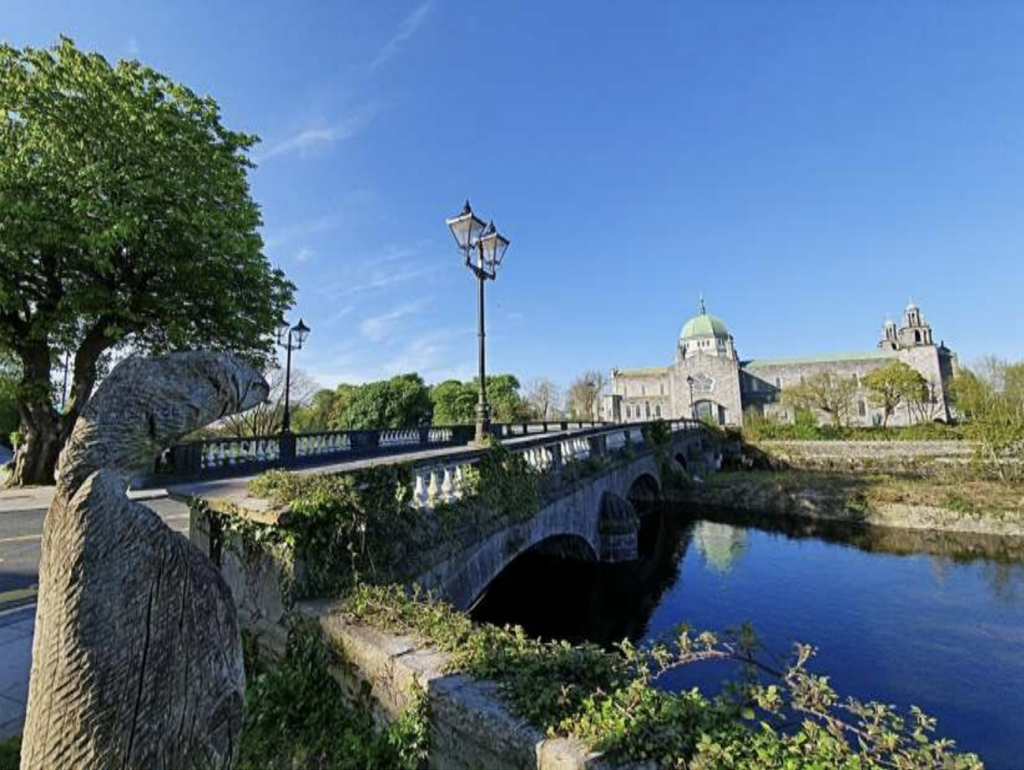
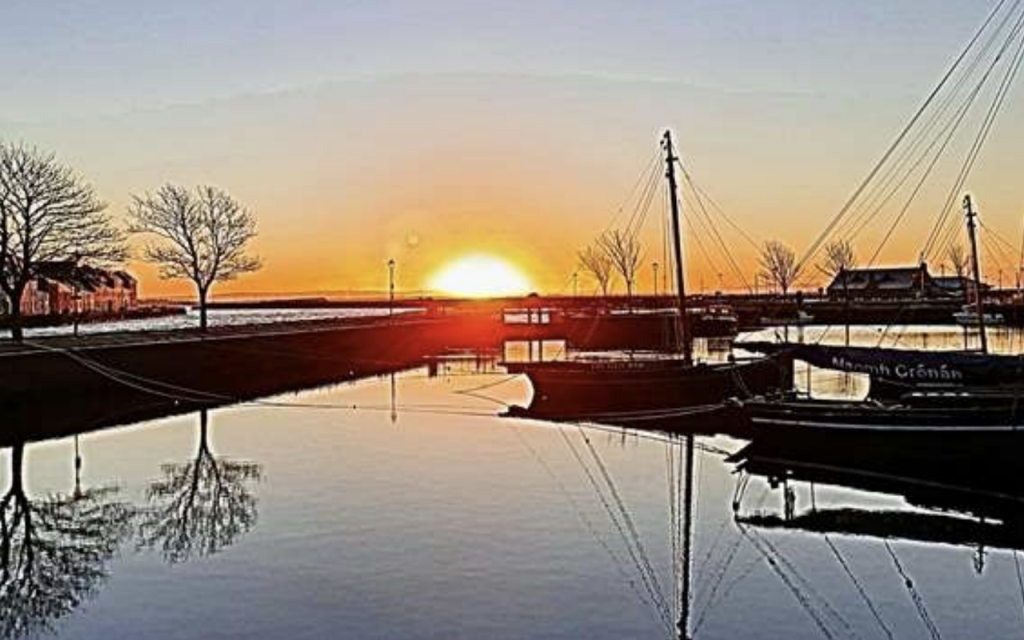
He describes an almost religious experience he experienced at the end of a long night shift, watching the sun come up in the Claddagh and looking back on the city being lit in the golden tones of dawn. “I stood on Wolf Tone Bridge and I couldn’t move for what felt like forever with the sheer beauty of that sight. It was a perfect Galway moment.”
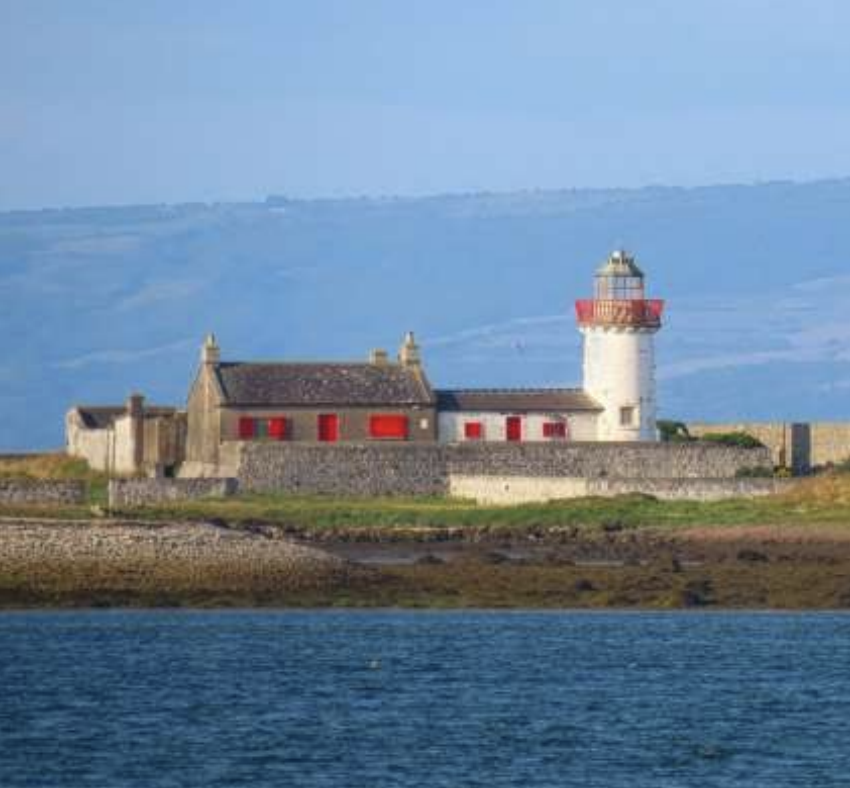
These days, he cleanses the mind and the spirit at Ballyloughane Beach. He goes there to begin each new day of his retirement, walking out to the lighthouse at 5:30 every morning. “The fog on the beach can be beautiful,” he says, “and the air coming off the water really clears the head.”
Pat McPhilbin is a quiet, unassuming man. So his aim was to slip quietly away on his last day of work, “and then, after a week or so, they’d have forgotten all about me.” That didn’t happen. Instead, various dignitaries of the City Council took the time to single out a great servant of Galway.
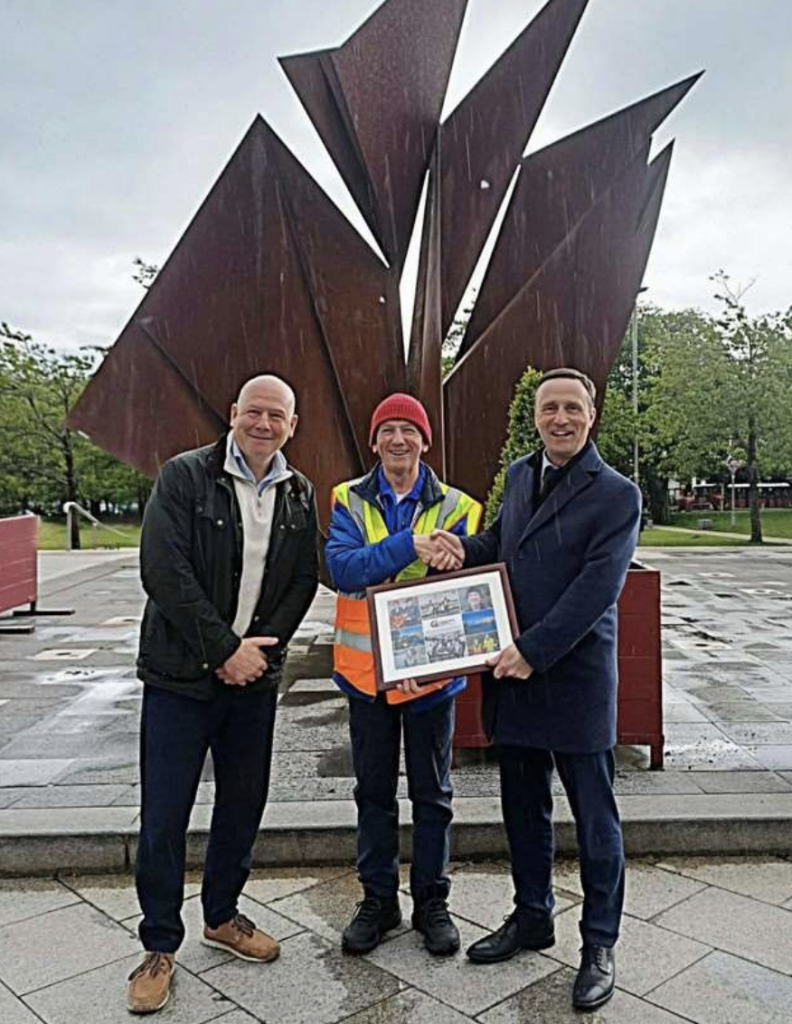
Mr. Leonard Cleary, the Chief Executive Officer left his office at Galway City Council, to meet Pat on Pat’s own turf—the streets of Galway—where he thanked him for his long years of dedication and presented him with a framed tribute.
Cllr. Terry O’Flaherty paid special tribute to Pat’s 37-odd years of dedicated service and lauded his “exceptional work ethic and commitment throughout his career. Starting work at 5.00 a.m. each morning, after setting his alarm for 3.45 a.m., he was renowned for his punctuality, diligence, and impeccable standards.”
She also noted his “role as an outstanding ambassador for both the Council and the city. His pleasant manner, professionalism, and respect for others made him a valued colleague. When the Council required a spokesperson for local and national media interviews, Mr. McPhilbin was frequently called upon and represented the organisation with distinction.”
Paul Connolly, the City Council’s Senior Executive Engineer summed up a lifetime of dedication to his hometown and those qualities that mean Pat will be remembered for a lot longer than most in Galway.
He misses the lads of his Litter Management Unit, the camaraderie of the crew: “We all cared about the work we did, and you felt part of a real team,” he says. “But life changes and you have to adjust.”
“There has been lots of changes within Galway City Council and indeed within the city of Galway since you started with us, but one thing has been consistent during all this time, the positivity of Pat McPhilbin.”
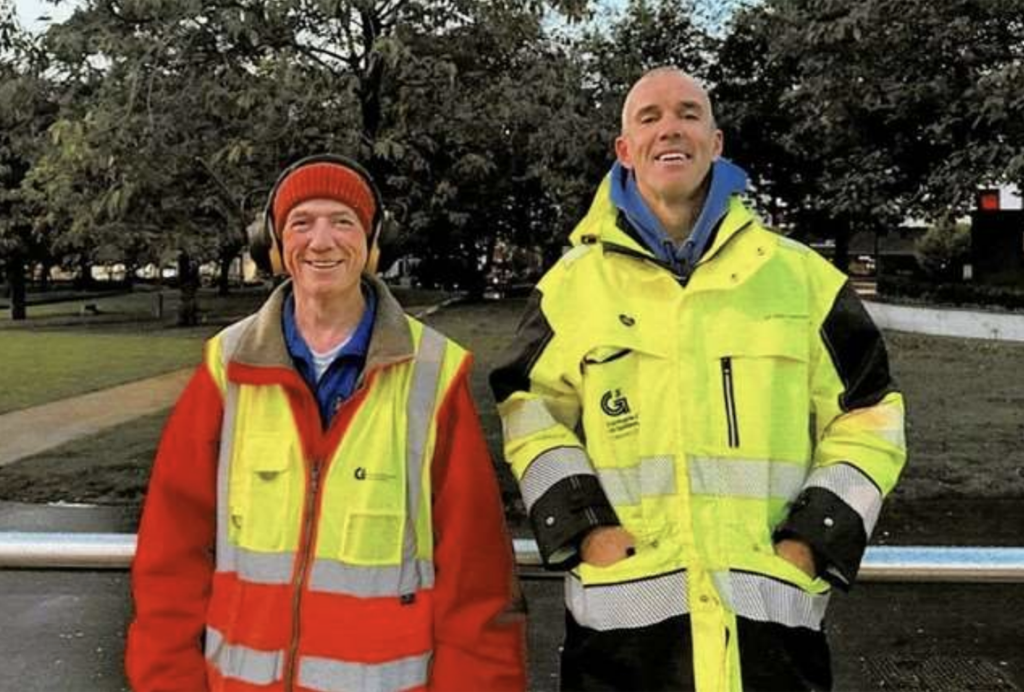
The baton of that positivity and dedication has now been passed on to one of Pat’s great friends, Kevin O’Brien. Kevin comes from the Claddagh and he is equally at home on the waves of Galway Bay or on the Galway streets that he has long maintained alongside Pat. Like Pat, Kevin can tell a great story, so he’ll be acting as a spokesman of those streets for the council, now that Pat has retired.
Galway, as we know, is a never-ending river of stories, flowing down to those streets, where they swirl like the ‘eddies’ you’d see leaning over any bridge that spans the great River Corrib. I ask the great storyteller, Pat, to tell me one last tale from his working life, fadó, fadó…
Very early in his working life, Pat McPhilbin found himself tasked with setting out the cups and saucers for a jury in the Courthouse. At 4:30 p.m. every day, he knew, those 12 men and women of Galway would get to deliberate on the fate of some poor soul. One day, for devilment, he went into the courtroom and sat in the judge’s chair and wondered what his own fate would be.
So I ask him straight up: If you were judge and jury, Pat, or Lord Mayor of Galway, for a day, what would be your judgment? What would be Pat’s Law? He pondered this long and hard: “You know, it’d be very simple, and this might surprise you coming from a photographer. It’d be
PUT THE PHONE AWAY FOR ONE DAY!”
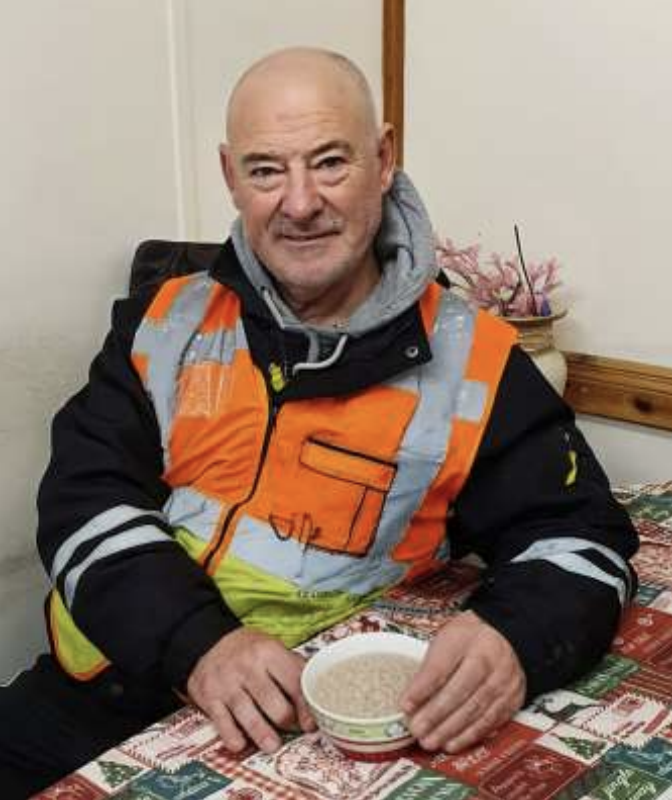
“Go out and walk around Galway and talk to the people of Galway. You can get the photos printed up later and framed and treasure the memories, but those smartphones are making no one smarter, and they’re making the world a whole lot less interesting and more lonesome.”
That’s the message from one of the best judges of the streets of Galway: Embrace the city. Enjoy its life, its unique character, and its one-of-a-kind characters.
Characters like Pat McPhilbin. He’ll have all day to talk now that he’s no longer waltzing around the streets to Strauss, with a brush or a leaf blower in his hand.