In Galway, as in many areas, responsibility fell upon local organisations to try and combat the disaster. While the clergy were feeding some 4,300 people daily, they were unable to reach all those in need. A Soup Kitchen was set up at Barna. Places of refuge included the Widow’s & Orphan’s Asylum on College Road. The Orphan’s Breakfast Institute was set up by Brother Paul O’Connor of the old Monastery School in Lombard Street. In January 1847, frightening reports of the ‘awful ravages of famine’ were spreading around the town. ‘Every locality of this district abounds in cases, too horrible for the human heart to dwell upon’.
In Connemara, details of almost unparalleled suffering were being reported. It was claimed that the population around Clifden were fast dying away for ‘want of food’. Many people were being ‘hurried’ to their graves through utter destitution without so much as a funeral ceremony or coffin. In one instance, a woman in Clifden crawled into an outhouse for shelter where she died, and by the time her body was found, part of her remains had been devoured by dogs. A pitiful hovel in the village of Glann, west of Oughterard, revealed an entire family of ten people dead; lying in a ‘heap of rottenness and putrefaction’. In another nearby hovel, seven more people were found in the same state, while four others were struggling in the last ‘throes of agony’. What had ‘once been a human being was found crawling on the ground’ of a third hut, trying to stay alive on a few turnip peels that were not fit for the ‘beasts of the field’. On the road to Galway, horrific sights of human misery could also be witnessed: emaciated women and children, almost naked and frozen in brutal winter conditions, crying and begging for food. The question for some witnesses was not that the people died, but rather how they lived.
The people turned away from the workhouse and made their way into the town. The Galway Vindicator stated that from early morning to ‘dead’ of night the town experienced harrowing scenes of suffering not seen in any other district, with ‘droves’ of men, women and children scarcely covered in rags weeping and ‘wailing’ at the doors of the ‘inhabitants’ for a morsel of food to stay alive. In one case, a child, about two years old, was found in an emaciated state in one of the lanes of the town and died that night.
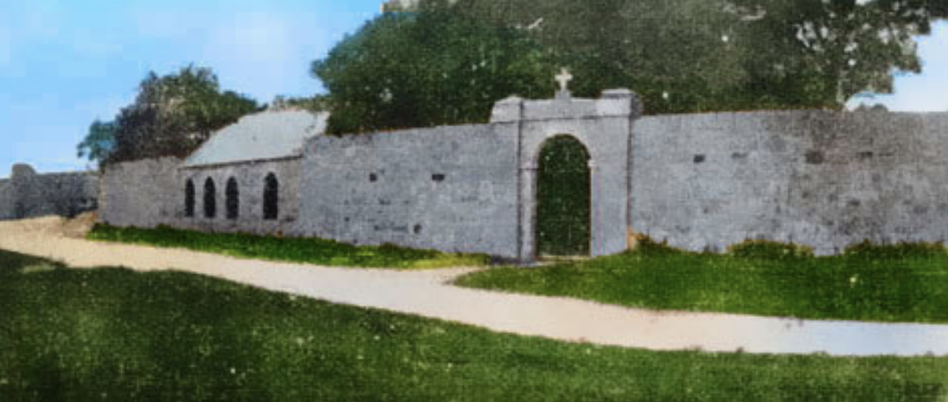
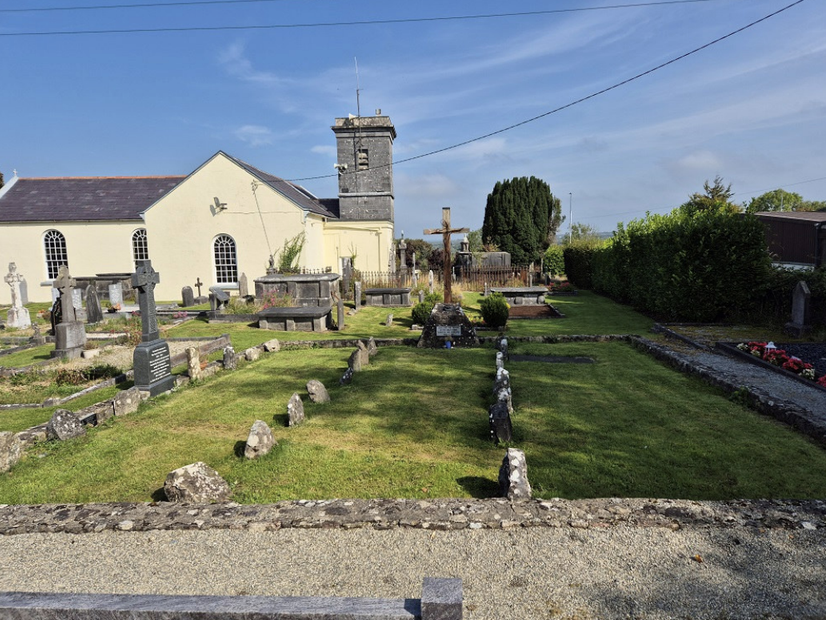
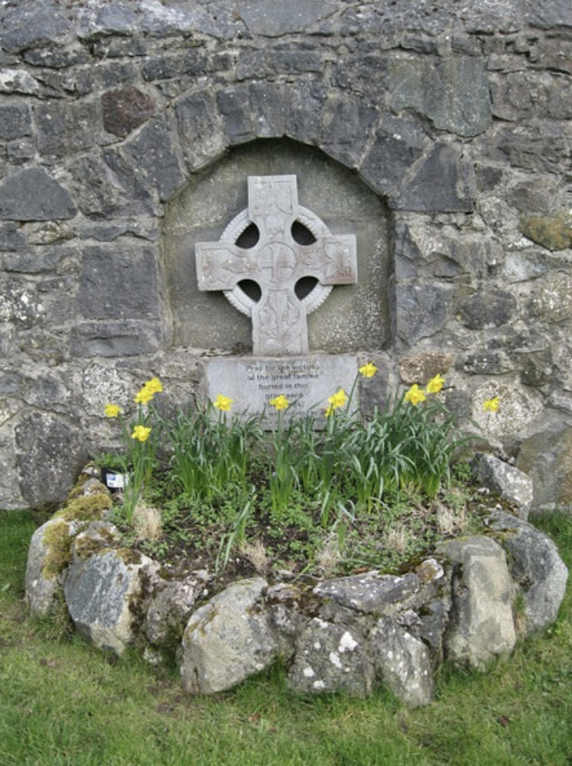
By June 1847, the authorities were seriously concerned about the danger of plague during the summer heat for want of a proper burial place for the victims. It was becoming urgent that additional burial grounds be found, as Fort Hill Cemetery was not sufficient to accommodate the mortality ‘now’ being experienced in the town, with the influx of destitute, starving people.
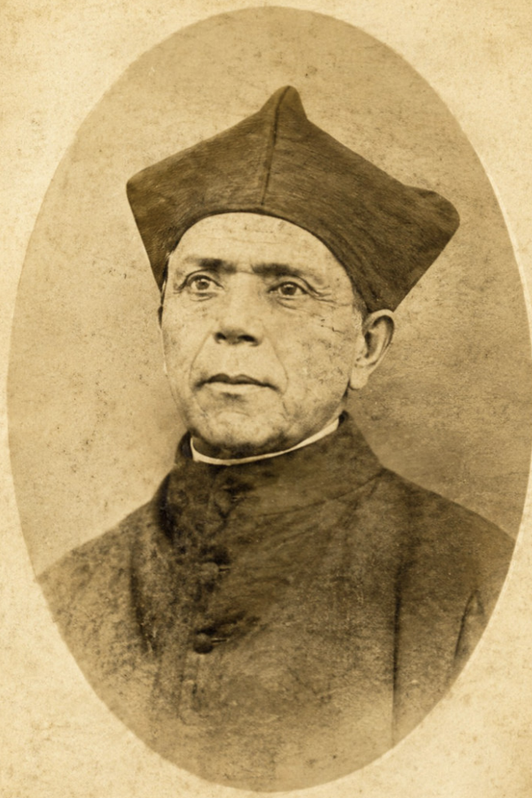
Brother Paul O’Connor, writing to the authorities in July 1847, warned that the children in his establishment were in great danger of starvation. This was as a result of a fall-off in contributions because many of those holding positions of power believed, or at least said they believed, that the new harvest would bring an end to the catastrophe. This attitude proved fatal for starving people. O’Connor warned that the situation remained very serious even if there was a good harvest, and added, ‘But alas for our poor Orphans – though the ground had been watered by sweat from their fathers’ brow and by their mothers’ tears, this sweat was only absorbed in the grave’. He was extremely concerned that the children would follow their parents to the famine pit and described the sickly and emaciated state of the children. He also warned that conditions would get more horrific if there was another bad harvest. His concerns were well founded, and the appalling situation continued to deteriorate as that particular year became known as ‘Black Forty-Seven.’
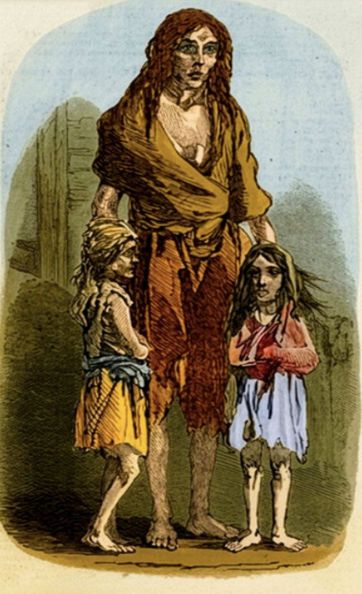
December 1847 saw another large influx of destitute people forced from their homes in the rural areas of County Galway. Newspapers reported that ‘For the past week the town has been literally inundated with a tide of rural pauperism … The streets are swarming with these wretched outcasts of landlord despotism, who, unable to procure admission to the Workhouse, throng the doors of the inhabitants demanding a morsel of food to save them from perishing’. Early that same week, eleven large ‘boatloads’ of destitute people from Islands off the coast arrived at Galway quay, all seeking assistance, adding to the already deteriorating problem. In contrast to this deplorable situation, ‘Superior Smoked Hams’ were also being advertised in the same newspapers for the wealthy. The word ‘exterminators’ is used many times in the contemporary newspapers in connection with landlords and evictions.
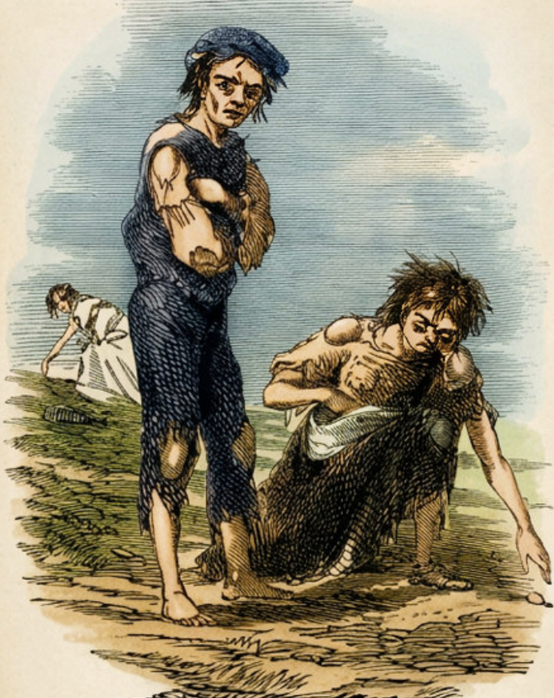
By January 1848, the situation in Galway was even more alarming, as thousands were being sent to their deaths. It was reported that there were at least three thousand starving people with scarcely a rag to cover them, roaming the streets. Starvation on the streets was a daily occurrence, and the suffering of children was commonplace. On the bitter cold morning of 26 January 1848, two children were found naked and dead in High Street, while another child was found in the same condition in an adjacent street; all three had succumbed to starvation. The hospitals, workhouse and even the jail were full of inmates. The jail was built to accommodate less than two hundred prisoners, but was now trying to accommodate nine hundred inmates and fifty children. The clergy were overcome with the task of attending to the sick and dying. Tradition tells us that in a field located just outside Menlo village overlooking Lough Corrib, people dying of fever were taken there so their bodies would be cooled by the breeze from the lake, giving some relief before death finally took them. The field was known locally as the Gort na Marbhe, the field of the dead. By this time, the only hope of salvation was the perilous voyages on board the infamous ‘Coffin Ships’ as they journeyed towards the New World.
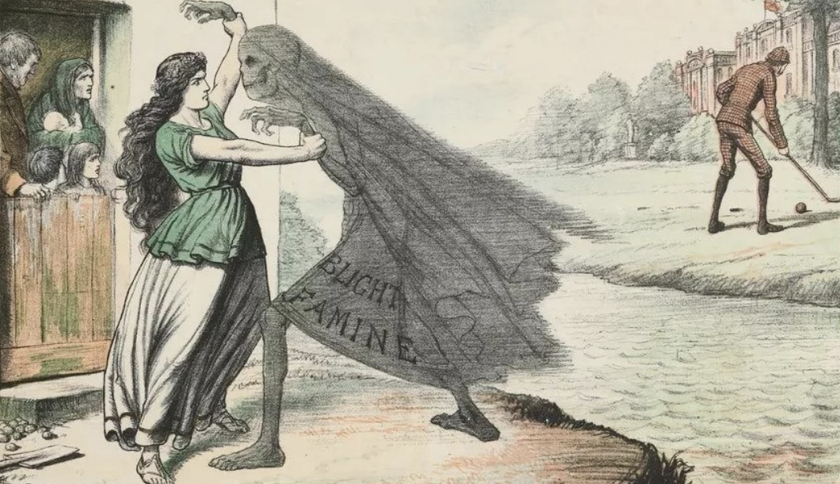
Throughout all of the suffering during the famine years, an abundance of food was continually arriving in the town, but all for export. The following are diluted accounts of a graphic report, that many say justifies people calling the famine an Irish holocaust. This is evident from the final section of a report by Fr M.A. Kavanagh in February 1849. He wrote of the appalling conditions of the people living-dying in Bohermore. He visited five ‘sick cases’ there on a wet and windy day. Upon entering the first house, he found himself standing in a pool of water as the roof was leaking badly. It was very cold and there was a constant ‘dull-sounding splash’ as rainwater from the roof dripped into the pool. He called out if anyone in the house. A woman of about thirty years appeared from another room, holding a ‘wailing infant’ in her arms. She begged for help for her children as they were starving. They hadn’t eaten in two days. The young woman was half naked; covered only in a ‘filthy’ inner garment. Fr Kavanagh, thinking that he was in the wrong house, asked her where the ‘Devany’ family lived. ‘They are here’, she replied, and again pleaded for assistance. At that moment, Devany’s daughter entered the room; she had been out begging for a candle to light for him. When she lit the candle in the inner room, the light revealed two ‘living skeletons’. They were her father and mother lying on beds of straw on the ‘watery floor in different corners’. There was no fire, no furniture, not as much as a utensil; it was difficult to believe that this man had once been a ‘well-to-do’ tradesman.
After administering the last rites, Fr Kavanagh made his second sick call to a family living nearby. He reported that this home was scarcely sufficient to sustain an ass. He found the woman of the house huddled in a corner of a room; she was very ill. In another room, he discovered her two daughters, shivering and weeping. Their father was seated on a low stool between them. He was crouching over a single coal of fire; his face had every expression of want and
sadness. His son was out trying to collect cabbage leaves as they had nothing to eat for three days. Fr Kavanagh moved on, and his next two calls were to families living in similar conditions.
His last call was to the Dowd family, and he found these people living in even worse circumstances. He simply reported, ‘I fear to describe the misery I saw here. It is enough to say that he died on the following day. I am sure before Heaven! He died of pure and absolute starvation … He was buried in the deep darkness of a wet and stormy night. And still – what a thought for the world! Our town was never, never fuller of corn and flour and meal!’ It was all awaiting export.