Following the capture of Badajoz and Ciudad Rodrigo, Wellington advanced across Spain. Marshal Marmont, the French commander of what had become known as the ‘Army of Portugal’, lay across his path between Toros and Tordesillas, to the east of Salamanca. The armies were more or less evenly matched with some 50,000 British, Portuguese and Spanish troops facing almost 52,000 French. Marmont was under pressure from the new King of Spain, Joseph Napoleon to attack. The king was somewhat agitated; his officers and men were hoping for a quick offensive against the allies. After some deliberation, Marmont began his attack on 15 July 1812; moving his troops against Wellington’s right flank. The British were caught off guard and forced to fall back towards Salamanca. The following day they intercepted a despatch from Joseph Napoleon to Marmont which stated that he was marching to join forces with him; the communication contained other vital details about the offensive. The two opposing armies marched on Salamanca, crossing the River Tormes on 21 July. Both sides were cautious, not wishing engage each other fully until either side felt confident. On 22 July, Marmont observed dust clouds rising into the air beyond the hills to the south of Salamanca, which he believed was Wellington retreating. Although British troops could be seen on the hills opposite the French positions, Marmont assumed this was a rearguard, covering the retreat and felt the opportunity to attack had now presented itself.
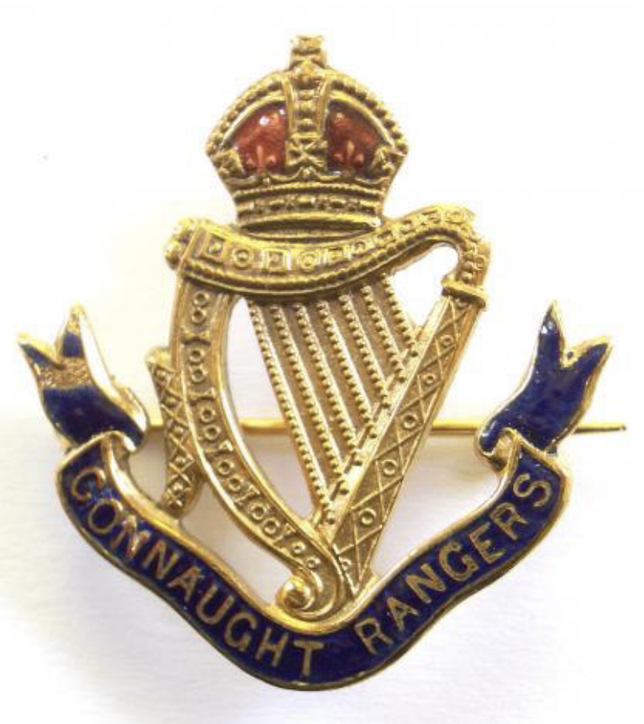
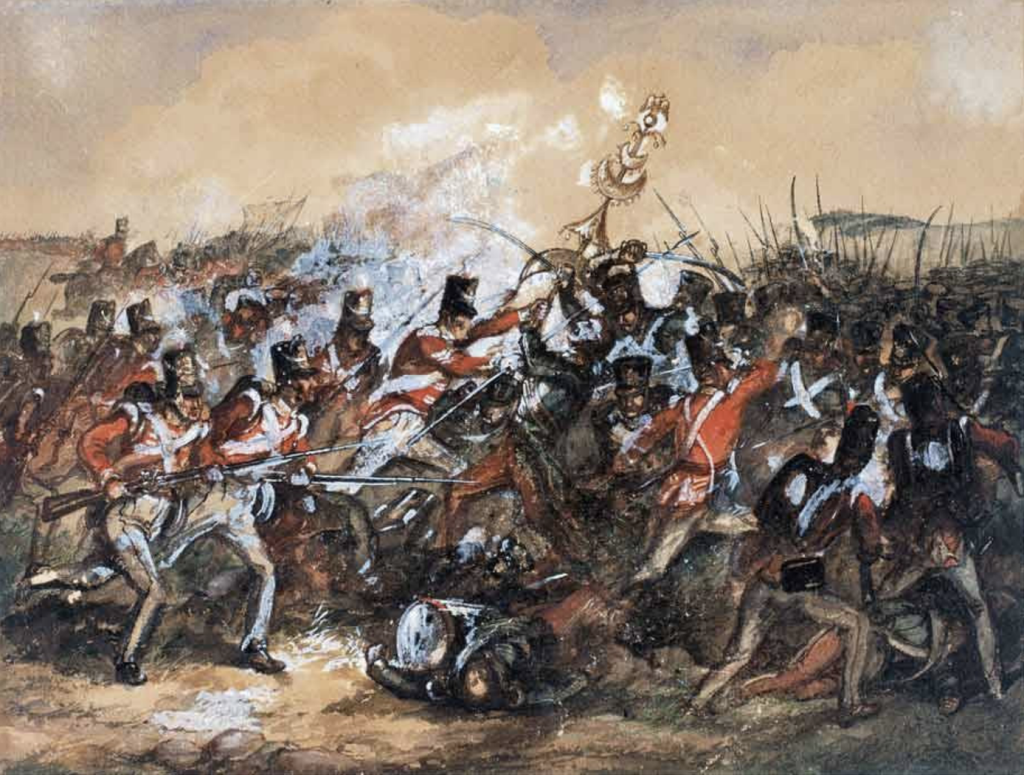
However, Wellington was not in retreat, in fact he had moved thousands of troops ‘hidden divisions’ into positions facing south. At about 2.00 p.m. he watched the French moving around his flank. The French divisions were marching along unaware of the real British and Portuguese positions; they were dangerously strung out with both flanks exposed. Wellington galloped to meet the Third Division – and Connaught Rangers who were arriving from Salamanca with the Portuguese Cavalry. He ordered an immediate attack on the head of the French column. He then galloped across the hill to his own centre, from where he would direct the battle and the other divisions. The Third Division began the combat, charging towards the front of the French column. After heavy fighting involving Lieutenant Colonel Wallace’s Brigade, the French gave way. The next phase of the battle involved an attack by the British heavy cavalry; this charge was led by General Le Marchant. They fell upon the retreating French infantry over-running and cutting them down. The charge continued until the cavalry encountered steady defiance as the French brigade regrouped and formed their infantry into squares. This brought the charging dragoons to a halt, and resulted in many casualties, among them their commanding officer, Le Marchant. However, the stand by the French was only temporary and by night fall, they were in full retreat streaming back towards the river to escape the renewed and continued British and Portuguese assault. The battle ended in complete victory for Wellington. This battle is remembered in the traditional Irish music and dance tune, The Salamanca Reel.
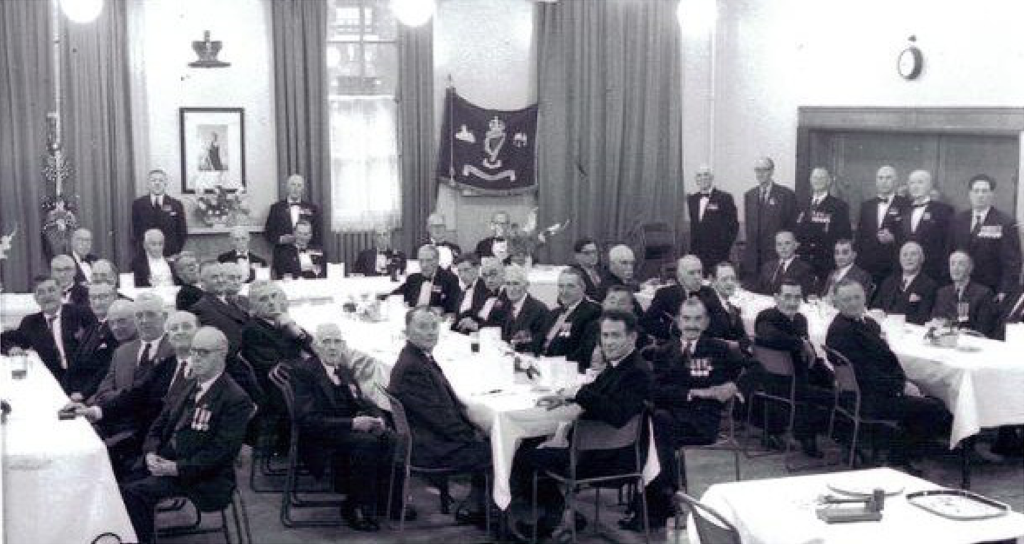
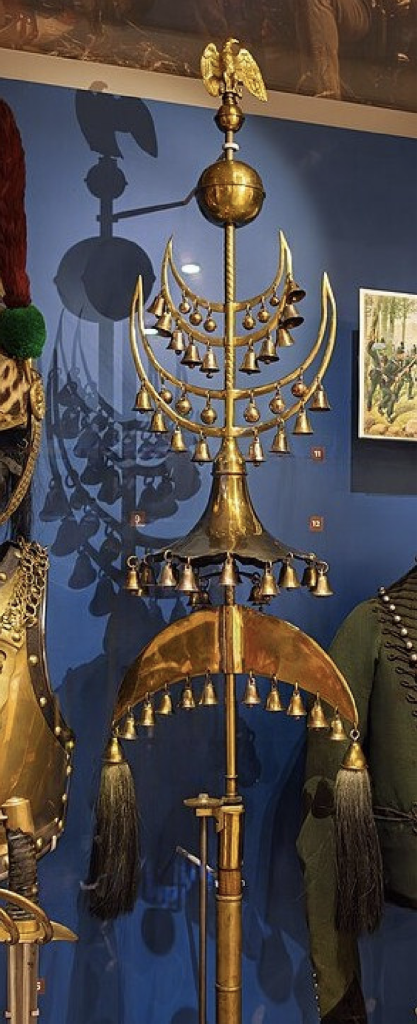
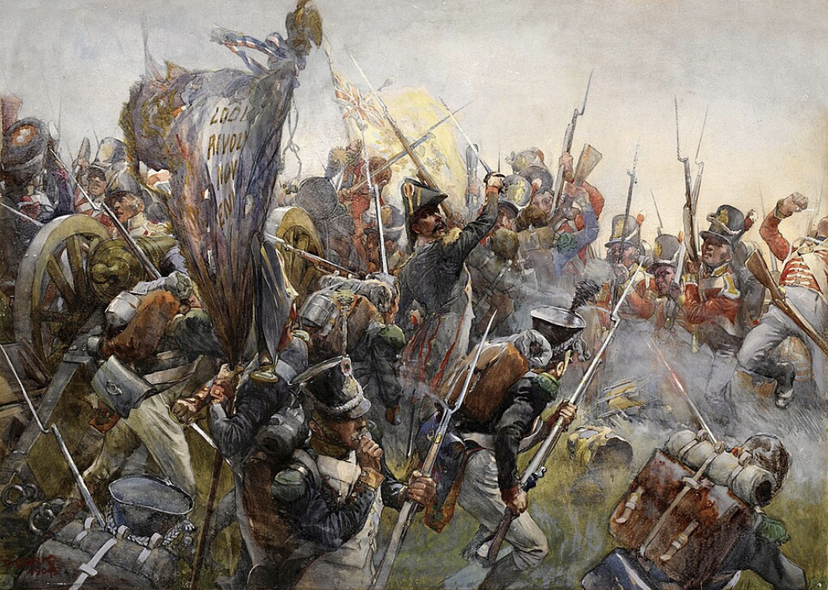
The Rangers had played a vital role in the battle and routing the French. The proof of their outstanding courage was soon apparent as they came away with one of the most prestigious war trophies ever captured in battle, a Turkish crescent nicknamed ‘the Jingling Johnny’. This seven and a half foot long pole is mounted with silver and brass crescents from which bells and decorative horse tails hang. The Napoleonic eagle mounted on its apex, is cast in brass and is a French addition to this celebrated ‘war standard’. Its origins are somewhat vague, but it is believed to have been a standard of the Ottoman Turks until it was captured by the French. It is one of the most impressive battle trophies ever captured and was from that time carried at the head of all Connaught Ranger ceremonial parades. It was housed in Kneller Hall Museum for many years, where it was the pride of their collection. Even after the disbandment of the rangers in 1922, the Jingling Johnny was on display during their annual anniversary dinners. While it is considered part of the British army’s ‘war trophies’ collection, perhaps it should be presented to Renmore Barracks Museum, after all this later became the official depot of the Connaught Rangers. Given that it is a military establishment, it would be housed in a secure location which is required for such a treasure.
The following is an officer’s description of the 88th Connaught Rangers at Salamanca and the lack of acknowledgment by the senior military command:
‘In my young days I used to read of it, and wonder at the calm bravery of these fine Irishmen, determined to win or die in the execution of their duty. Their onslaught at Salamanca was irresistible and this again carried the day. The Jingling Johnny was the only proud reward for their gallantry on this day. Everyone in the army of liberation in the Peninsular War knew and heard of the gallantry of the 88th, but the officers and men were never rewarded for their devotion to duty and their brave conduct and dauntless gallantry under a leader who never gave them credit for the fighting reputation of the 3rd Division. In the years afterwards, Major Mackie and William Grattan stood up for the Regiment in the press and on every occasion, and with some success. The commanding officers of the 88th and 94th General Sir Alexander Wallace and Sir James Campbell, were certainly most successful commanding officers, but they were unable to obtain the approval of the divisional commander, Sir Thomas Picton, for any rewards to officers who had done so well.’
One wonders about Picton’s attitude and indeed Wellington, as to their reasons for not acknowledging or rewarding the Connaught Rangers for the supreme gallantry they displayed in every battle. After all, they were more aware of this that anyone; they commanded them and reaped the rewards in battle honours. Perhaps it was simply down to bigotry, not wishing to acknowledge that Irishmen ranked amongst their best soldiers. There is an old story told regarding Wellington and his place of birth, Ireland. It seems that upon being asked about his Irish background, he is reputed to have said, ‘Just because you are born in a stable, doesn’t necessarily make you a horse’.
The French continued to fall back through Spain, but it had taken six years of bloody combat to defeat them on the ‘Peninsular.’ Incidentally, the last man to be killed in the Peninsular War was Nicholas Thorpe who had initially run away from home to join the 88th Connaught Rangers. While still in his teens he was appointed as a drum major with the regiment. During the campaign, Thorpe met and fell in love with a local girl, Jacintha Cheritc, who returned his love and affections. Her father, a Spanish nobleman, was against the relationship, but this didn’t prevent them from being together. When the regiment moved on, she eloped with Thorpe, disguised as one of the percussionists with the Ranger band. The young couple were married in Monte Forte, by which time Thorpe was a Sergeant. Sadly the marriage was short-lived as Thorpe was killed in 1814 at the battle of Toulouse, by what was reported as the last shot of the war. After the war the 88th were sent to Canada and although recalled to Europe when Napoleon escaped from Elba, they arrived too late to take part at Battle of Waterloo on 18 June 1815.