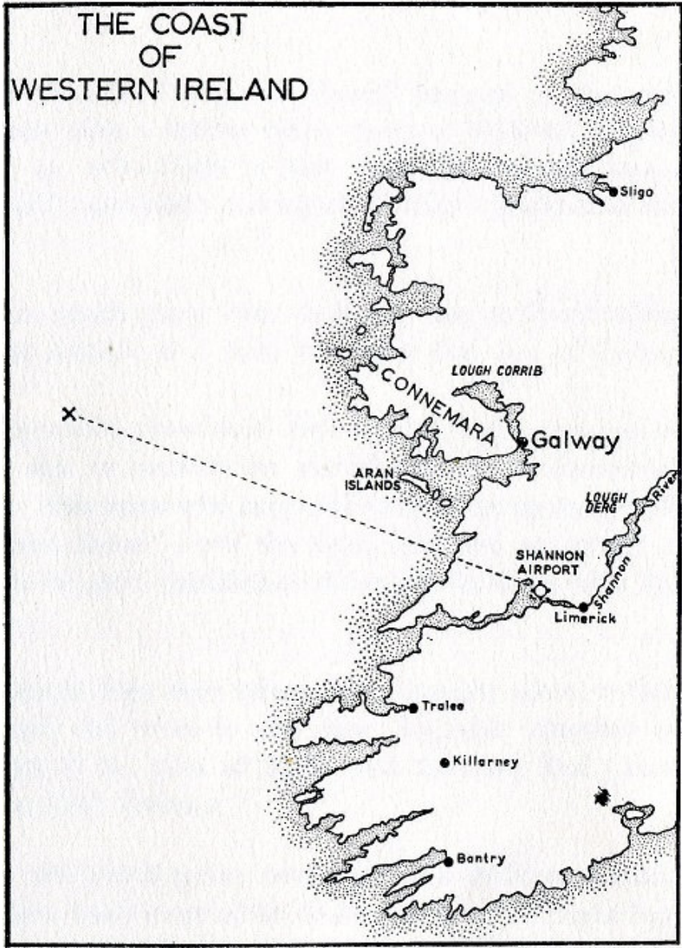
At 4.05 a.m. of Thursday morning 14 August 1958, the KLM Dutch Airliner Hugo De Groot, flew out from Shannon Airport. The Super-Constellation aircraft was en-route from Amsterdam via Shannon, bound for Gander in Newfoundland. There were ninety-one passengers and eight crew members on board flight 607E. The aircraft checked in with Shannon after reaching 12,000 feet. The last radio contact with the Hugo de Groot was at 4.42 a.m. when Shannon air traffic control requested her captain to relay a message to another aircraft regarding a flight course. The captain replied saying that he had contacted the aircraft and received an acknowledgment. Shannon air traffic control thanked him and this was the last contact with the doomed flight. At the time the plane was approximately 120 nautical miles west-north-west of Shannon.
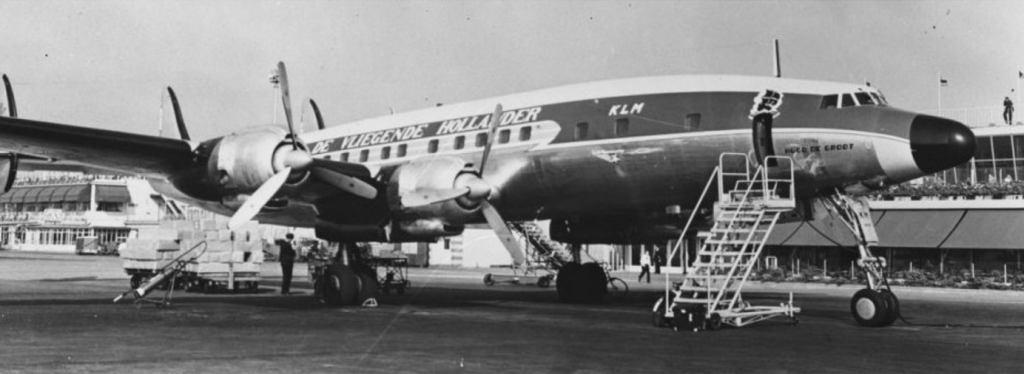
Later, flight 607E failed to make a routine radio check with Shannon and the alarm was raised sending air and sea rescue services into action. Gander Airport was also contacted, but they claimed to have been in contact with the aircraft. However, two hours later, they cancelled this message; indicating that they had not made contact with Hugo de Groot. Rescue planes from the RAF were scrambled and the search began. Shipping was also notified and began searching also. Just after midday an RAF plane sighted wreckage and bodies in the sea about sixty miles west of the Aran Islands. Ships in the vicinity were requested to proceed immediately to the crash site. Ten ships responded among them; Naomh Eanna, Kilronan, Jules Verne, General Lecerc and a Canadian destroyer, Crusader. When the ships reached the area they found bodies scattered over about a mile radius. The ships then began the gruesome recovery task. One vessel took on board five female victims, all of whom were mutilated and none had been wearing life jackets. This could indicate that whatever caused the disaster was very sudden. The captain of the Naomh Eanna reported that the area was littered with debris and among the items recovered was a watch belonging to a man named Paul Christovik. It had stopped at 4.48 a.m. just six minutes after the last radio message, an indication of when the disaster occurred.
Meanwhile in Galway City, medical staff at the Regional Hospital; and Red Cross and Order of Malta units were all alerted. They began preparing to receive survivors, but as evening wore on, all hope faded for the ninety-nine passengers and crew. Thirty-four bodies were eventually recovered, nine male and twenty-five female, and one a baby girl. Her name was Bernadette Kock Van Leeuween, she was just fourteen months old. On Friday evening the first ships began arriving at Galway docks where a huge, but silent crowd had gathered. They were led by the French trawler, Jules Verne. The bodies were removed and taken to the Regional Hospital where post-mortems were carried out throughout the night. KLM officials and Dutch Government investigators arrived in Galway. They began sifting through the meagre pieces of wreckage to try and identify the cause of the disaster.
An inquest opened on 18 August 1958 in the Great Southern Hotel (now Hardiman Hotel), Eyre Square and eleven people were called to give evidence. Deputy Coroner, W.B. Allen took the chair. The hearing lasted five hours, after which a verdict was delivered on the cause of death: ‘Multiple injuries, fractures and haemorrhages due to violent impact’. There was no evidence to show the actual cause of the disaster. International news agencies attending the inquest published the findings of the inquest. Only twelve of the victims were positively identified.
On Tuesday afternoon 19 August, Galway City mourned when the remains of twenty-three victims of the air crash were brought to the New Cemetery for burial. It was a cloudy wind-swept day with flags around the city flying at half-mast. Catholic, Protestant, Presbyterian, Jewish, Moslem and Greek Orthodox churches were all represented at the religious services held in the grounds of the Regional Hospital before the vast funeral cortège moved off. It was also attended by Government representatives from America, Argentina, Ireland, Egypt, Mexico, Great Britain, Dutch and United Arab Republic.
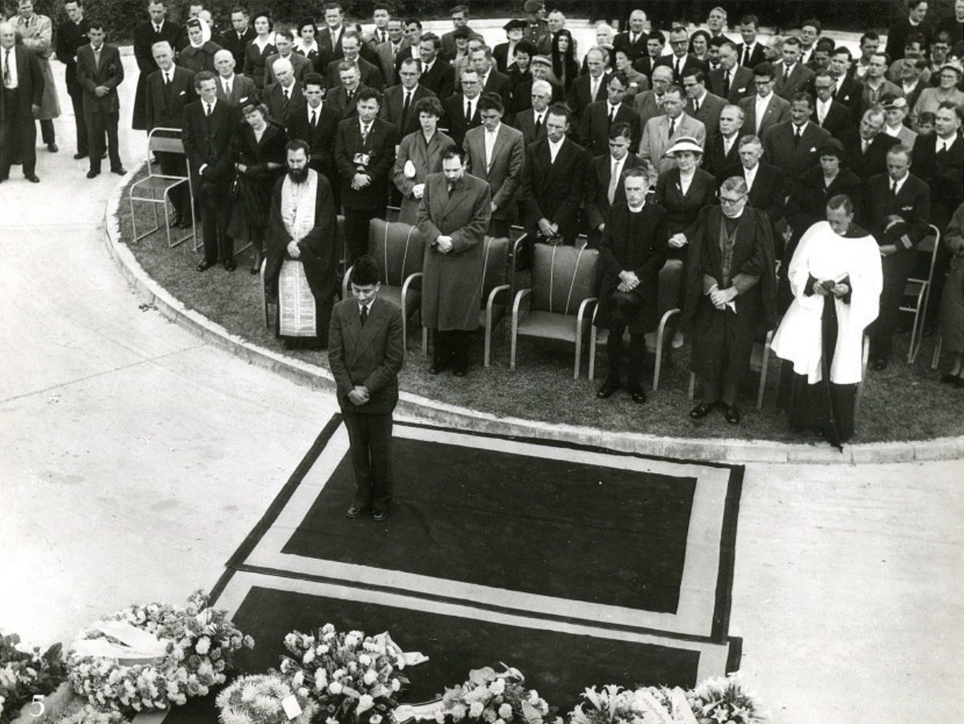
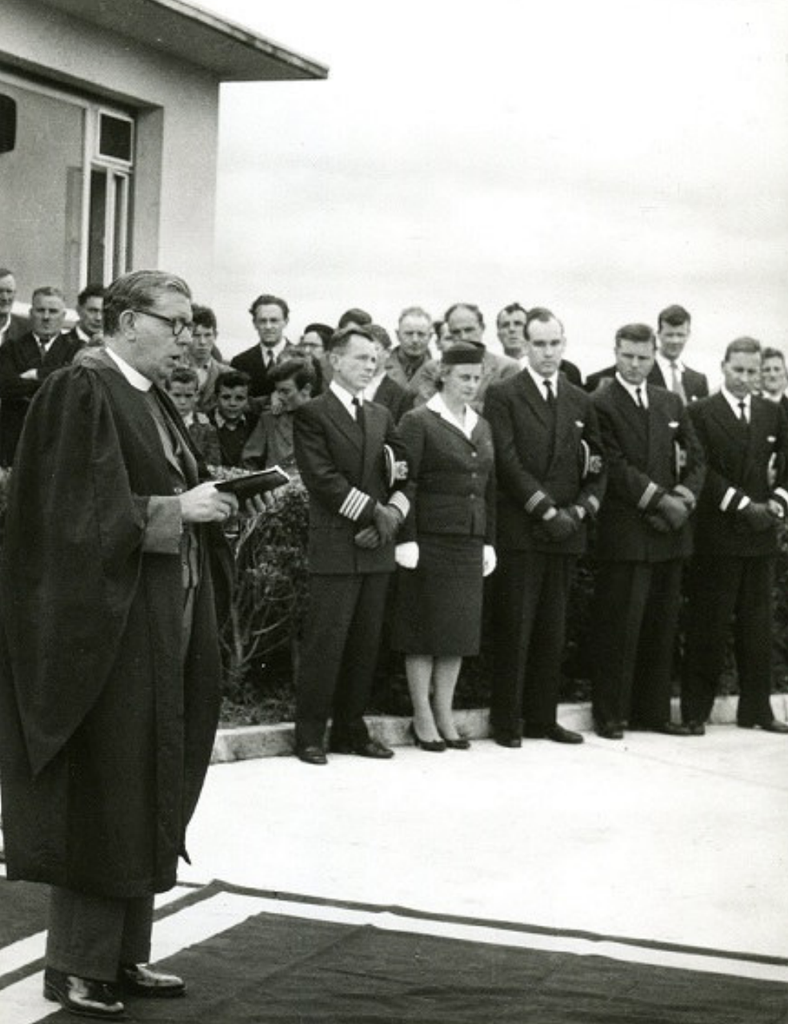
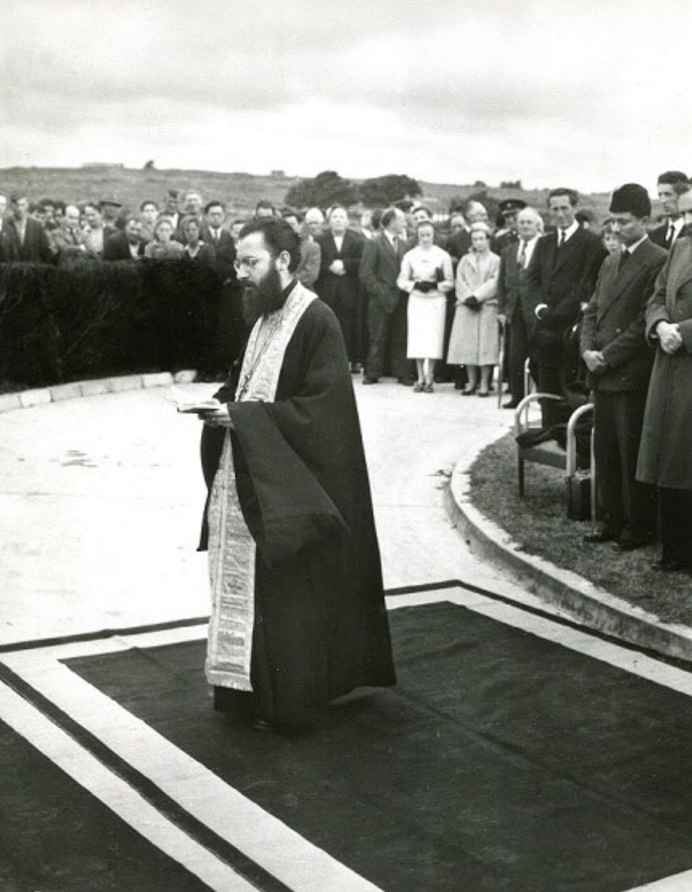
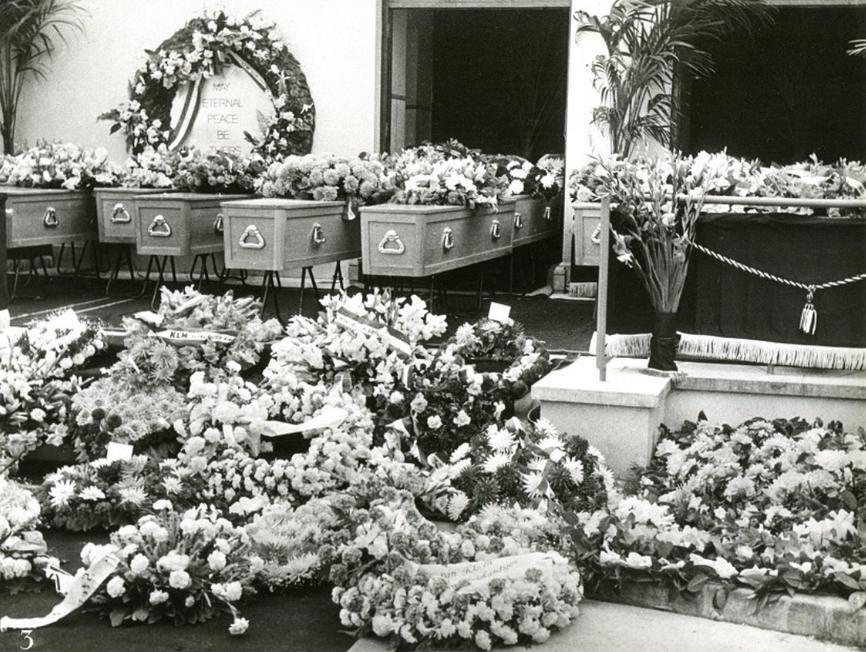
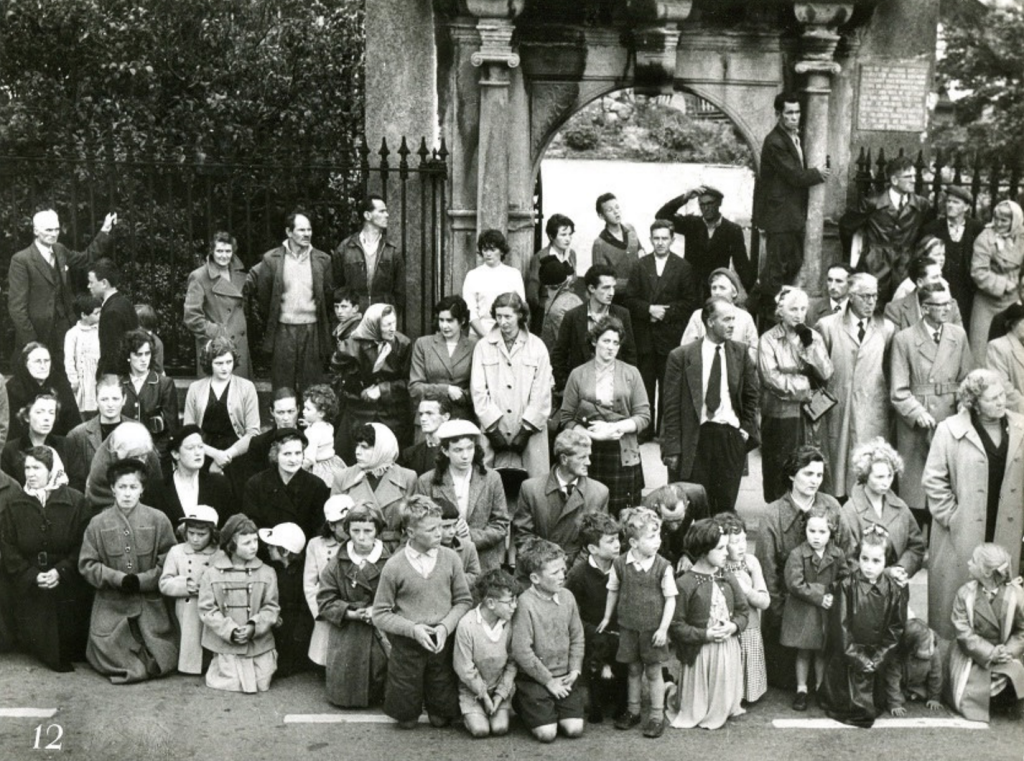
The funeral cortège, the biggest ever seen in the city, consisted of a fleet of hearses and five army trucks. Soldiers of An Cead Cath acted as pall-bearers. Thousands of people lined the route to the cemetery and there was an unforgettable sympathetic silence among them. All businesses along the route closed as a mark of respect. Along by Eyre Square and Bohermore, mothers and children knelt in prayer as the cortège passed. A mass grave had been excavated on the eastern side, just inside the main gates of the cemetery. Upon arrival, soldiers began laying the coffins in rows along the grave site. Following a grave-side ceremony, the coffins were covered with earth. One of the larger wreaths laid that day was made up of three hundred white lilies and the words from the airline company: May Eternal Peace Be Theirs. Stone memorials were later placed over the site of each coffin, many simply read ‘Unidentified.’ A large monument was also erected over the plot and a path was constructed around the parameter of the burial site.
The youngest victim, Bernadette Kock Van Leeuween, whose parents also perished in the disaster was buried on Friday 29 August close to the communal grave of the other victims. Several hundred children, members of the Red Cross, Order of Malta, nurses and many dignitaries attended the funeral. Bernadette was later re-interred in her own country, as were some of the other victims. The Connacht Tribune reported on 23 August that the loss of the Super-Constellation was the worst civil airline disaster involving a single aircraft in the history of aviation.
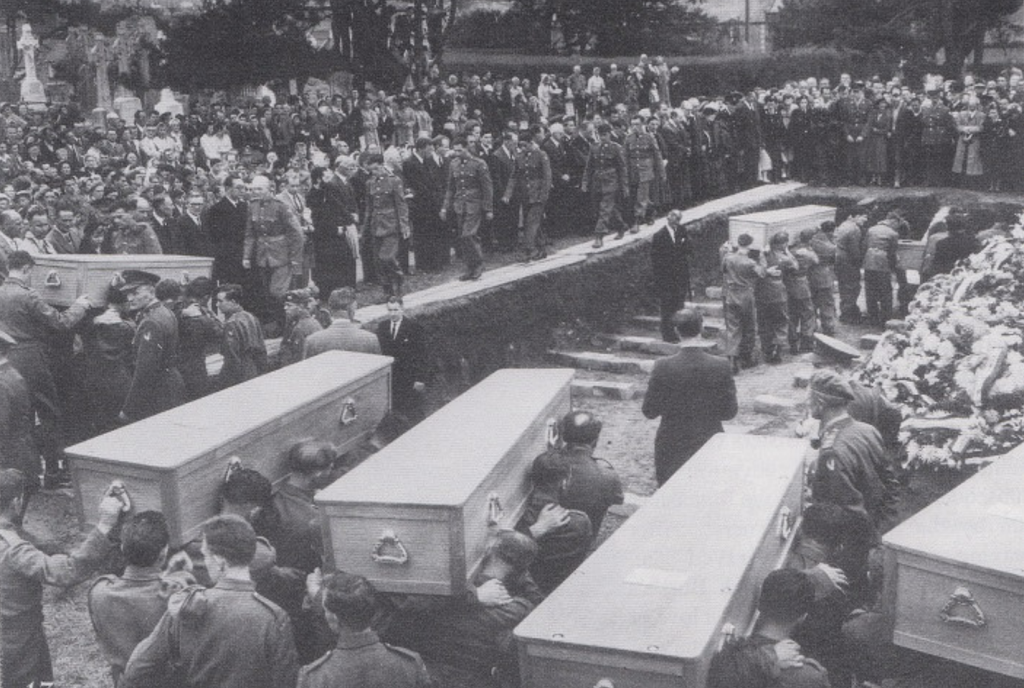
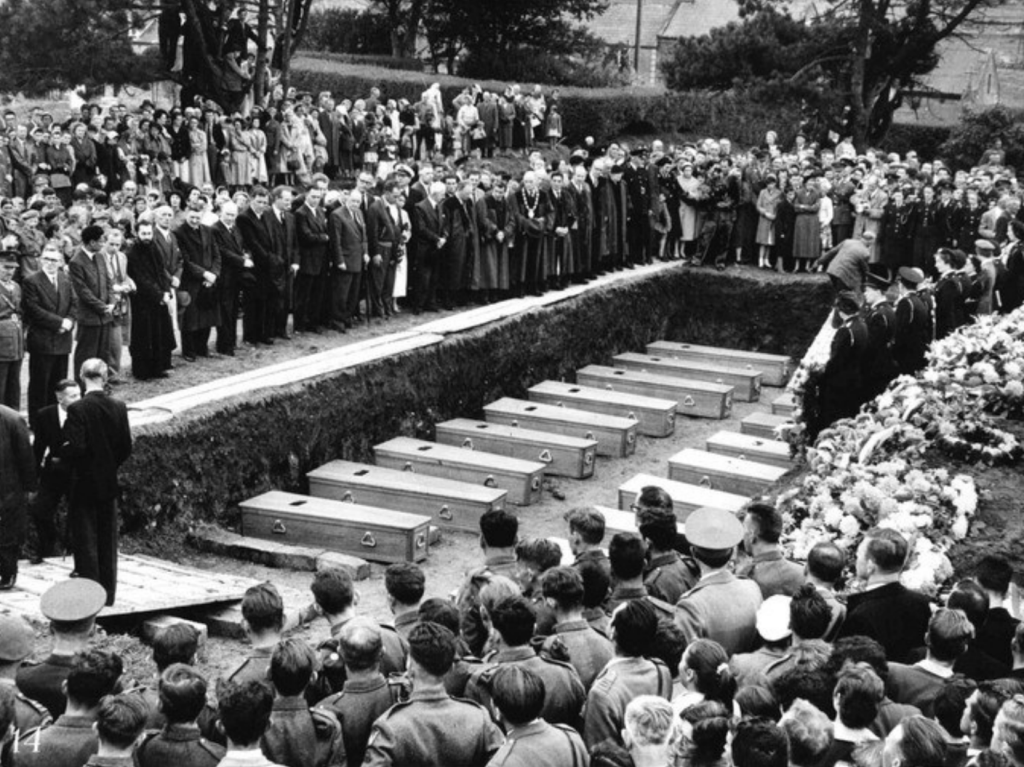
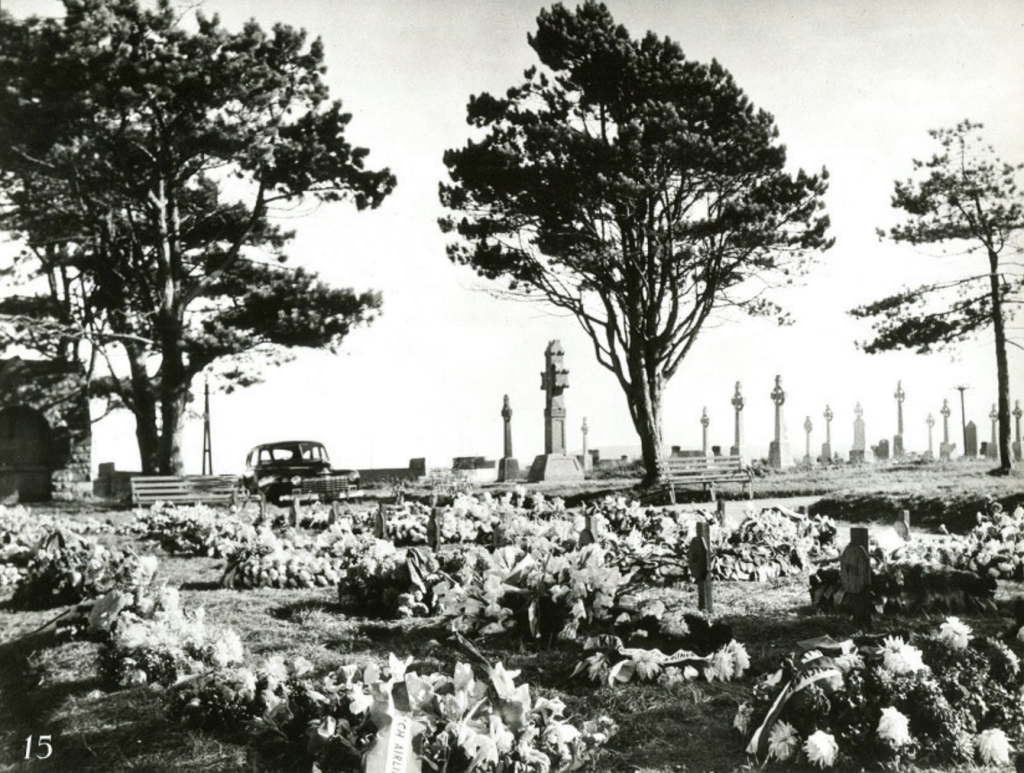
Mhaoiliosa, and the aftermath of the burial with the abundance of flowers and wearths
The Hugo de Groot disaster remains a mystery today and many questions still remain unanswered. The pathologist at the Regional Hospital, Dr J.D. Kennedy said that in his opinion, there was no evidence of an explosion. However, while the bodies showed evidence of being immersed in the sea, there was no evidence of drowning. All the victims showed evidence of trauma. The main type of injury reported was a high speed impact, yet they was no collision with any another aircraft. It was also said that the plane would not have nose-dived into the sea. Many of the victims were not wearing life jackets, which could indicate that they did not have sufficient time to slip them on. If an aircraft was in danger of ditching into the sea, one would imagine life jackets as a first priority. Why was there no distress call from Hugo de Groot?
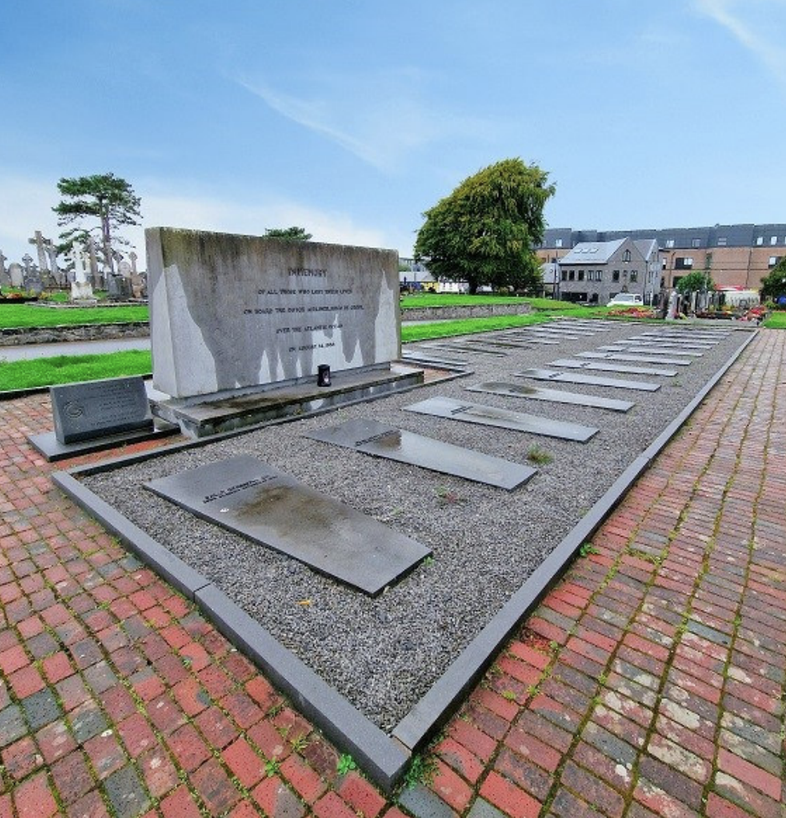
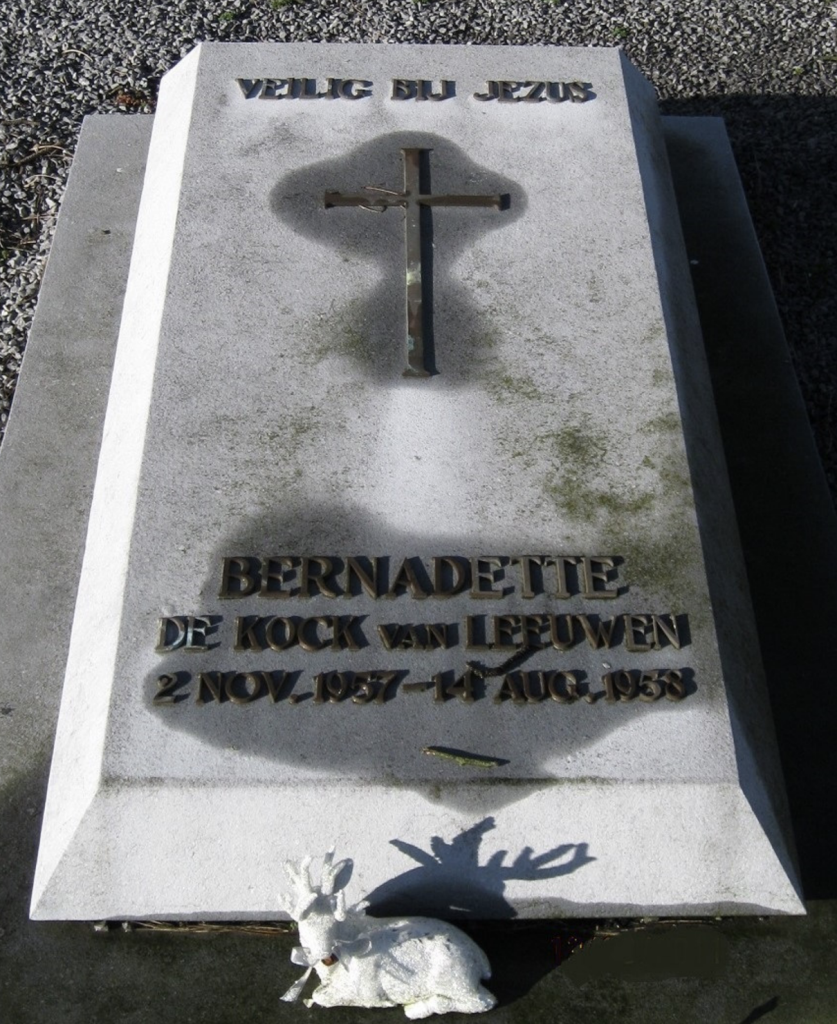
At the time of the disaster, Peter Greene was the Mayor of Galway and was personally involved in supporting family members and the investigators arriving in the city in the wake of the disaster. Two years later, he was among a number of recipients who were awarded the Insignia of the Order-Nassau by Queen Juliana of Holland in recognition of their support following the loss of the plane. On 14 August 2008, Galway City Council held a commemoration ceremony for all those who lost their lives in the tragedy fifty years earlier.
Beneath the trees of the wind-swept slopes of Ireland’s west coast, overlooking the eternal waves of the Atlantic Ocean where tragedy reached for prayer.
(Apart from the Author’s Collection, other photograph series: Courtesy Connacht Tribune & Damien Flanagan)