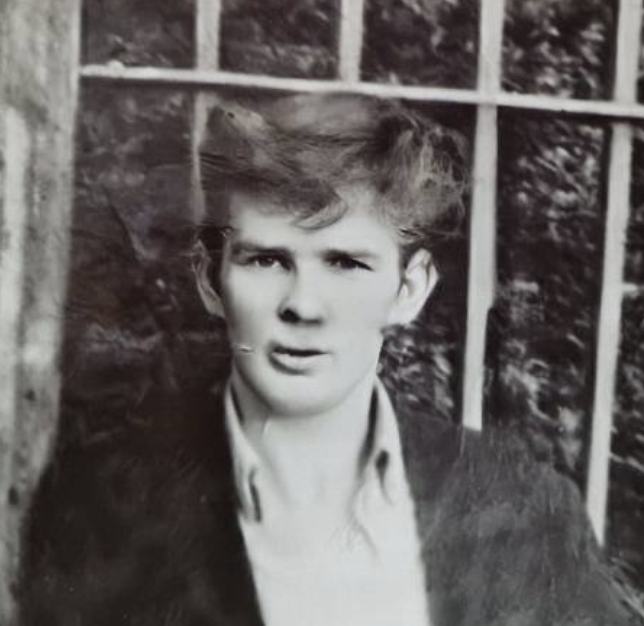
People say that there is a book in everyone, and this is certainly true of Paddy Grant of Shantalla. Paddy’s first job was ringing the bells for the Angelus in the Jesuit’s Church, Sea Road. It also included working one night a week for £1–5s. You weren’t allowed to wear narrow trousers, or ‘Teddy Boy’ pants as they were called. His father worked in the Docks, and Paddy secured a job on a ship as a ‘Galley Boy’ for a time. However, his big ‘adventure’ as a young teenager was looming. This would take him to Scotland ‘picking spuds’ along with a number of youngsters from Galway in 1964. This was an old tradition and by the start of the nineteenth century most of the migrant workers, ‘potato pickers’, were from Achill Island and Belmullet in County Mayo. The season began at the end of May and continued for about six months. The huge fields of the Scottish Lowlands could produce some twenty tons of potatoes per acre. The Irish agents or ‘gaffers’ as they were called hired workers for the Scottish landowners.
Paddy and the others saw an advertisement looking for ‘potato pickers’ in one of the newspapers and became interested in travelling to Scotland. The boys were promised £3 upon arrival in Dublin. Of course, they couldn’t tell their parents, or they wouldn’t be allowed to travel. It seems that Paddy’s father heard about the venture and made his way to the station to prevent him from going. Paddy remembered seeing his father walking up and down the platform looking for him before the train pulled out of the station. Upon arrival in Dublin, the £3 promised never materialised; the boys were told they would receive the money when they reached Scotland. Once they reached Glasgow, they boarded an open-back cattle lorry along with other migrant workers for the long journey to Ardwell, a village near Dumfries and Galloway.
Their destination was a farm outside Ardwell. Upon arrival, the boys noticed a lot of pallets around the place. They were told to take two or three pallets each and place them in a very large cattle shed. This was going to be the accommodation for the duration of their stay there. They were also given canvas sacks and told to fill them with straw as these were their mattresses and the pallets were the beds.
Work began the following morning at 6.30 am after being driven out to the massive fields by tractor and trailer. The potato ridges were extremely long, and each youngster was given an area of about thirty-five yards long, marked by two sticks stuck into the ground. As they moved across the potato ridges picking the spuds, they moved the sticks accordingly. One had to be careful, as some of the workers would move the stick in closer on their side, therefore increasing the workload on those working in the next section. A tractor uprooted the potatoes and the boys had to collect them in baskets and bring them to where they were sorted and cleaned. This meant they were constantly bending down. The work was carried out in all weathers. It was back-breaking work that went on all day until finishing time at about 4.30 pm.
The boys would sometimes place a piece of metal rod in the ground with the spuds, which brought the tractor to a halt as it would get caught in the machinery. This gave them a few minutes to rest while the driver fixed the problem. It seems the driver was aware of what was happening, but turned a ‘blind eye’ to the sabotage. When break time did arrive, the workers shared tea out of the lid of a milk churn. At the end of the day, the lads could wash themselves from a tap attached to an old pig trough. They worked and slept in the same clothes. There was no food supplied and some of the workers resorted to eating raw potatoes. There was a travelling shop that went around once a week, and also one shop in the village of Ardwell. They were paid £7 per week for their hard labour. Paddy remembers the corned beef that would make some people ill, but they never got sick.
They made a number of failed attempts to run away. Eventually, after about three months, Paddy and some of the Galway lads managed to get to Glasgow, but were three days without eating. They made their way to a church, but the priest was unable to help them. However, he sent them to a convent, where the nuns made tea and sandwiches for them. They slept in a container in Glasgow port on the River Clyde. One day outside a church, a lady noticed Paddy and gave him some money, obviously realising his situation. He went to a local shop, where he purchased a tin of beans, a packet of Marietta biscuits; and a comb. Paddy is still reminded of buying a comb when they were starving. Nevertheless, the boys didn’t go to bed hungry that night. On another occasion, Paddy went into a shop where a girl was working. She asked him his name and he told her he was Brian Poole from the then-famous rock band, The Tremeloes. She believed Paddy and would go for walks with him, but the lads were always hanging about. Over time, the boys split up on their quest to get home. Paddy was the last to reach Ireland. After arriving on O’Connell Street, he noticed and a man leaning on a railing reading a newspaper. He approached the man and asked him for directions to Galway. It seems that the man had great respect for Galway people. Knowing that Paddy was hungry, he took him to a restaurant for breakfast. He also offered Paddy a job on a building site, where the foreman was from Rahoon. Paddy was tempted, but at this stage all he wanted to do was get home. The man gave him a half-crown and put Paddy on the bus to Galway. This was his first ‘adventure’ and there were many more to come.