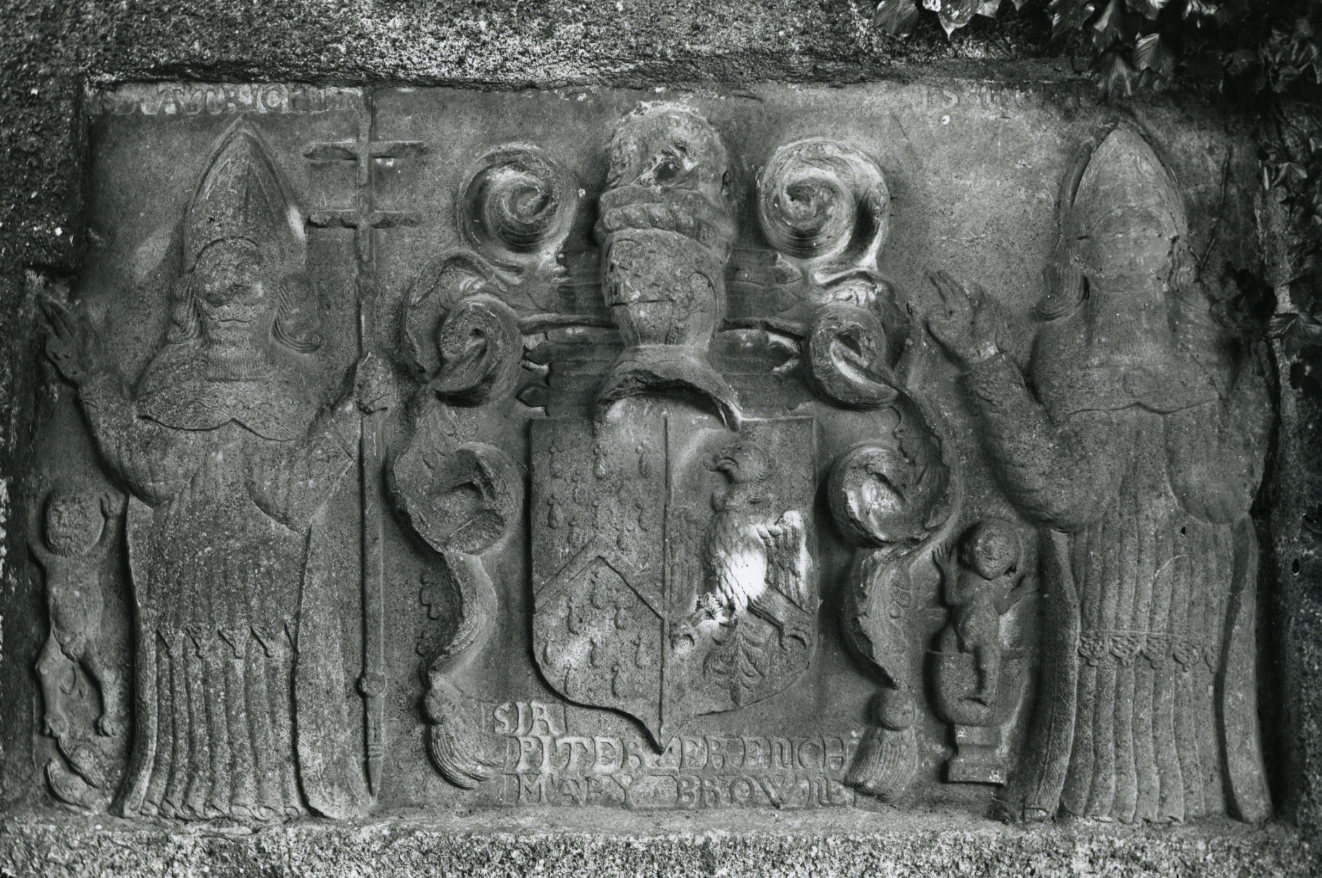
Sir Peter French was a wealthy merchant, and his family numbered among the famous Tribes of Galway. He was married to Mary Brown, whose family were also members of the tribes. He died in 1631 and was buried in the Franciscan graveyard in Newtownsmith. His tomb was one of the notable monuments in Galway. It was carved from fine marble and quilted with gold, costing approximately £500 at the time. Following the city’s surrender to the Cromwellians in 1652, Colonel Peter Stubbers destroyed the tomb. Stubbers had it dismantled and converted into a chimney-piece, and the remaining stone was sold abroad.
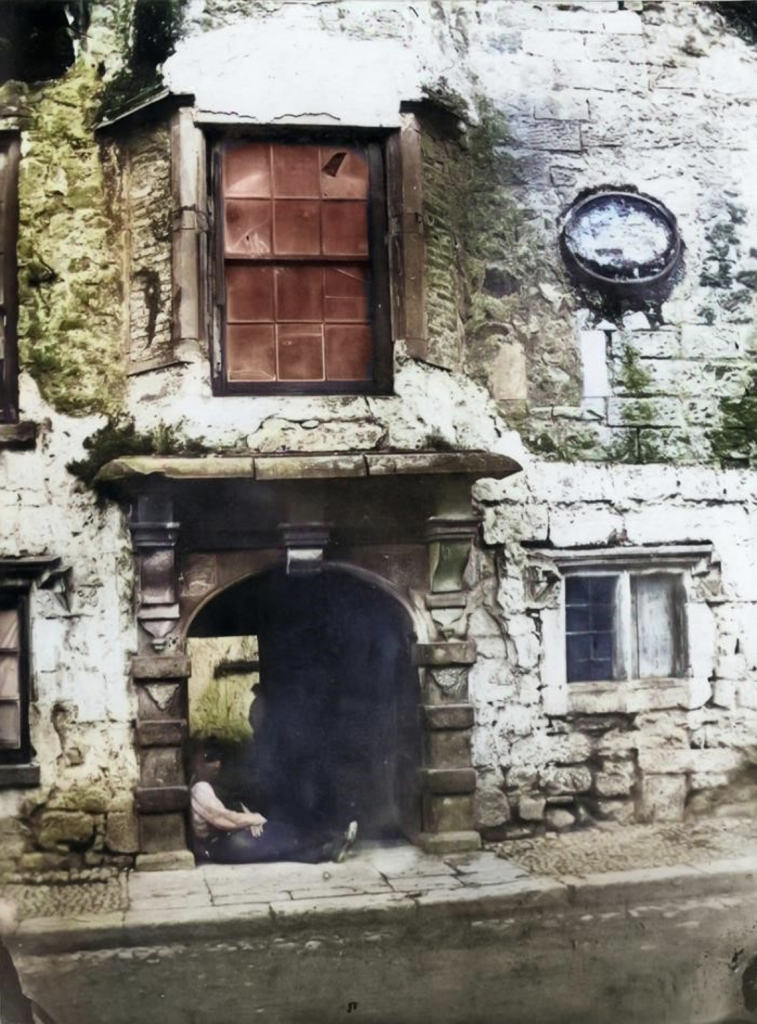
However, the house survived but had fallen into ruin by the nineteenth century. There were a number of carved stones, including a spandrel on the left containing the French coat of arms and another on the right with the Browne coat of arms. The decoration on the frieze was damaged because of the insertion of the Burke arms. This carving possibly accounts for the house being called ‘De Burgo’s Mansion’. Despite this magnificent doorway’s great importance, it was lost to development in the early twentieth century. One wonders about its whereabouts? The photograph was taken in 1908 by Lilian Bland, a keen photographer who took a series of images during her visit to Galway. She was an Anglo-Irish journalist and pioneer aviator. She is believed to have been the first woman in the world to design, build, and fly an aircraft.