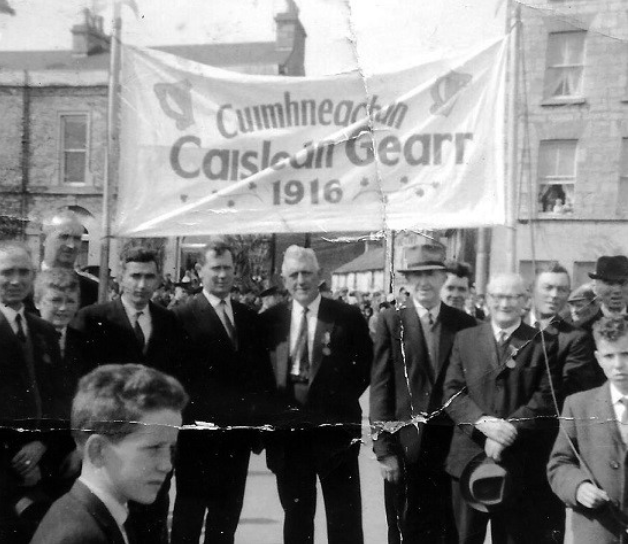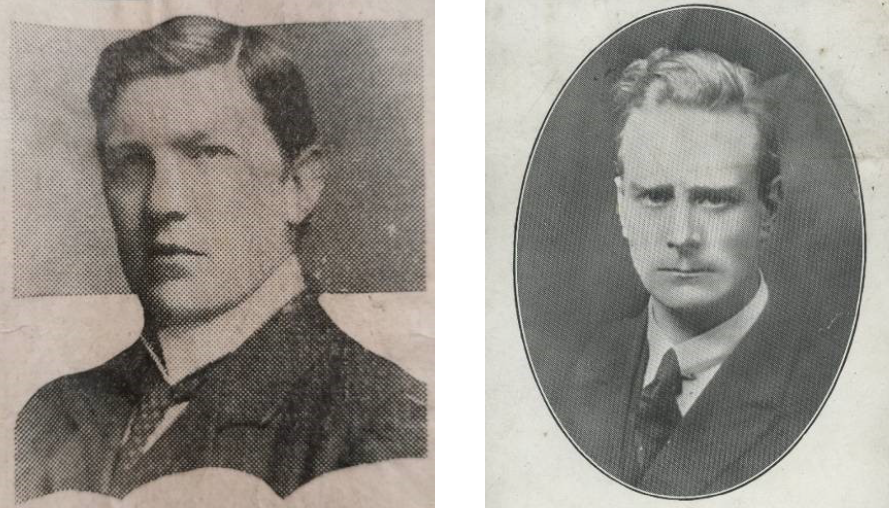
In December 1922, Liam Mellows and three other Republican leaders were executed in reprisal for an IRA attack on two politicians, Pádraic Ó Máille from Connemara and Seán Hales from Cork, in which the latter was killed. Former military comrades and political allies, in 1916, Mellows had instructed Ó Máille to go to Connemara to rally the Irish Volunteers for the Easter Rising, and both men had represented the county in the first and second Dáil Éireann, 1919–22. A new exhibition at Galway City Museum explores the Irish Civil War, the lives of Ó Máille and Mellows, and the fateful events of December 1922.
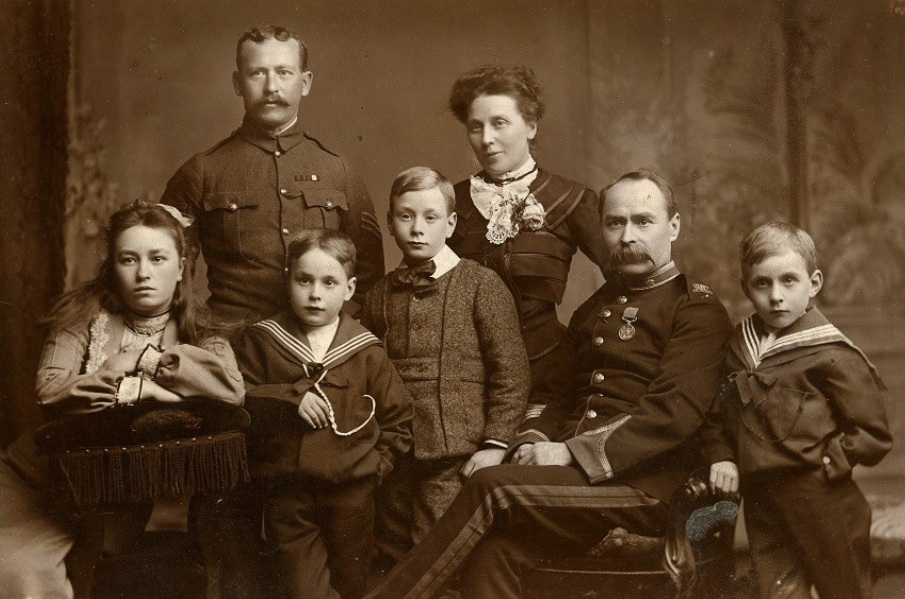
Part 1: The Irish Civil War (From Truce to Civil War)
In December 1921, Irish and British delegates signed a compromise agreement, the Anglo-Irish Treaty, which granted dominion status to 26 Irish counties – the Irish Free State. Following its narrow ratification by Dáil Éireann in January 1922, a provisional government, headed by Michael Collins, began the task of creating the new state. While there was broad public support for the Treaty, it caused division within the political and military wings of the republican movement. Some Republicans viewed the Treaty as a betrayal of the Irish Republic and of those who had fought and died for it, while others reluctantly accepted that it was the best available offer in the circumstances. In March 1922, the Irish Republican Army split into pro and antitreaty factions. The larger anti-treaty faction rejected the authority of Dáil Éireann, elected an Army Executive, and seized the Four Courts in Dublin.
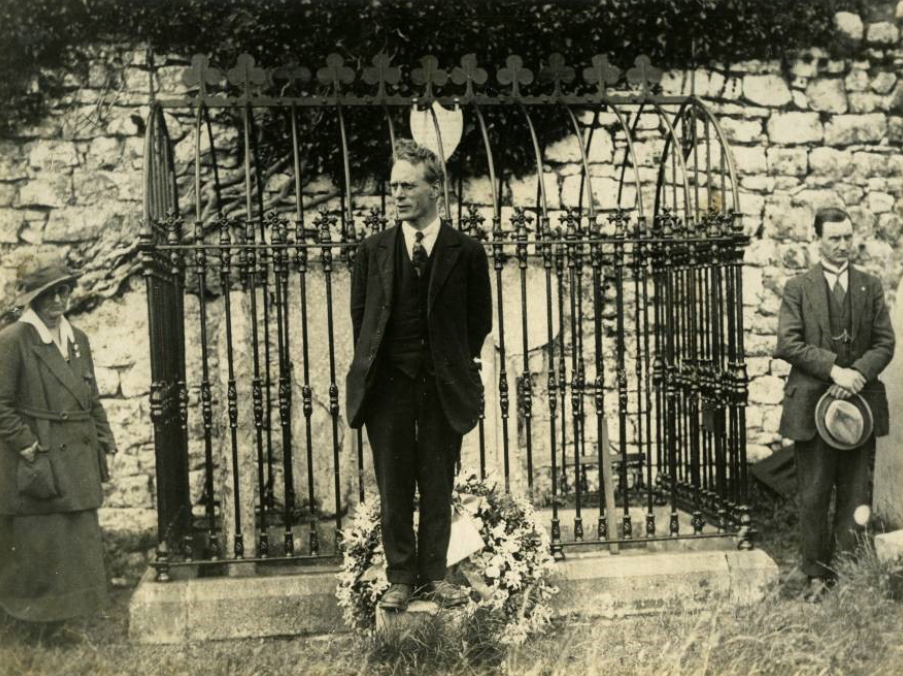
The Civil War Begins: In the general election of 16 June 1922, almost 80 per cent of the Irish electorate voted for pro-treaty candidates, allowing the Provisional Government to claim popular support for the Treaty. Twelve days later, civil war erupted when, under pressure from Britain, the Free State Army began shelling the Republican position in the Four Courts. After three days, the Four Courts surrendered, but fighting continued in and around O’Connell Street until 5 July.
With Dublin now effectively under its control, the Free State Army went on the offensive between July and September, with much of the fighting taking place in the ‘Munster Republic’ and in the West. Financed and equipped by the British, the Free State Army quickly took control of urban areas. Republican forces then retreated to the countryside, reverting to the guerrilla tactics successfully used against Crown forces during the war of independence (1919–21), and destroyed roads, bridges and railway lines to impede the advance of the Free State Army.
Executions and Reprisals: Following the sudden death of Arthur Griffith on 12 August and the killing of Michael Collins on 22 August, the Government and Army, under W.T. Cosgrave and Richard Mulcahy, adopted a more hardline approach to the conflict. In October 1922, the Public Safety Bill established military courts that could impose death sentences for possessing arms or attacking government forces. Between November 1922 and May 1923, the government carried out 81 official executions. Following the execution of prominent Republican, Erskine Childers, on 24 November, Liam Lynch, Commander-in-Chief of the Republican forces, listed fourteen categories of people who were to be shot on sight, including all Dáil deputies who had voted for the Bill, certain senators, judges and hostile journalists.
Part 2: Pádraic Ó Máille and Liam Mellows
Pádraic Ó Máille (1876–1946): On Easter Monday 1916, Ó Máille attended a meeting of Irish Volunteers at Athenry, Co. Galway and Commandant Mellows instructed Ó Máille to go to Connemara to mobilise local Volunteers for the Rising. The following day, while on his way to carry out his order, Ó Máille was arrested in Galway city and ultimately interned at Frongoch Camp in Wales. Released under the general amnesty at Christmas 1916, Ó Máille campaigned for Sinn Féin in the South Longford and East Clare by-elections, and afterwards took an active part in the reorganisation of the Volunteer movement in Connemara.
The police attempted to arrest Ó Máille at his home for alleged involvement in the fabricated ‘German Plot’ in May 1918. He opened fire, escaped and went on the run. The following December, he was elected MP for Galway-Connemara and was one of only 27 Sinn Féin MPs present at the formation of the first Dáil Éireann in January 1919. In early 1921, Ó Máille was involved in the formation of the West Connemara flying column, and took part in ambushes at Clifden and Screebe. He supported the Treaty, stating that he was representing the popular view of his constituents. He was re-elected for Galway in the June 1922 election.
Liam Mellows (1892–1922): Following the Easter Rising, Mellows escaped to New York. While there, he was elected Sinn Féin MP for Galway East in 1918 and became a key organiser during de Valera’s American tour of 1919 to 1920.
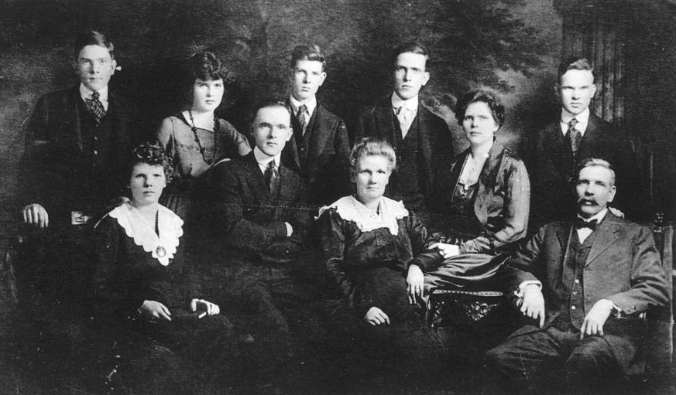
Mellows returned to Ireland in October 1920, and was appointed IRA Director of Arms Purchases. Returned unopposed for Galway in 1921, he strongly opposed the Treaty. He argued that the Irish Republic was ‘a living tangible thing’ and that the Treaty was invalid because it was signed under threat of ‘immediate, terrible war.’ He was elected to the anti-treaty IRA’s Army Executive in April 1922, and lost his Galway seat in the following June election. One of the leaders of the Republican garrison in the Four Courts, Mellows was against surrender, declaring: ‘The Republic is being attacked here … we must stand or fall by it. If we surrender now, we have deserted it.’
Part 3: Ambush, Reprisal & Reaction
7 December 1922 Ambush: On 6 December 1922, the first anniversary of the signing of the Treaty, the Irish Free State formally came into existence, and Ó Máille was elected Deputy Chairperson of Dáil Éireann. The following afternoon, he lunched at the Ormond Hotel in Dublin with fellow pro-treaty deputy Seán Hales, a Brigadier-General in the Free State Army. As the pair boarded a hackney cab to go to Dáil Éireann, members of the Dublin No. 1 Brigade anti-treaty IRA opened fire, killing Hales and wounding Ó Máille.
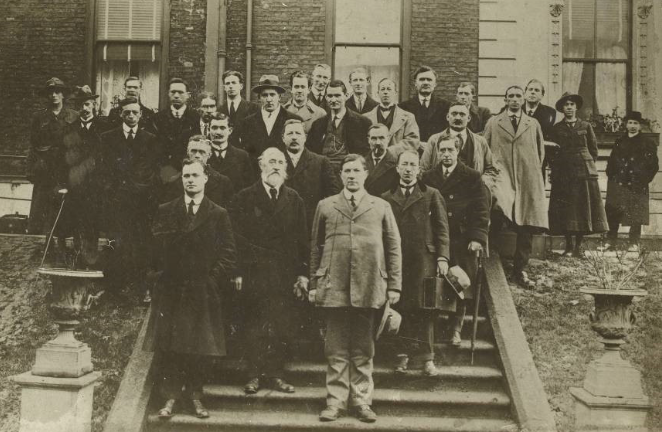
It seems that Ó Máille, and not Hales, was the principal target of the attack, with the Dublin No. 1 Brigade reporting: ‘It was intended only to wound Hales, but he was mistaken for O‘Maille.’ Hales was not present when the Provisional Government voted on the Public Safety Bill, known by Republicans as the ‘Murder Bill’ or ‘Executions Act’, and so was not a target for assassination by the anti-treaty IRA. Ó Máille, however, had voted in favour of the Bill and, therefore, was a target. Dáil Éireann was in session when news of the attack reached Leinster House. President Cosgrave broke the news of the ‘appalling tragedy,’ but there was no hint of any immediate government response.
Reprisal, 8 December 1922: On the evening of the ambush, the Free State cabinet met and Richard Mulcahy, both Minister for Defence and Commander in Chief of the Army, proposed the execution of four prominent Republican prisoners – Dick Barrett, Joe McKelvey, Liam Mellows and Rory O’Connor – as a reprisal and a deterrent. The four men had been in prison since the fall of the Four Courts, before the passing of the Public Safety Bill. One-by-one, the cabinet consented to the executions.
Woken at 3.30 am, Mellows initially thought he was being transferred. He was then presented with a typed notice stating that he was to be shot at 8 am as ‘a reprisal’ and ‘as a solemn warning’ to those ‘engagedin aconspiracyof assassination against the representatives of the Irish People.’ At 5 am, Mellows penned a last letter to his mother, distributed his personal possessions, and sent a farewell note to his imprisoned comrades. After Mass, the four men were blindfolded and lined up against a wall before a twenty-man firing squad. Mellows held a little crucifix firmly in his hand, which he had with him during the Easter Rising in Galway. His last words were ‘Slán Libh Lads.’
Reaction: The executions prompted widespread shock, anger and dismay. Republican prisoner Peadar O’Donnell, who had shared a joke with Mellows the previous night, recalled: ‘The wing that day was a grave; we were a wordless, soulless movement of lives suddenly empty.’
At home, The Irish Times opined that the executions, ‘eclipses in sudden and tragic severity the sternest measures of the British Crown’. Abroad, The Times of London declared that ‘The British Government never adopted such drastic measures, even in the darkest days of the fighting before the Truce,’ while The Nation of New York called the executions ‘murder foul and despicable and nothing else’. One dismayed bishop wrote to President Cosgrave: ‘That one man should be punished for another’s crime seems to me to be absolutely unjust.’ The Galway diocesan secretary, Fr. James O’Dea, who opposed the Treaty, wrote: ‘a Government that murders its prisoners deserves no support … the last executions [8 December 1922] are an outrage on civilisation.’ Labour deputy, Cathal O’Shannon accused the cabinet of acting without authority: ‘You murdered these men … you have smashed the Irish Free State.’ Cosgrave defended the action, declaring bluntly ‘terror meets terror.’
The Legacy of the Civil War: Known in Irish as Cogadhnag Carad (war of friends), the civil war contradicted the old proverb ní buan cogadh na gcarad, ‘a war between friends doesn’t last’. The resulting division and bitterness led to the foundation of two parties, pro-treaty Cumann an Gaedheal (later Fine Gael) and anti-treaty Fianna Fáil, that would dominate Irish politics for a century. Although there were atrocities committed on both sides, by international standards of the time, the number of casualties (around 1,500, including 81 state executions) was relatively low. However, many leaders of the Irish revolution were lost to the civil war, and afterwards many disillusioned Republicans emigrated. Historian Michael Hopkinson wrote: ‘In such a small country there was a horrible intimacy about the war.’ This was certainly true in the case of Ó Máille and Mellows. The Galway writer Micheál Breathnach (‘Tóchar Mhairtin’) summed up many people’s view of the conflict when he wrote: ‘I would rather draw down a big black curtain on that period and put it out of my memory altogether if I could.’
Galway City Museum: War of Friends, 1922–23: The civil war story of Pádraic Ó Máille and Liam Mellows will run from October 2022 to May 2023, the centenary of the end of the Irish Civil War. It features rare photographs and several items connected to both men, including a revolver gifted by Michael Collins to Ó Máille on his wedding day and the last letter of Liam Mellows, written to his mother shortly before his execution. Funded by the Department of Tourism, Culture, Arts, Gaeltacht, Sport and Media, the exhibition is produced as part of Galway City Council’s Decade of Centenaries Programme 2022.
Galway City Museum is open from Tuesday to Saturday, 10 am to 5 pm, and is free of charge. Call (091) 532460 or visit www.galwaycitymuseum.ie for further details.
Tá fáilte roimh cách!