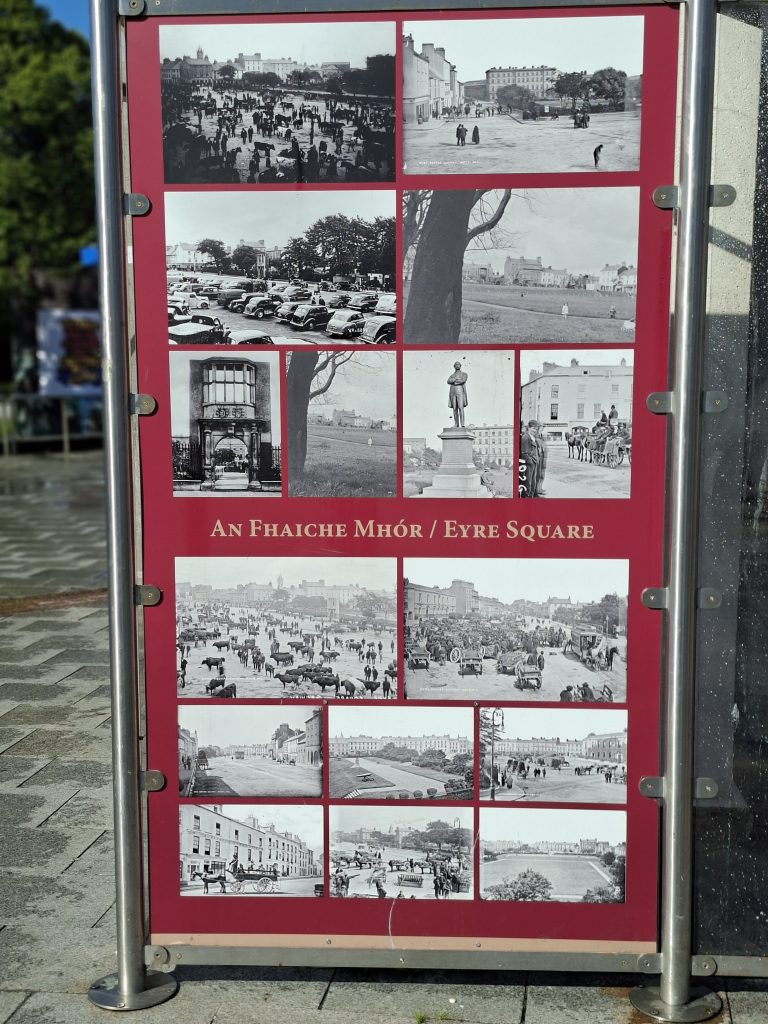
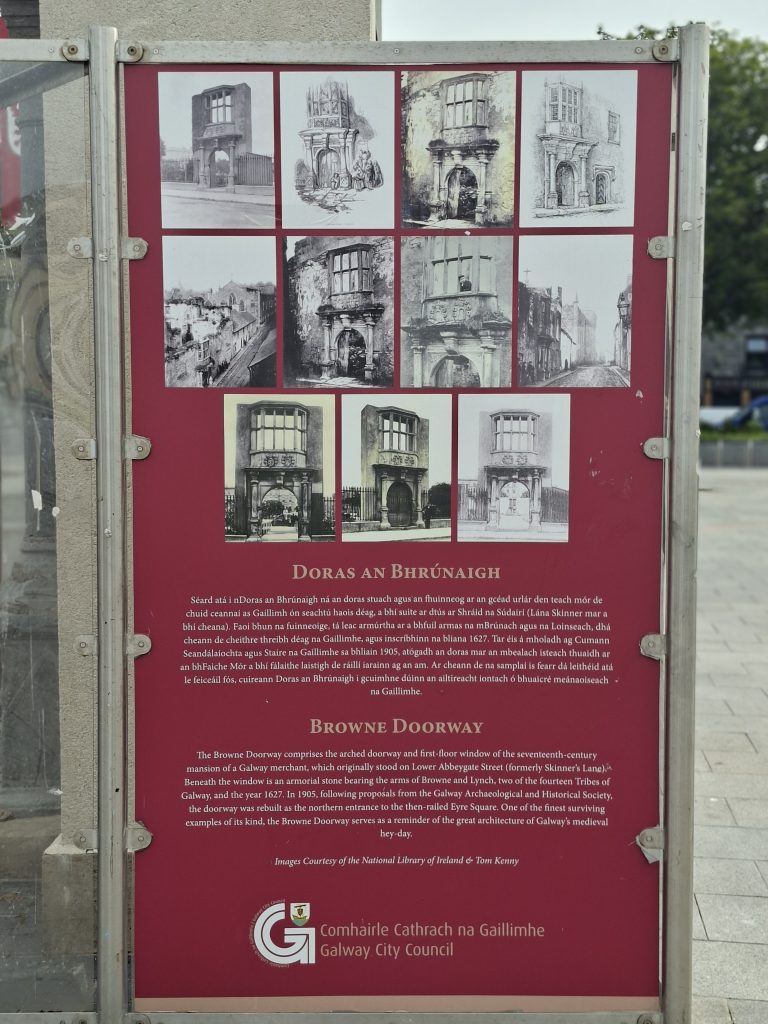
What follows are several old photographs of Browne’s Doorway, which is now located at the top of Eyre Square, and these photos are courtesy of Galway Library:
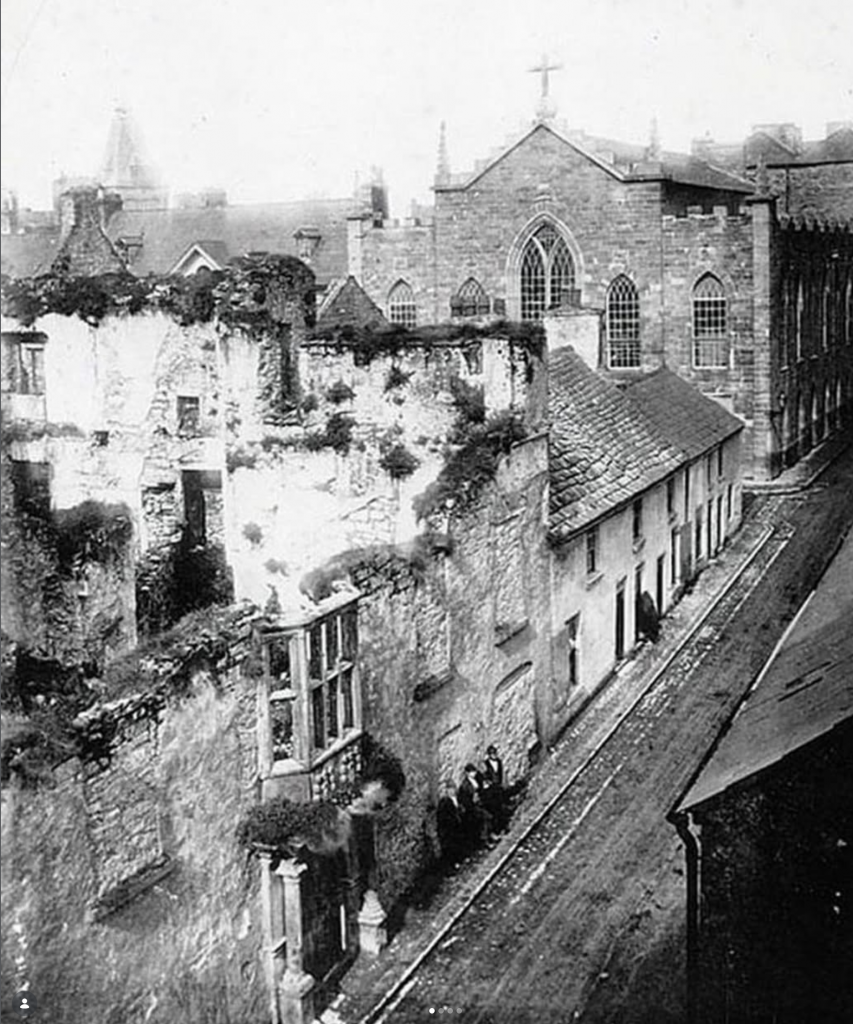
In the first photograph taken in circa 1870, you can see the remains of the Browne Mansion, and the original site of the Browne Doorway, as it stood on Lower Abbeygate Street from the early 1600s. The pro-cathedral building is very viable at the corner of Lower Abbeygate Street and Middle Street. The doorway was about to be demolished in 1905, when the Galway Archaeological and Historical Society stood in and had it carefully protected and relocated to Eyre Square, where it became the entrance into the park and remains standing today.
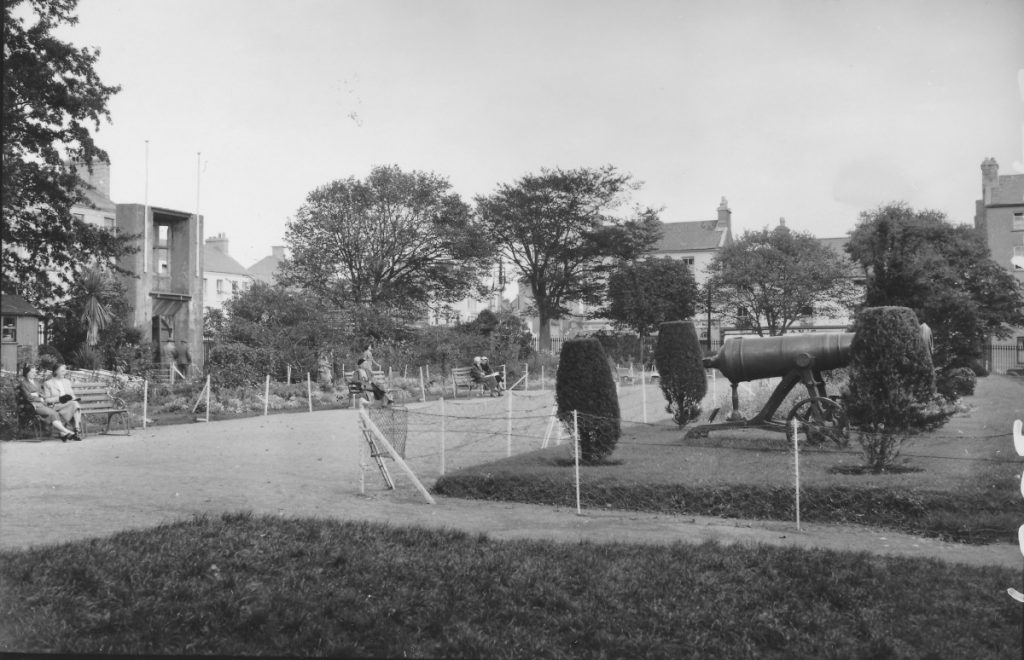
The second photograph is taken from inside the park in the middle of Eyre Square. There are trees and shrubs around the park, and walkways run through it in a number of directions. Several seats are available along these walkways, and a number of women are seen sitting on these. Some of the green areas in the park are surrounded by fencing, and at least one rubbish basket is attached to one of these fences. On the left is Browne’s Doorway, which serves as the entrance to the park, which is surrounded by railings. The doorway was originally the entrance to the Browne family home on Lower Abbeygate Street, but was moved, in 1905, to Eyre Square. The cannon in the foreground is one of two captured during the Crimean War and gifted to the City.
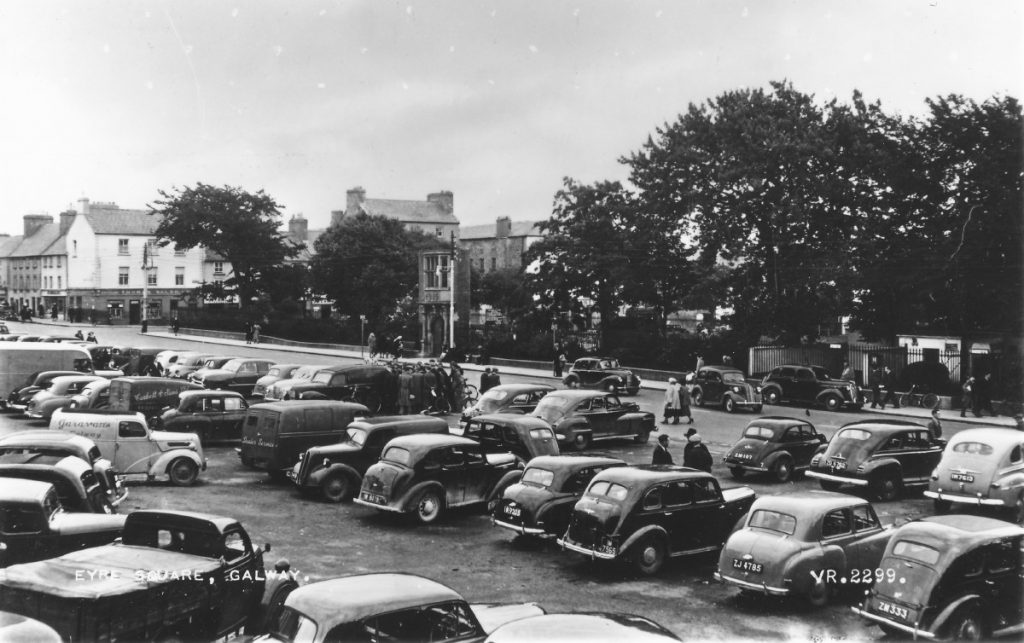
The third photograph is again of Eyre Square, but taken from outside the park. There are numerous cars in the square, and in many cases, it is possible to read their number plates. There are a few vans, one with the words “Garavan’s Galway” on another with “Corbett & Sons Ltd” printed on its side. A crowd of people is standing behind another car for some reason; some of whom are holding bicycles. There are railings around the green that is in the middle of the square, and the entrance to this green is the Browne Doorway. There is an electricity pole near the doorway, and the Railway Hotel can be seen on the far side of the square. Trees are very evident on the green, and a bicycle leans against the railings. Houses on the left-hand side of the square are visible. At the corner, there is a shop with the name “Thomas Walsh” over its door. There is an electricity pole in front of this shop on the other side of the street.
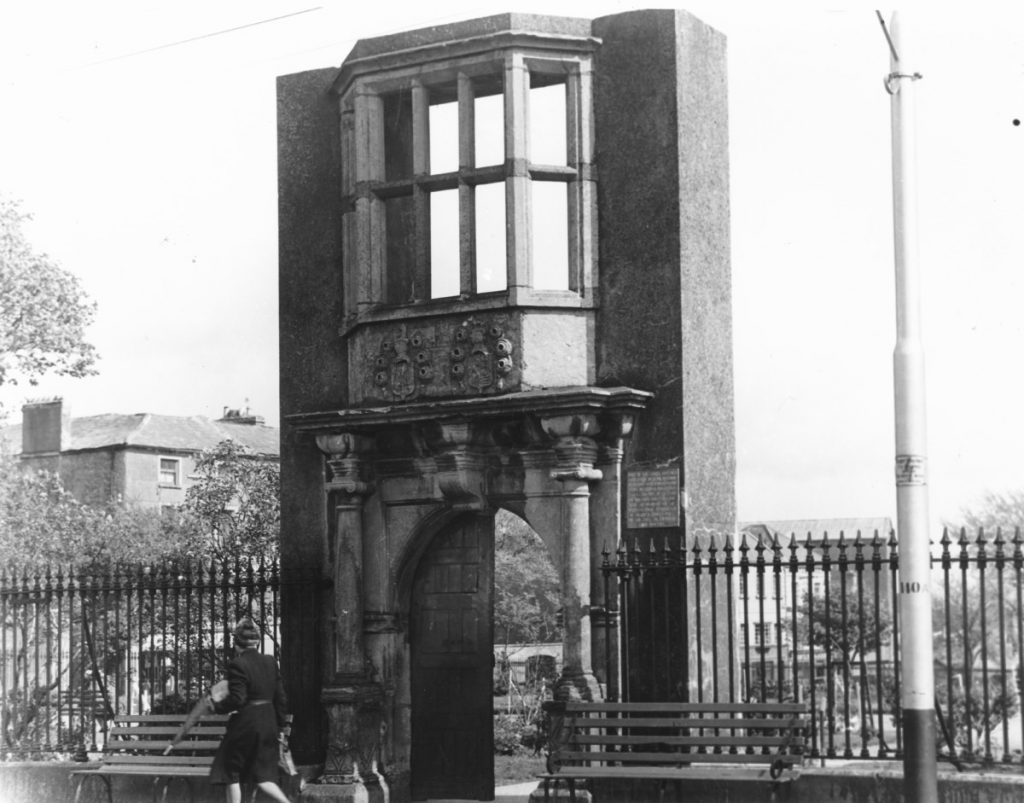
The fourth photograph is a clearer image of Browne’s Doorway in its heyday. There is a bay window over the door, and a column on either side of the front, with a plaque on the right. There are railings around the square, and the door serves as its entrance. There is a seat on each side of the door, and a streetlight to the right of the door. A woman is seen walking past the doorway. There are trees growing in the square, and some of the buildings surrounding the square are visible on the left.
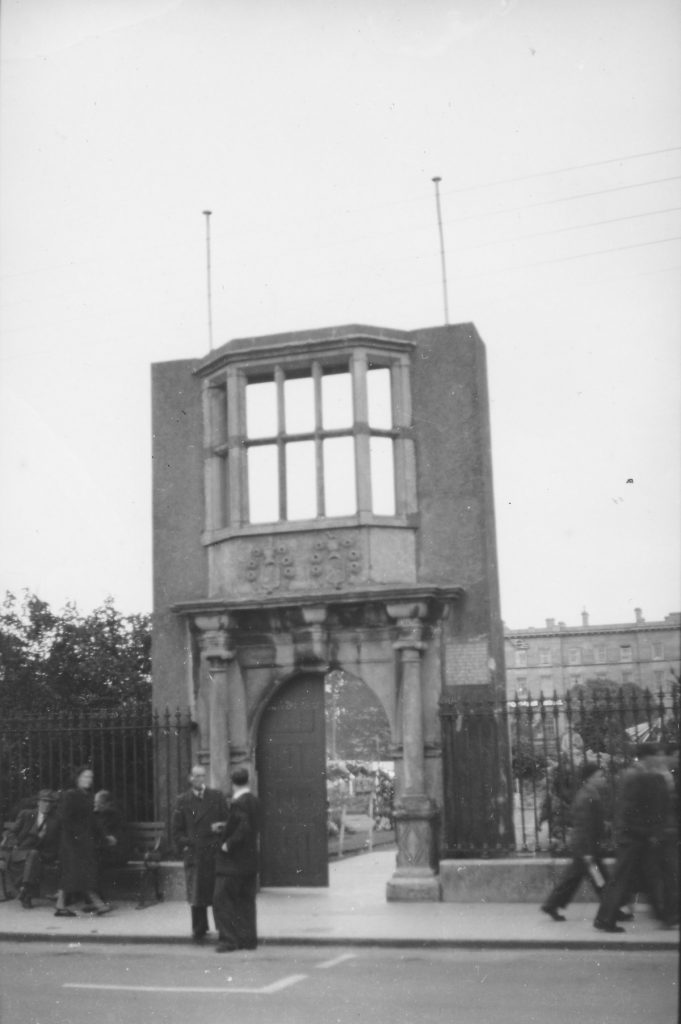
The fifth photograph is a similar one of the doorway leading to the park in the middle of Eyre Square. There are railings around the square, a plaque visible on the right of the door, and a seat on the left. There are two people sitting on the seat, one of whom is a man wearing a hat. There are five other men in the photograph, and one woman. Trees are growing in the park, and the statue of Padraic O’Conaire is just beyond the railings. The Railway Hotel can be seen in the background. Interestingly, there appears to be two flagposts on top of Browne’s Doorway.
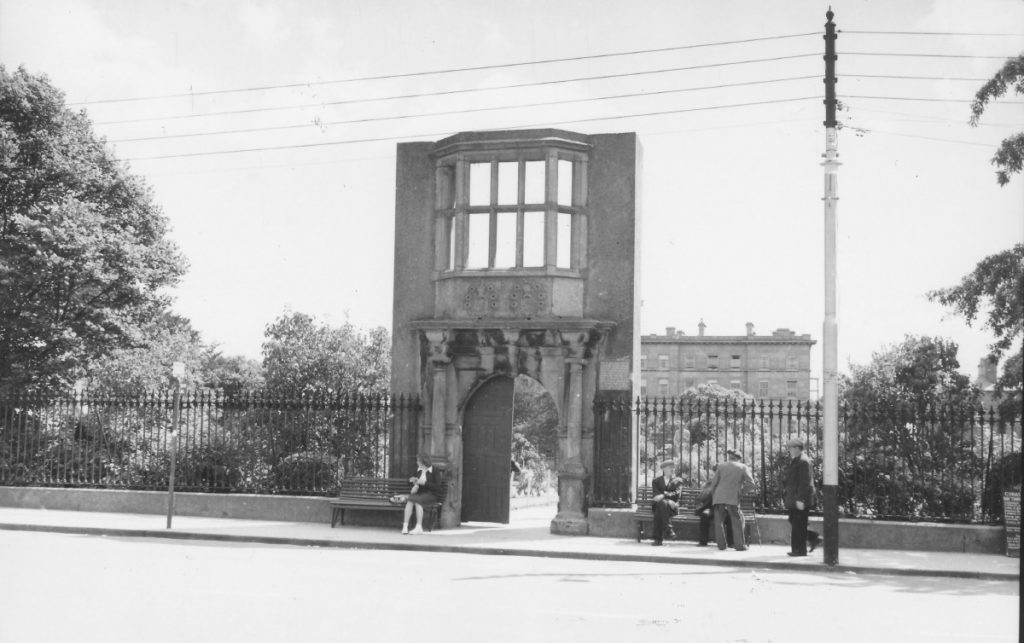
The sixth photograph is again from a similar position. There is a seat on either side of the entrance, and a woman is seen sitting on the seat on the left. There is a bus stop near this seat, and two men are sitting on the seat to the right. A third man is talking to them while a fourth man is walking past. All four are wearing caps. There is an electricity pole near this seat. There are trees and shrubs evidently growing in the square. The statue of Padraic O’Conaire is just about visible in the square, and the Railway Hotel can be seen in the background. On the extreme right of the picture, there is a board with white writing. The first word on the board is ‘Coras’. Coras is an Irish word meaning company. The next line reads, “Day Tours”. The company mentioned in the first line is most likely Coras Iompar Eireann (CIE), which means Transportation Company of Ireland. This was a state-owned company with responsibility for public transport that exists to this day.
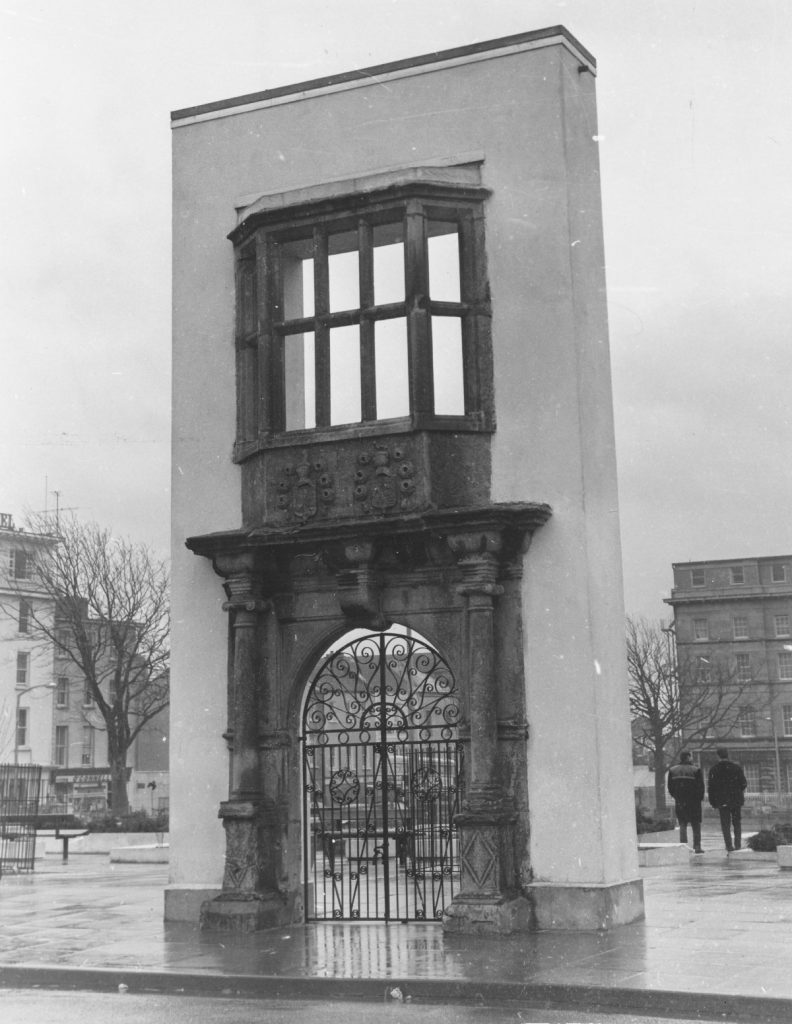
A seventh photograph of Browne’s Doorway is more recent, as the railing surrounding the square has now been removed. Two men are standing a short distance behind the door, and the Railway Hotel can be seen further on. There are trees and at least one seat in the square. Some of the buildings that surround the square can be seen. There is a public house on the left with the name “O’Connell” over its door, which is still in operation to this day.
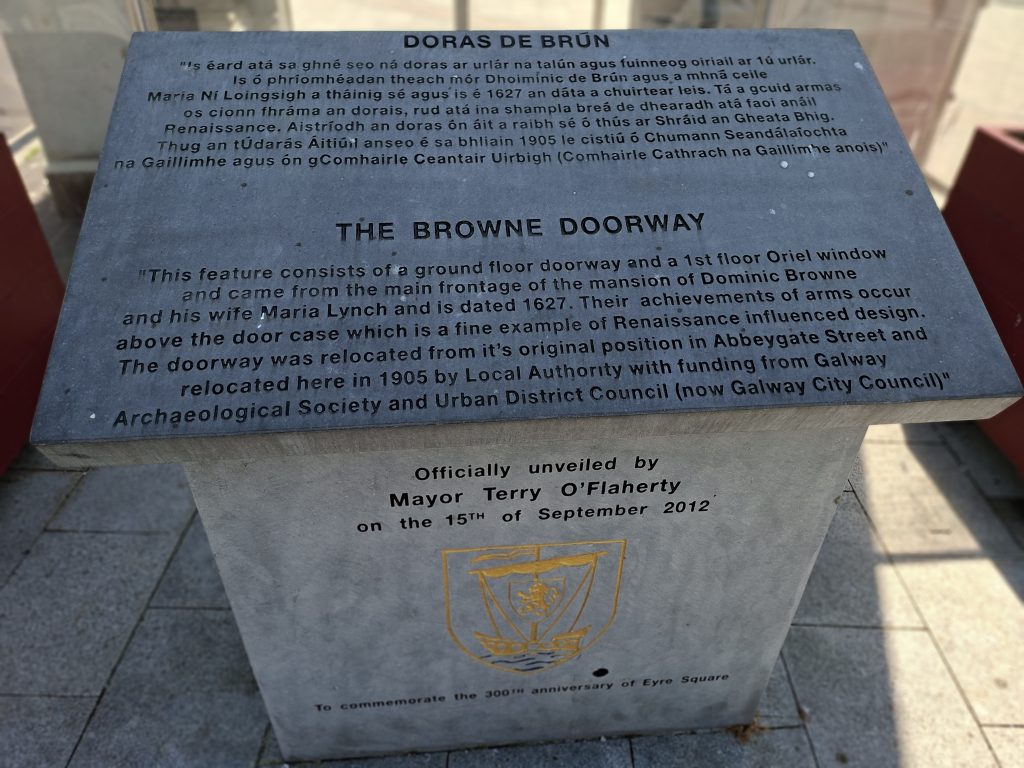
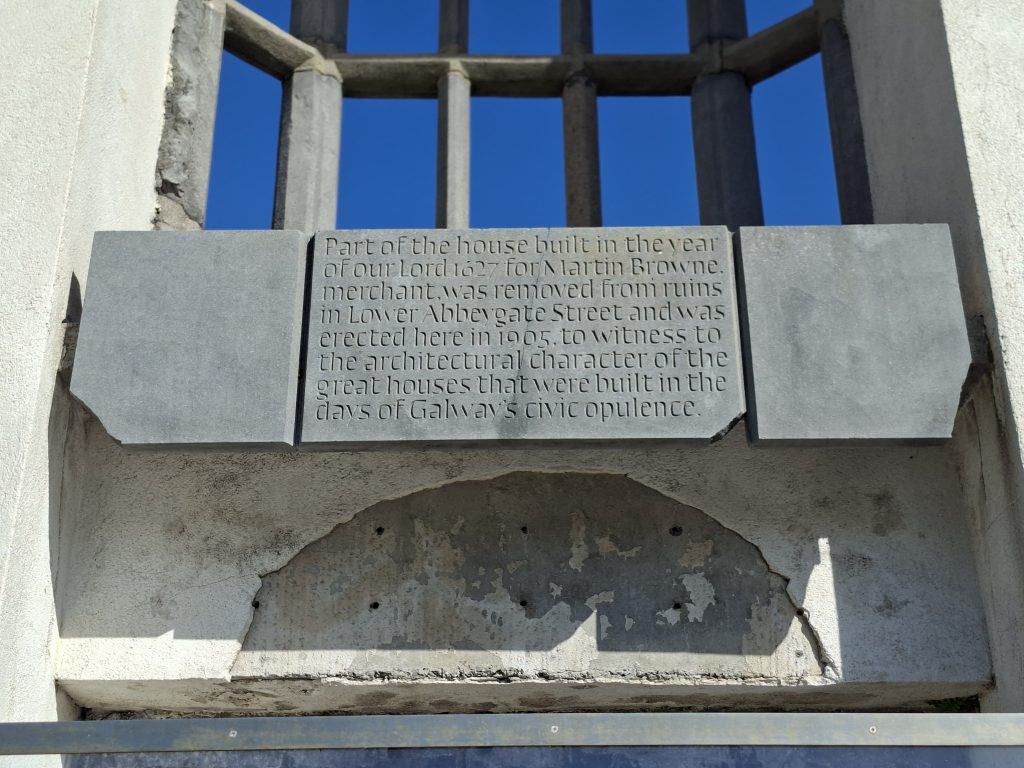
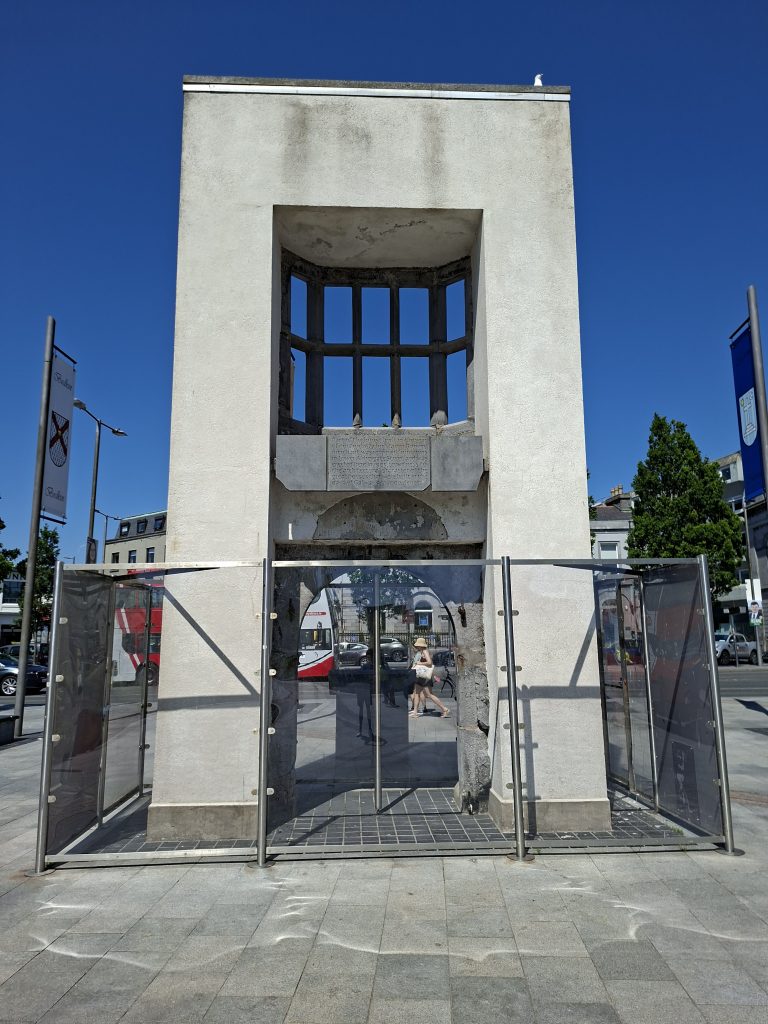
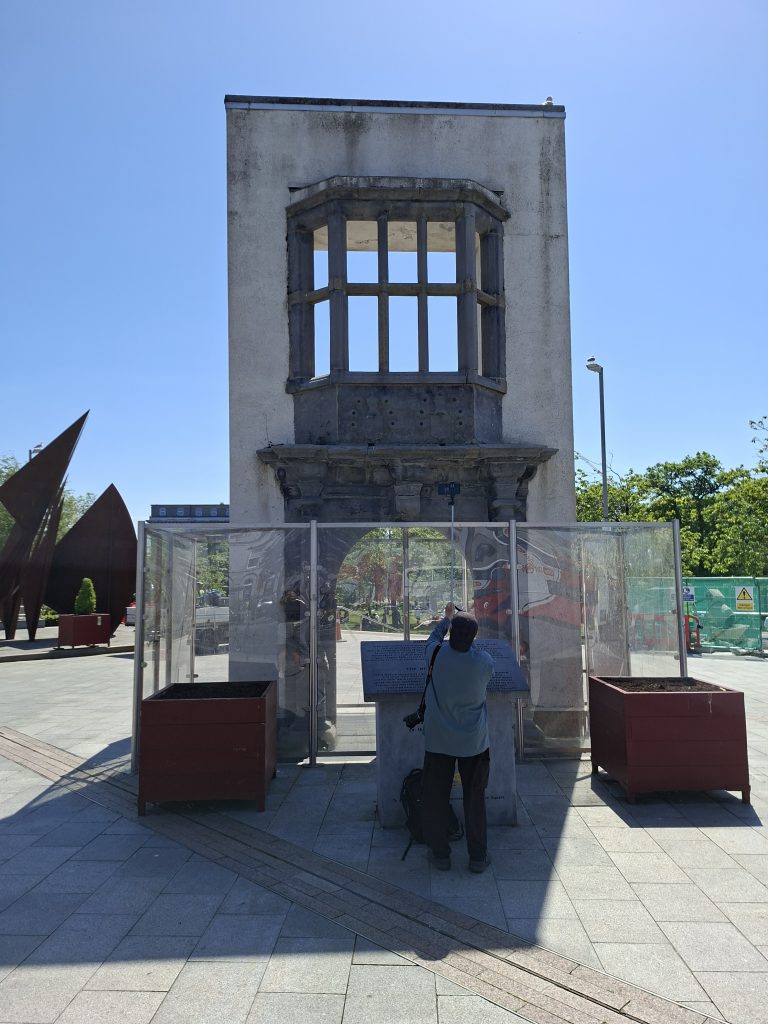
The final series of photographs were taken at the end of May 2026. By this time, a clear perspex barrier has been built around the lower part of the doorway, and a commemorative podium has been erected at the front. A plaque adorns the back of the doorway, and on the side of the perspex barrier, a number of old photographs and further information on Browne’s Doorway are displayed.