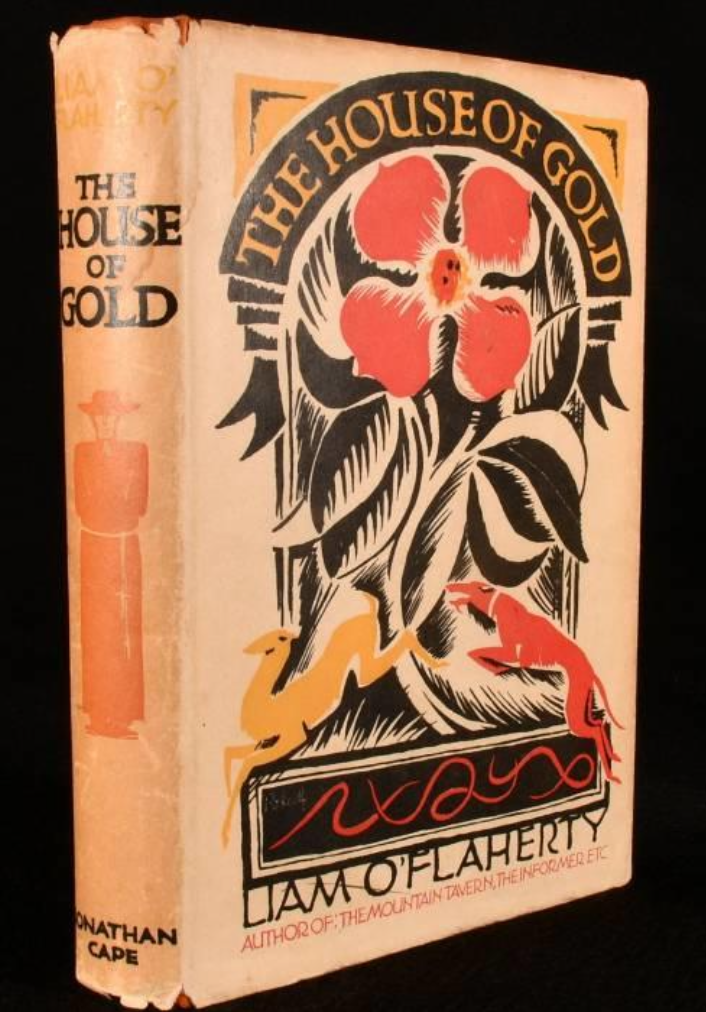
Liam O’Flaherty’s novel, The House of Gold, was published in 1929, the year that the Censorship of Publications Act was enacted, and it was the first novel by an Irish writer banned under that legislation. With its action taking place in a single day in the town of Barra, a thinly-fictionalised Galway, The House of Gold is in some respects a Galway equivalent of Joyce’s Ulysses. In terms of subject matter, however, it more closely resembles James Plunkett’s Strumpet City.
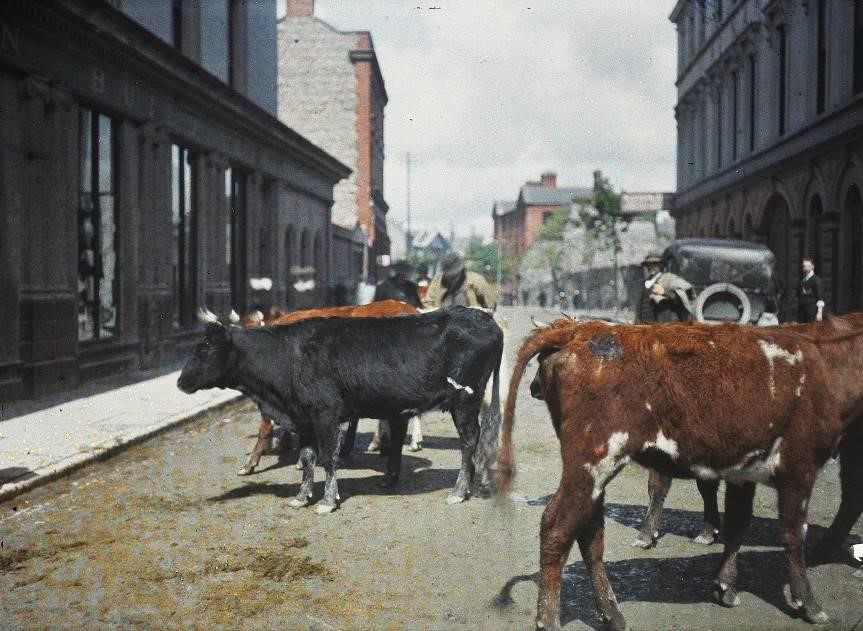
Galway was at a low ebb economically in the 1920s, and O’Flaherty’s description of a fair day scene conveys something of its appearance and character:
“The car moved on, advancing in low gear, tooting, past a horse tough into a narrow street that was like a ravine, descending to the sea, cobbled, with tall stone houses, overarching, dark, falling into ruin. Some houses were empty, others were buttressed. Clothes hung out to dry on ornate balconies. Carved and columned doorways led into shabby hucksters’ shops. Steps led down from the pavement into cellars, where old women sat at tables selling pigs’ feet and mussels. There were cobwebs in the windows...” (House of Gold, 1929 edn, p. 115)
A novel of love, jealousy and disappointment, The House of Gold carries a strong socio-political message. It may be regarded as an allegory of 1920s Ireland, with its principal characters representing distinct ‘types’ in the emerging Free State, and with the social relationships in Barra/Galway standing in for those in partitioned Ireland as a whole. To appreciate the wider message of the novel, it is important in this instance to take account of the novelist’s background.
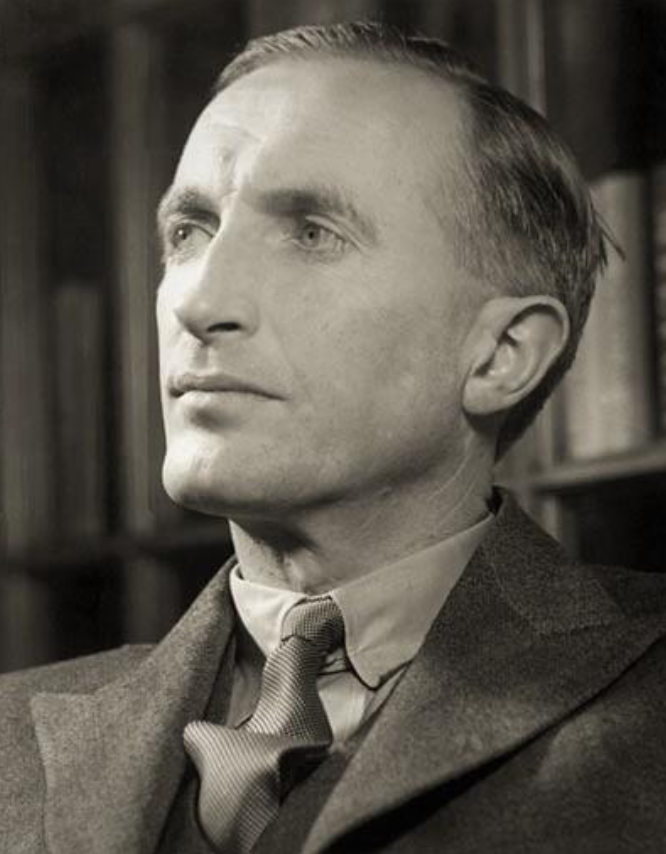
Liam O’Flaherty (1896-1984) was a native of Gort na gCapall on Inis Mór, the largest of the Aran Islands. As a prospective Catholic priest, he received a secondary education in Rockwell, Co. Tipperary, and Blackrock College, before briefly attending the Dublin diocesan seminary in Clonliffe. He enlisted in 1916 in the Irish Guards, a regiment of the British Army, and was sent to fight in France and Belgium. Wounded in 1917, he was invalided home, but he continued to feel the effects of posttraumatic stress or ‘shell-shock’ as it was labelled at the time. In 1919-20, he visited his siblings in Boston, where he was encouraged to write by his older brother Tom, a radical labour activist. He was also influenced politically by Tom, and back in Ireland, he opposed the Anglo-Irish Treaty and joined the infant Communist Party, leading an ill-fated protest of the Dublin unemployed dubbed the ‘Rotunda soviet’. Thereafter, he committed to a literary career, publishing short stories and a succession of novels, including a bestseller and award-winner, The Informer (1925). By the time The House of Gold appeared in 1929, he was recognised as a leading modernist writer.
In Francis O’Neill, one of the central characters in The House of Gold, we recognise elements of its author’s biography:
“I’m sent away to school after my people have starved themselves to collect enough money to make me a priest. I ran away from the seminary and become a revolutionary. I’m put in jail. My people are disgraced… Then I started a paper with that scoundrel Mullally. He ran away with the funds and the paper went bankrupt. Then I came home with the idea of going to America. My sister gave me the money to go. The money is spent long ago. I’m still here.” (HoG, p. 15)
But if O’Neill is partly based on O’Flaherty himself, he also represents a generation of idealists who, having been on the losing side in the Civil War and sundry social struggles, have become bitter and disillusioned. Having once fought to free Ireland and her people, O’Neill’s highest ambition now is to rob the richest man in Barra, and to run away with his wife.
The rich man is Ramon Mor Costello, a government TD who represents the ascendant class in the new state. He is the classic ‘gombeen man’ who has exploited credit relationships to enrich himself and to impoverish those obliged to do business with him, while using his wealth to exclude all competitors. Liam O’Flaherty’s opinion was that the struggle for Irish independence had produced merely a change at the top, with exploitative capitalism replacing parasitical landlordism. To underline this point, Ramon Mor’s home is the former mansion of the landed de Burgo family, Ramon Mor, however, lacks the good taste of the previous occupants, as is shown in the following description:
“The drawing room was very large. It was cluttered with furniture. The furniture did not suit it. Everything lay about pell-mell. Colours contrasted violently… Over the mantelpiece there hung an enormous portrait of His Holiness, the Pope of Rome. The Pope had his hand raised, as if he was blessing Ramon… all the heirlooms of the family were therein gathered, including s spinning wheel and the blackthorn stick brought from Dublin by Ramon’s father, as a souvenir of Daniel O’Connell’s Birth Celebration.” (HoG, p. 90)
The eclipse of the gentry class by a rising business class is underlined by the marriage of the gruff, uncultured and ageing Ramon to Nora Saunders, the beautiful daughter of improvident and insolvent gentry. Nora is a tragic figure, an object of lust who has at least four of the male characters and one of the female characters in her thrall.
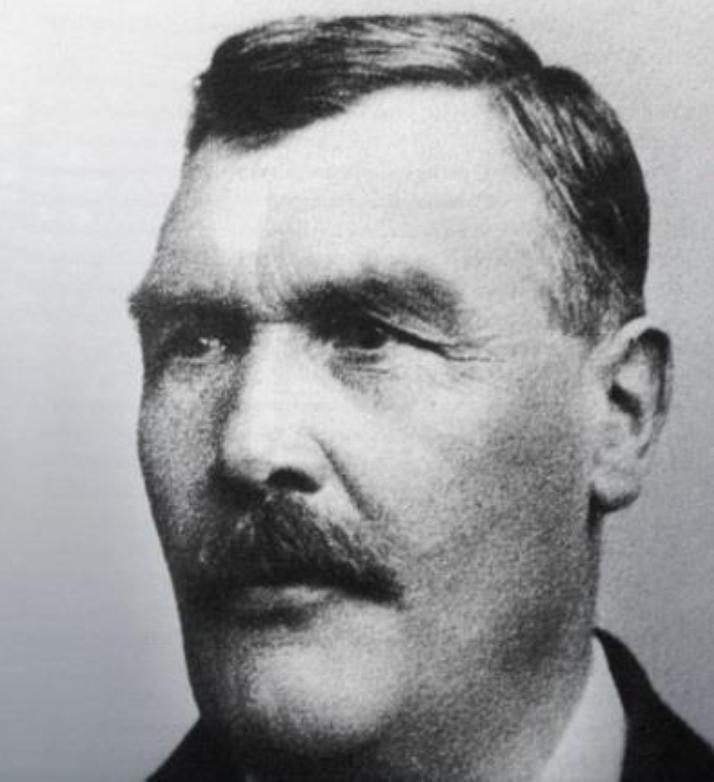
In Ramon Mor, contemporaries would have recognised the merchant and politician Máirtín Mór McDonogh, who dominated the public and business life of Galway during these decades. In one scene in the novel, Ramon Mor stirs up a crowd, turning it against a planned cooperative which will threaten his business, before leading it through the town to break up a cooperative meeting:
“Provided you stand by me. If you don’t, if you listen to the scoundrels that are plotting against me, there’ll be another story. That’s my word for you.” (HoG, p. 278)
It was an episode with close parallels in the 1920s Galway. In February 1927, Máirtín Mór McDonogh had personally led a group of his workers across a dockside picket line to unload a strike-bound vessel, while in September of the same year, he had the workers in his fertilizer plant called together on the eve of an election, to warn them of ‘the serious consequences if he was forced out of public life and public business’.
O’Flaherty himself was unapologetically anti-clerical and, reflecting his attitude, the Catholic Church is represented in The House of Gold as a powerful social force, but one that is mostly subordinate to business interests. None of the priests in the novel are sympathetic figures. Fr Considine is an effete and bookish alcoholic, obsessed by Nora, but utterly under the control of Ramon Mor. Fr Fogarty is a self-satisfied man of the world who supports a cooperative only because he fears that Ramon Mor’s greed will provoke:
“a further revolution, and this will be a real one, sweeping away the rights of property and Christianity revolution.” (HoG, p. 151)
Another priest was the promoter of:
“a public subscription in aid of a tennis club for the sons and daughters of the shopkeepers who wanted to become refined.” (HoG, p. 291)
The House of Gold is satirical and allegorical, but it is also absorbing and unsettling. The characters feel their emotions – love, hate, jealousy – very intensely, and in their interactions with one another they are frequently sharp, disparaging and worse. One shocking scene in the second chapter, a sexual assault on Nora by Fr Considine, would have been sufficient in itself to have it banned by the censors.
The writer deserves not our anger but our pity and the hope that he will come back out of the unhealthy swamp of thought and imagination into which he has wandered, until he stands once more on ground where the complex problems of human life can be dealt with more sanely by his undoubtedly brilliant pen, until he stands in short on the firm foundation of Justice, Purity and Truth. Though long-banned, The House of Gold is available in affordable paperback and ebook formats, having been republished by Nuascéalta in 2013.