Over the centuries there have been a number of theories regarding the origins of the name Galway. One of them involved the death of a beautiful princess named Galvia (Gaillimh). According to tradition, she was of the Firbolg tribe, who settled in Ireland. Legendary tales inform us that they were descended from an earlier group of people who left Ireland and settled in different parts of Europe. They were enslaved by the Greeks and forced to work on barren lands in a bid to make these places fertile. The work involved carrying bags of clay and spreading the soil across the sterile areas. This is how their name supposedly evolved, ‘Fir’ meaning Man and ‘Bolg’ referring to the bag. They eventually escaped and returned to their old hunting ground and settlements in Ireland. Medieval chronicles record that the women were, ‘obedient daughters, devoted wives and nurturing mothers. However, this does not mean that they were subservient; they could also be strong and independent.
Galvia would have been considered an obedient daughter and was much loved by her family. Her father, Brasil, was a great chief or king, whose settlement was around the Galway area. The colony was large and encompassed both sides of the River Corrib, including the present-day Claddagh. According to one tale, Galvia was loved by all the people, and they were enchanted by her presence. Folklore mentions her father being wealthy, but she was his greatest and most precious treasure. It seems that she loved swimming and wandering the shore along Galway Bay.
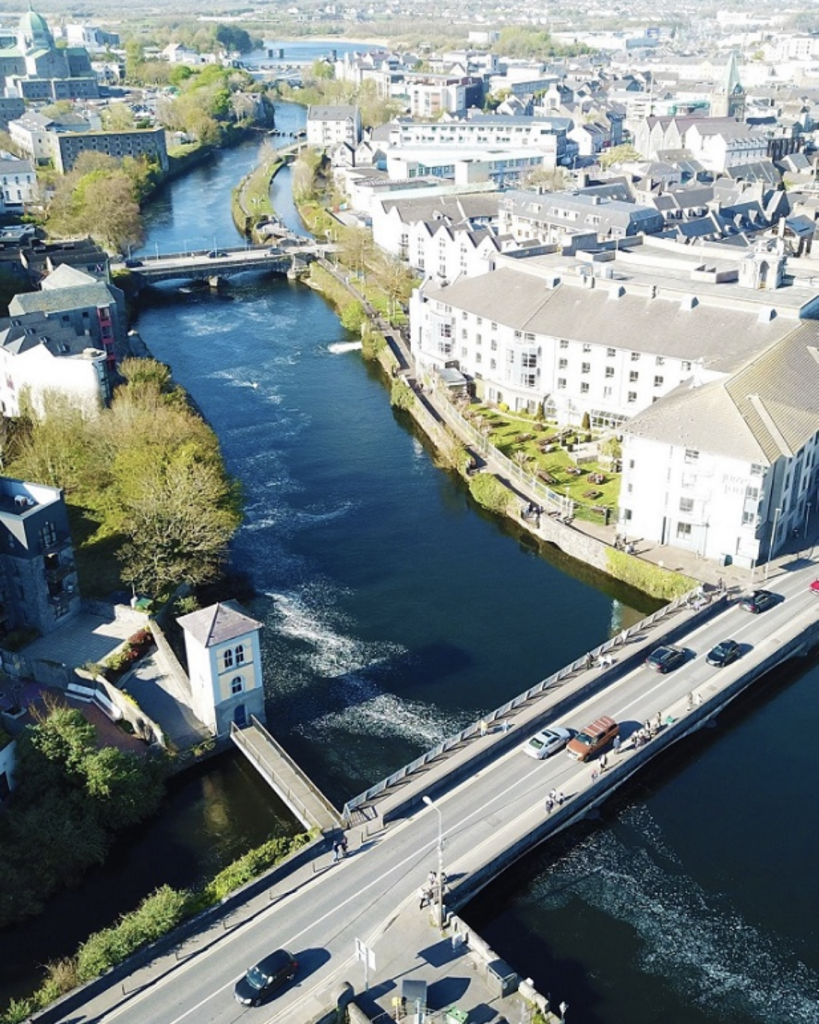
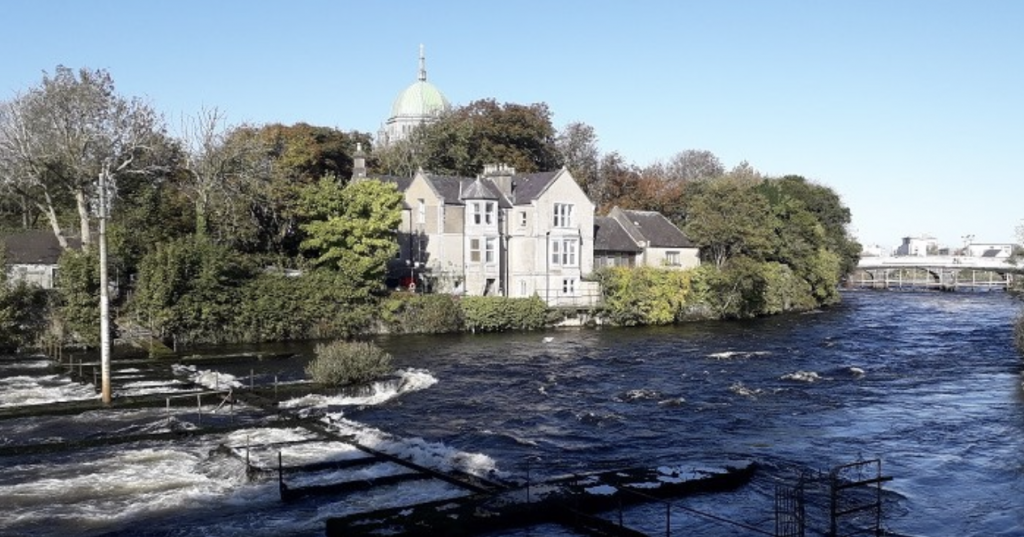
One morning Galvia took some clothes to the river to wash them. There was a large rock on the riverbank, where she sat while washing the clothes. On this particular morning Galvia slipped from the rock and fell into the river. The river was flowing very fast, and she was swept away before anyone could help her. Another version mentions that she drowned while swimming. Her haunting cries were said to echo across Galway Bay. Brasil was shocked and immediately ordered his men to launch their boats and with him leading the small flotilla of vessels they set out onto the bay. He continued the search for his daughter over a long period of time regardless of the hopelessness of such a quest.
Early one morning Brasil sailed out from the harbour. His journey brought him further out to sea than usual. A strange mist rose up from the ocean and as the haze lifted it revealed an enchanted island. Brasil went ashore where he met an old and wise-looking man sitting on the headland. He asked the man, whose face was wrinkled with time, where he had landed. ‘This is the Isle of the Blessed’, the old man replied. According to some folklore traditions, Brasil, being broken-hearted over the loss of his daughter, settled on the island and never returned to his home. Over time the mystical island became known as Hy-Brasil and over the following centuries, sailors and adventurers searched for its enchanted shore.
Of course, all of this is legend and folklore, but it is interesting that historians over centuries mention Galvia and her connection with the river and the early town of Galway. The seventeenth century historians, Roderic O’Flaherty and Sir James Ware stated that the town may have taken its name from the ‘River Galvia’. This is mentioned in the Annals of Roscommon in 1177 and again in 1190. Geoffry Lynch Fitz-Dominick, writing in 1661 agreed with Ware saying that these are ‘remarks drawn from antiquity’. The 1651, Pictorial Map of Galway indicates the rock from which Galvia fell and was drowned. The map reference records, ‘The rock where, it is said, the lady Galvia was drowned, whence the city was named’ (The present-day County Club is believed to have been built on the rock). It is also worthy of note that the earliest recorded names for the Irish; and later Anglo-Norman fortified settlements, include elements of her name, Dún Bhun na ‘Gaillimhe’ and Bun ‘Galvy’ Castle.
The story was taken more seriously during the nineteenth century. In 1840, there was a proposal to erect a monument to remember Galvia. The application was made to the city authorities and was a genuine request as can be seen from the submission below:
(The following communication has been lately made to our Town Commissioners)
Gentlemen – It is not, I believe, very universally noticed, that the river, town and county of Galway have derived their name from a large rock which lies near the west bank of the river, a little above the present salmon weirs, between them and the new bridge, which leads from the county court-house to the prison; its situation may be seen marked, No.24, on the old map of the town, formed about 200 years ago, and given in the History of Galway, with this reference, 24, “The Rock where the woman Galvia, is said to have been drowned, from which the city of Galway was named”
Having heard it was intended to clear away the rocks in this part of the River, it was suggested that the one in question, from the historical incident connected with it, deserved not only to be spared; but moreover, that it would be creditable to the town to have some distinctive mark placed on it commemorative of the circumstance alluded to: in which several opinions of the inhabitants fully concur, and have recommended an application to be made to you on the subject, that you may be pleased to take it into consideration in order to have a memorial erected thereon at a moderate charge, but at the public expense, under your auspices, as town commissioners. It is respectfully suggested that this may be affected by having a single shaft of granite limestone, about 8 feet high erected perpendicularly on the rock, to appear in the following manner: (An image of the proposed monument was also included with the submission. It was to be in the shape of an obelisk). The expense of procuring the stone, having it shaped, lettered, and erected, may be estimated by reference to your Architect. Submitting the foregoing, and a suitable inscription, to your consideration, I have the honour to remain, Gentlemen, with much respect, your very obedient servant
(James O’Flaherty, Taylors Hill, 13th May 1840)
P.S. Enclosed is an extract in Irish, recording the circumstances, taken from the Din Seanchas, one of our oldest records, preserved in the Book of Lecan, in the possession of the Royal Irish Academy. If it is considered too long, some other appropriate inscription may be devised’. The following are the extracts from the above-mentioned manuscript. The first four lines were in old Irish and have been translated.
Gailleav daughter of noble Breasail
Bathed in this cooling stream;
Here the blooming branch was drowned-
And from her is Galway named.
The last two sentences were in Latin and recorded later by Roderick O’Flaherty. The Latin version also refers to the girl being lost to the river and the sadness of her father. The meeting of the Town Commissioners considered the proposal at length, and they expressed their regret that they could not afford the finances required for such a venture. However, they all agreed that it was a well worthwhile project and said that a fund should be opened, and the general public invited to contribute to the erection of the monument so the project would become a reality in due course. A vote of thanks was then passed to James O’Flaherty. The project was never completed because of the financial situation in the city during those times. Galway experienced food riots in 1842 and just three years later, the Great Famine struck. People had more pressing matters forced upon them at the time. The fact that proposals were made to have Galvia honoured in such a manner certainly indicates the importance of the story.
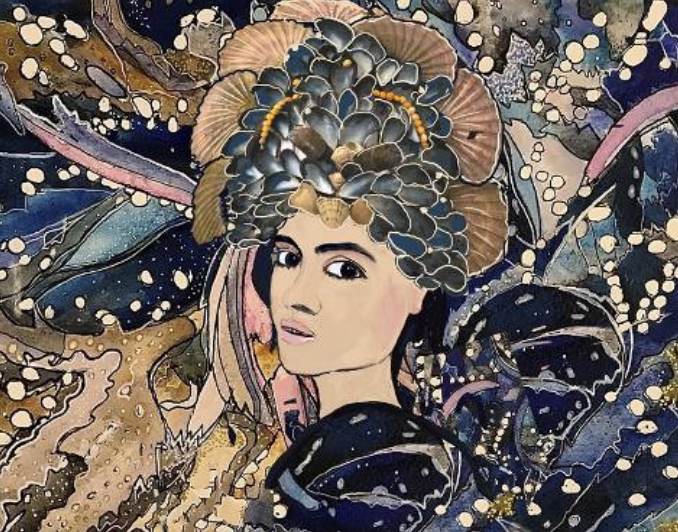
Perhaps, the city fathers today would consider honouring the name Galvia and complete the work promoted by their nineteenth century predecessors. It would also be good for tourism and add another dimension to the ancient history of Galway. This is the earliest reference to a woman in Galway, so one could say that Galvia was the original Galway Girl.
Galvia, daughter of a noble King,
From a Rock fell into the cooling stream,
In the arms of blooming youth,
This young Princess was lost,
She vanished in the waters,
On sunrise Galway Bay,
Leaving her memory immortalised,
In the town that bears her name.