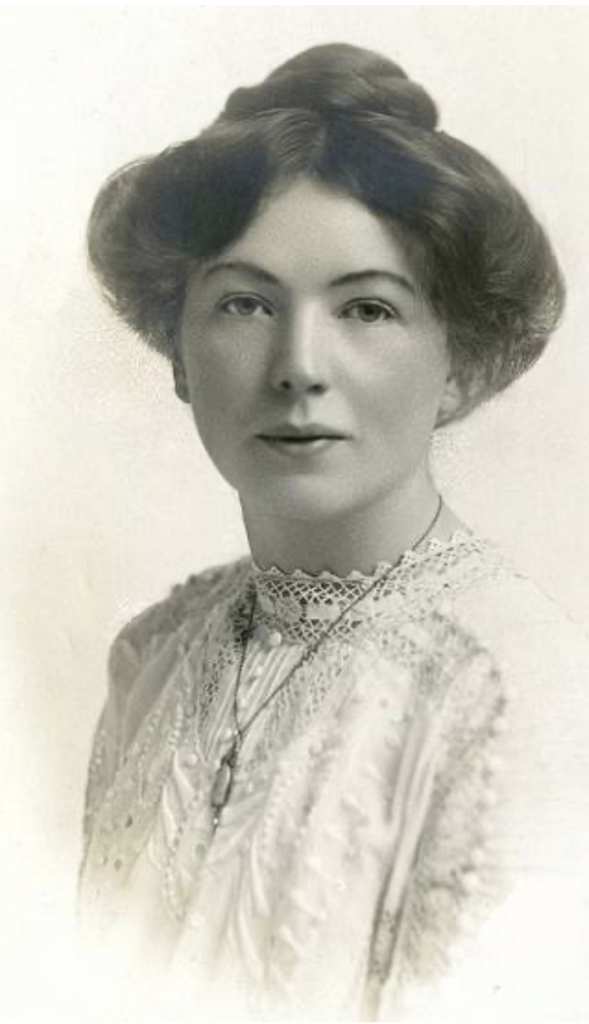
In 1911, the prominent British suffragist Christabel Pankhurst arrived in Galway to promote the cause of votes for women. It is difficult to believe that women in Ireland and the United Kingdom had no voting rights at that time. It took a long and hard struggle by a number of courageous women to change age-old attitudes. These visionary women were, in every sense of the word, before their time. The pioneers of the women’s movement believed that political equality with men was vital for all aspects of life. The movement rose against a backdrop of Victorian society and values, which made it even more difficult for these women to challenge the status quo.
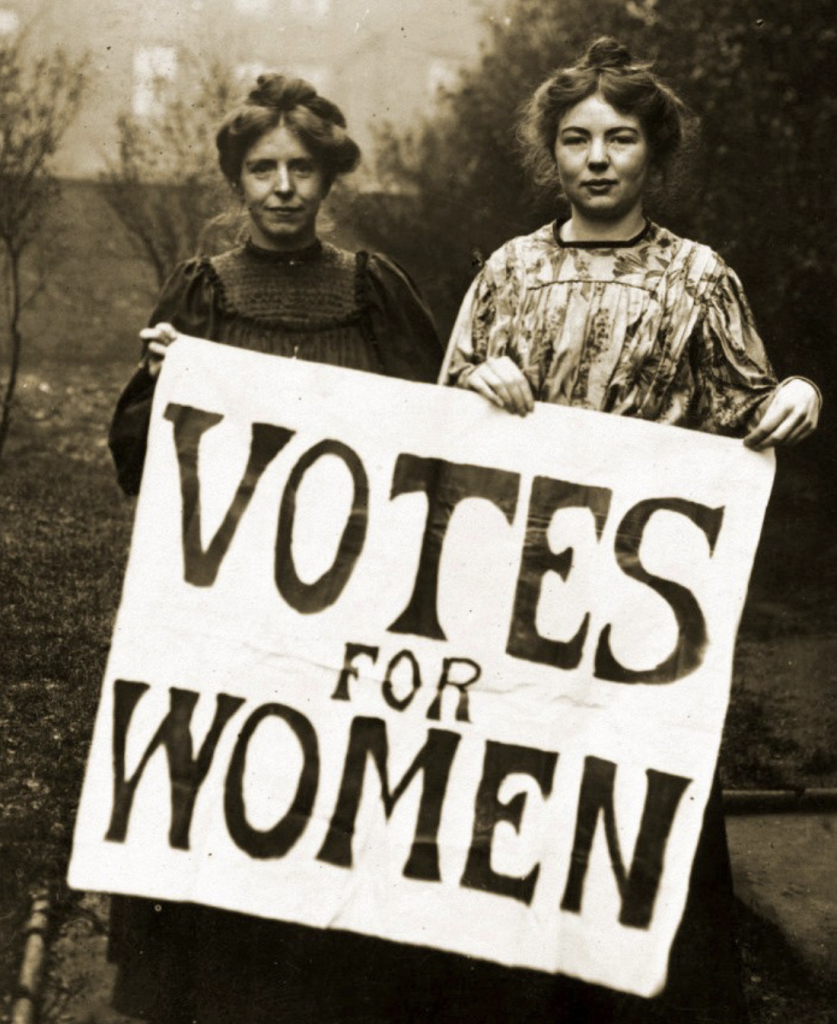
While suffragists in Connacht remained committed to peaceful methods of campaign, one Galway suffragette, Kathleen Kean, was arrested following the infamous 1913 Bow Street riots in London. Christabel Pankhurst was also arrested for her part in the demonstration. The movement called on the women of Ireland to unite behind the cause. Christabel Pankhurst was born on 22 September 1880; the oldest daughter of Richard and Emmeline Pankhurst. Her mother was the renowned suffrage leader. Christabel and Annie Kenney were arrested and served prison terms after they continually disrupted a meeting in London where a Government Minister, Sir Edward Grey, was speaking. Both women were shouting and demanding the right to vote. Prison only strengthened their resolve as activists. Pankhurst’s campaign led her to Ireland and eventually to Galway to promote the women’s cause. She had proved herself a committed, yet sometimes militant suffragette, and was now confident of strong support in the West of Ireland.
Some of the Galway suffragists included Florence Moon, Mary Fleetwood Berry and Emily Anderson. Florence Moon was the honorary-secretary of the Connacht Women’s Franchise League. She was married to Charles Moon, owner of a prestigious drapery store, Moons of Galway. They had three children, Blanche, Elsa and Charles. Florence was also an active member of the Women’s National Health Association. Mary Fleetwood Berry was a member of the Connacht Women’s Franchise League. Her husband, Rev. Fleetwood Berry, was Rector of St Nicholas Collegiate Church. Their only son, Edward, was killed in action in Mesopotamia in 1916. Mary was also an active member of the Women’s National Health Association. Emily Anderson was the daughter of Alexander Anderson, Professor of Physics and President of University College Galway in the early twentieth century. After graduating, Emily travelled to Europe, where she continued her studies. She returned to Galway and became involved in the women’s rights campaigns and was a founder member of the Connacht Women’s Franchise League.
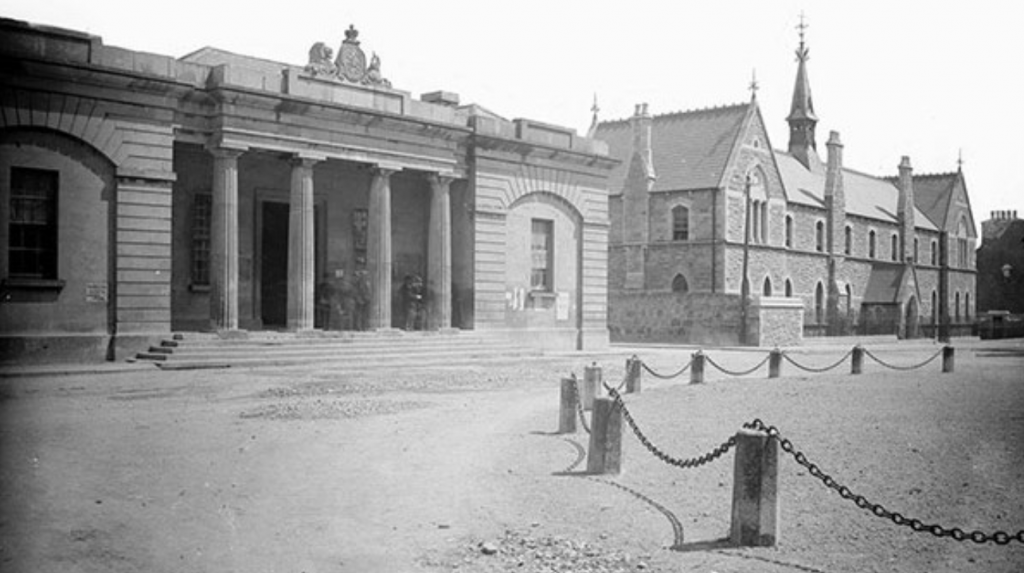
These women were instrumental in having Christabel Pankhurst address a suffrage meeting at the Town Hall on 18 October 1911. The meeting was held under the auspices of the Irish Women’s Franchise League. Pankhurst opened her address by saying she always felt at home in Ireland because of the support she received from the women’s movement. She said that it was in the very nature of Irish people to believe in equality. She reminded the crowd that women were playing an important role in society, and this should be recognised. Pankhurst said that ‘we are well accustomed to men saying what great respect they have for women’. She added, ‘If they have such a high opinion of us, let them show it in a practical way and give women the vote … Men have the power to influence Parliament only because they have the vote; without it they have no real power,’ She told the audience the reason that she had come to Galway was to stress the importance of the female vote as it was an important factor should Ireland become industrialised in the future.
Manufacturers were always looking for ‘cheap labour’ and women provided this workforce. She said this was because of old habits that ensured women are made to believe that anything should be acceptable for them. In a raised voice, Pankhurst called out, ‘They grind women down, work them long hours, pay them sweated wages and all because women have no vote … Parliament did nothing to protect them from this brutal state of affairs, resulting in women’s physique being lowered, their health suffering and living in miserable slums on starvation wages. Was it any wonder that there was a high mortality rate among babies and poor health among workers, she asked’. She also spoke on the burning question of the day for Ireland, Home Rule. As far as women were concerned, she said, it didn’t matter who gained power. It was the business of women to stand up for the civil rights of a country regardless of who was in power – Unionists, Home Rulers or Parliament.
The Irish Women’s Franchise League had already put forward a resolution to have a clause inserted into the Home Rule Bill giving women the right to vote. She felt that it was a vital clause whether the Bill was carried into law or not, as it would promote the right to vote for women. ‘It is a glorious thing’, she said, ‘if Ireland is to have a new constitution that women start fair and square and equal with men’. At one point during the campaign, they were asked to wait until a new Irish Parliament was appointed before promoting their cause and she now took this opportunity to answer these people. ‘We do not believe in waiting. People who wait, wait forever. We are in a hurry. Our cause is too long before the public’ she said to the now charged audience. She said that if the Bill was carried without ‘their clause’, then the new Parliament would simply be a change in name only. She believed that the Home Rule Bill was a great opportunity for ensuring the right to vote and felt that Irishmen would support this. Men in Galway were already leading the way, and she informed the audience that a day earlier, the Urban Council passed a resolution in support of ‘our cause’. She hoped that other areas of Ireland would follow the fine example set in Galway.
In conclusion, she said, ‘Ireland has an opportunity to rise above the ordinary level of politics, an opportunity to stand for justice in every sense of the word, in telling the world that, on this Island at least, there is a real practical belief that justice for one sex is worth nothing unless it is shared by the other also. ‘This is the line we want you to take: that is the help we want you to give, and I believe you will take that line and give us the help we ask for tonight.’
During a question-and-answer session that followed the meeting, a male member of the audience asked Pankhurst if women wished to sit in Parliament? The question was really being directed at her personally. She said that having some experience of chasing bills through Parliament, it always felt as if she was in Holloway Prison. Her reply brought huge laughter from the audience. She felt this was a question for the future; first women must have the opportunity to vote. When asked how the vote would affect equality in the workplace, she replied that without it, nothing would change. It was only by voting that women could influence the government and make progress towards a better future. Before the meeting closed, Councillor M.J. Crowley of Galway Urban Council proposed a vote of thanks to Christabel Pankhurst. He thanked her for her time and effort and told her that she had put forward an argument that would be difficult to challenge. He also told her, and all the women present, that the council had already made up their minds to support the right to vote for women. Furthermore, he said she could return to England assured that her meeting had succeeded in championing the rights of women in Galway.
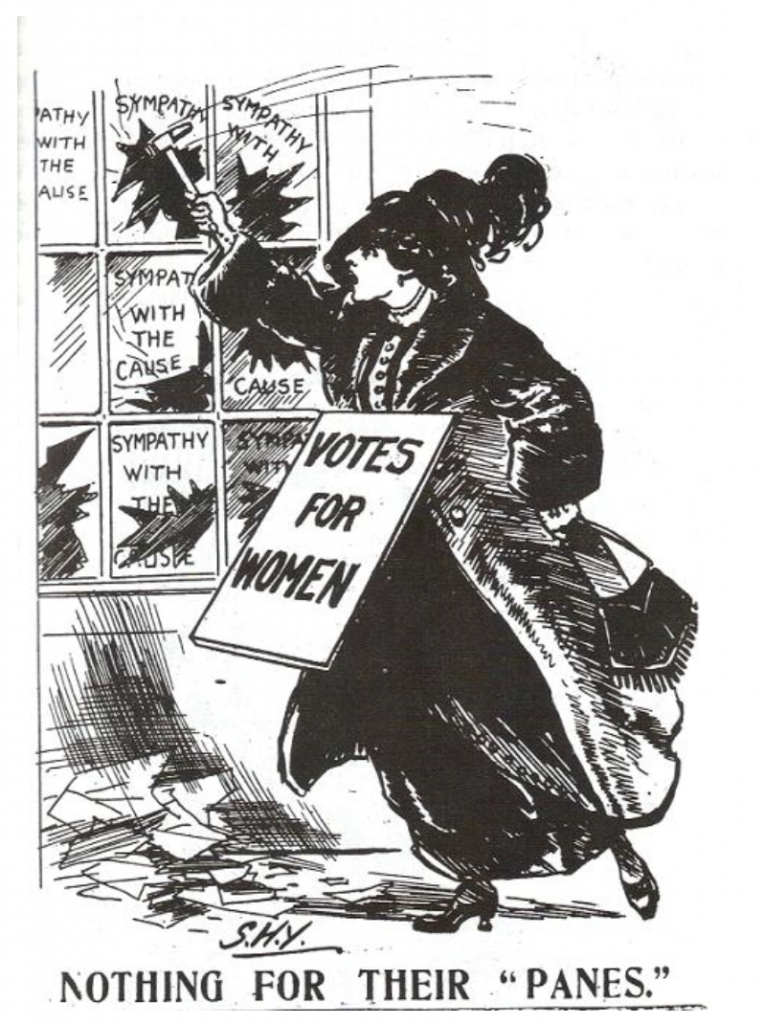
Christabel Pankhurst’s visit marked a historic milestone for women in the West of Ireland. Her speech in the Town Hall was delivered to an emotionally charged audience and was met with great enthusiasm from the packed house. The meeting was a complete success and, in the days following her address, a branch of the Irish Women’s Suffrage League was established in the city. It also led directly to the establishment of the Connacht Women’s Franchise League. Members of the suffrage movement became very active and organised lectures, speeches, published pamphlets, produced plays, short stories, poems and songs to further their cause. They also gave recitals, held conferences and their leaders’ addressed meetings around the country. Some of the speeches were delivered from the backs of Lorries. The women were ridiculed by some people and condemned for being ‘unladylike’. However, they attracted a lot of publicity, which was eventually recognised by the general public.