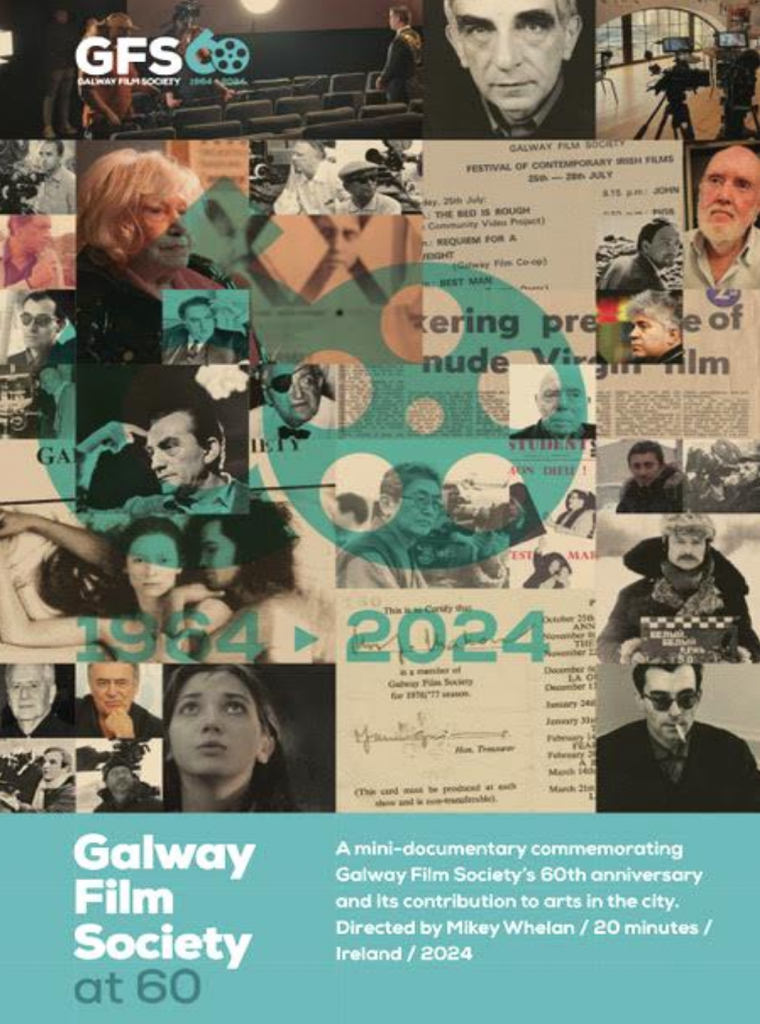
The Galway Film Society (GFS) was founded in 1964 by Yann Guiomard (Photographer), John Cunningham (Connacht Tribune) and Tom Murphy (GPO). Cinema had always been extremely popular with local audiences. These people felt the time was right to develop a cultural cinema group in Galway. This would give enthusiasts an opportunity to enjoy films that were not normally included in the established cinemas. Some films were obscure, classical, subtitled and some were even banned. There were also regular Hollywood movies included in the seasonal (Autumn and Spring) screenings over the years. As there were no dedicated arthouse cinemas the GFS lived a nomadic existence in those early years trying to secure hotels and school halls. Some hotels included Flannery’s, Dublin Road, Great Southern Hotel (Hardiman) and the Sacre Coeur in Salthill.

The GFS Goals: (1): To promote non-mainstream films, alternative and foreign films. (2): To provide an ecumenically viable means for film enthusiasts to plug into a network of like-minded people at local level.
On the 24th of November 1964, Galway Film Society became affiliated to the Dublin based Irish Film Society. This had been announced on Telefis Eireann’s ‘World of the Cinema’ programme the previous week. The first film screened by the society was the Ballad of a Soldier and it was shown in the Sacre Coeur Hotel on 4 December 1964. This 1959 film was a Soviet war and romance movie set in World War II. It recounted, within the context of the turmoil of war, various kinds of love; romantic love of a young couple, committed love of a married couple, and a mother’s love of her child. The film was directed by Grigory Chukhray and produced at Mosfilm. It won several awards, including the ‘BAFTA Award for Best Film From Any Source’ and was nominated for an ‘Academy Award for Best Original Screenplay’.
A limited number of society members were accepted for the first night. Membership was being handled by Kevin Bowers, Glenard Avenue, Salthill; Eileen Powell (Four Corners); Yann Studios, Mainguard Street and Tom Walsh, organiser of the society. By January 1965, they had over 100 members. The film that month was Elmer Gantry starring Burt Lancaster and Jean Simmons. This 1960 American drama film was about a conman and a female evangelist selling religion to small-town Americans.
Among the films shown for the 1969 season was Joseph’s Strick’s adaptation of Ulysses by James Joyce. The film was made in Ireland in 1967 and starred Thomas Patrick McKenna, Joe Lynch (Leopold Bloom), Barbara Jefford (Molly Bloom), and a number of other Irish actors. The film was shot on location in Dublin on a modest budget. Although the novel is set in 1904, the film portrayed the city as it was in the 1960s. The society was determined to promote further interests in the cinema and create a deeper appreciation of films. One way of achieving this was to hold special discussions on all films shown.
A regular venue was established during the 1970s in University College Galway (University of Galway). This proved very successful and catered for larger attendances. It also provided an opportunity to encourage additional student membership as the films were now shown on their doorstep. The audiences were introduced to masterpieces by people such as Visconti, Godard, Bergman and many others. The society also looked back at some of the silent classics. The university became a place to view great films and embrace important contemporary art; and in addition, feel part of the intellectual and political movement from across the world. John Cunningham was the Secretary during those years. He was also looking after ticket sales and ensuring that the events were well advertised.
In 1970, the society announced that they would be screening two of the most controversial, but brilliant films of ‘recent years’; Roman Polanski’s Rosemary’s Baby and a Cuban film, Memories of Underdevelopment. Rosemary’s Baby was described as one of the best modern semi-horror films. It starred Mia Farrow and John Cassavetes. Memories of Underdevelopment told the story of an upper-class Cuban attempting to readjust to life after the Castro revolution. Another film shown that season was The Third Man starring Orson Wells. Incidentally, when he was sixteen years old Wells arrived in Galway. This was in August 1931 and he visited the Taibhdhearc where he became friends with one of the Galway actors. Two months later he found himself in the Dublin Gate Theatre, where some say his acting career began; however, others say it was in Galway.
By 1971, the society was one of the strongest in the country. It had grown steadily since its foundation and was the largest outside Dublin with almost 300 members. This was mentioned in October of that year at a meeting held in Dublin, which was attended by delegates representing all of the branches in Ireland. Despite this success, the society was becoming a little concerned as they were finding it difficult to motivate some committee members to become involved in the organisational work. An appeal was made through the Connacht Tribune requesting anyone interested in being involved in the administration to contact John Cunningham. The appeal seems to have worked and the society moved into the 1980s with the full support and attendance of its members. During the 1983 season, the society screened Coilin and Platonida. They announced that this film had more Joyces, McDonaghs and Flahertys ‘than you could count in the cast’. It was filmed in the striking beauty of Connemara with a mainly local cast. The film was an adaptation by James Scott of a story by Russian writer, Nicolai Leskov. Scott gave it an Irish setting. Coilin and Platonida tells of a boy (Coilin) who was raised as a girl until the age of twelve and his cousin, a girl named Platonida, who was unhappily married and disappeared after being sexually attacked.
In April 1984, the society screened the tragic story of Anne Devlin, Robert Emmett’s housekeeper. Anne Devlin was certainly one of the great, but almost forgotten heroines of Ireland. The Society is to be congratulated for highlighting this woman’s tragic life. The film was shown in Cannes the following month. There were other films that some people felt should be banned and the society was showing them. In 1986, a Galway County Councillor demanded that the censorship laws be tightened and there should be more control over films, videos and publications. The Film Censorship Board and Garda Superintendent were invited to attend a meeting with Galway County Council to discuss the matter and see what could be done. Most councillors were not in favour of banning films, but one must remember that it was a time when many books and films were banned.
By this period the society was promoting and introducing matinees for children in the O’Flaherty Theatre in University College Galway (University of Galway). The first season of the Junior Film Society screened, Superman II – King Kong – Flash Gordon – Convoy and Grease. They were also looking after the interests of senior citizens by screening films to cater for these audiences. All of this meant a lot of work and demanded a strong and committed committee. It is also an indication of a strong and successful society.
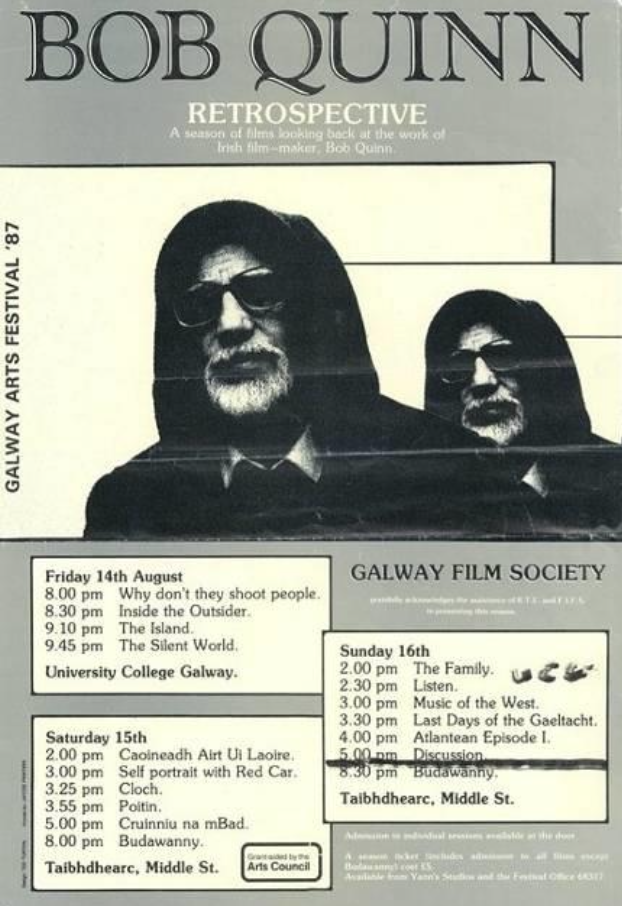
In 1987, the society screened a retrospective of the work of Bob Quinn spanning twentyfive years. This was to acknowledge and honour his prominent place in the independent Irish film industry His films were shown on RTE and Channel 4. Bob Quinn is an Irish filmmaker, writer and photographer who directed Poitín, the first feature film entirely in the Irish language. His work includes Atlantean, a series of four documentaries about the origins of the Irish people. Quinn has a history of protesting against the commercialisation of television. He resigned from RTÉ in 1969 as a protest because of this issue. In 2001, Quinn received a Lifetime Achievement Award from the Irish film Institute.
In the 2000 season, the society included The Quiet Man which was filmed in Cong (1951). This was the highlight of that season which included a series of films that were made in; or about Ireland during the 1950s. The title of the series was Images of Ireland and offered audiences different perspectives of life in Ireland during the preceding decades. It was a real treat for all classical film lovers. In February 2008, the society joined forces with the Loughrea Branch of Comhaltas Ceoltóirí Éireann to film the history of Mummers in East Galway.
Films went ahead as normal during this period despite the recession, banks crashing and Government bailouts. The attitude of the society was simple; Recession or no recession, ‘We all need the entertainment and challenge that the arts bring to our lives’. They organised full programmes, ‘an eclectic mix’ as it was called; and included something for all tastes, from drama, to dance and music. The films were screened in the Town Hall and Black Box and the society was not disappointed with the attendance. One of the highlights of the 2010 season was the screening of Dean Spanley. This film was set in Edwardian England. It was based on an adaptation by Alan Sharp of the 1936 novella, My Talks with Dean Spanley, by Irish author, Lord Dunsany. It starred Sam Neill, Jeremy Northam; and Peter O’Toole who was a regular visitor to Galway.
John Cunningham died on 7 February 2012. John was a committed and influential journalist and commentator who had edited the Connacht Tribune for twenty-three years. He was a regular contributor to RTÉ television’s Today Tonight (Prime Time), and reviewed the regional newspapers on RTÉ radio for almost a decade. He was a member of the Broadcasting Complaints Commission for five years and a judge of the ESB Media Awards. He received a national award himself in 1979 for articles on the controversial Section-4 planning permissions. Another great name associated with the Galway Film Society was Joe McMahon. He was an outstanding Chairperson and represented all that is great in Galway film. Joe was on the board of the original Galway Film Fleadh. He was also Chairperson of the Galway Film Resource Centre. He supported the emerging Galway film-making community. His incredible work gave audiences in Galway and, indeed, Ireland an opportunity to view and appreciate a broader range of world cinema features. When Joe passed away in May 2024, he left an enduring legacy to cinema history in Galway. There were of course many more dedicated members too numerous to mention in this short account of the society.
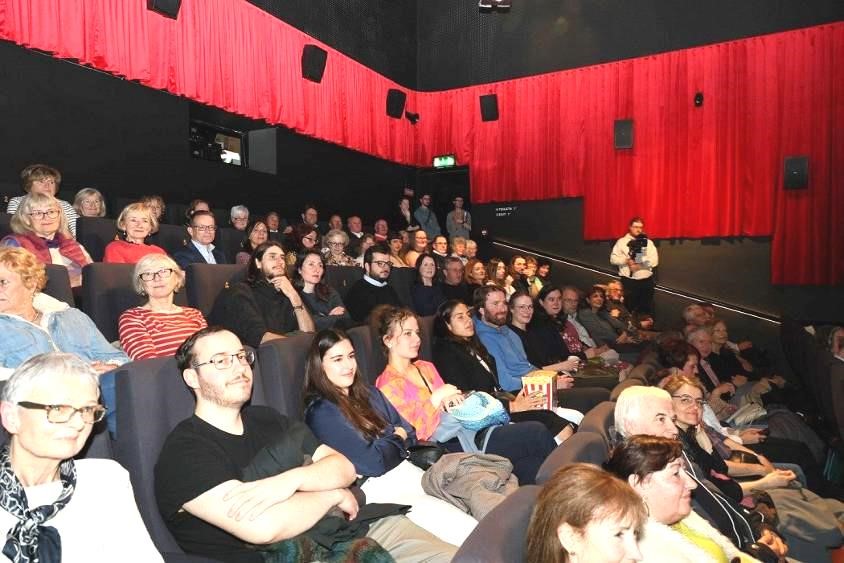
The films mentioned above are chosen at random as there were literally hundreds to choose from going back over the years. The list of films screened is simply endless. The Society has gone from strength to strength year after year. Great credit must be given to its founders, who all those years ago had the foresight and commitment to ensure that the society became a Galway institution. The Galway Film Society has always been a beacon for film enthusiasts and cinephiles in our vibrant city of culture. For decades, they have celebrated the art of cinema by curating a diverse selection of thought-provoking, entertaining, and impactful films from around the globe.