Tullokyne School: A Legacy of Olympians

Moycullen Heritage

Nestled along the historic route from Maigh Cuilinn to Knockferry, Tullokyne School opened its doors in 1862, beginning a journey that would see it become a remarkable breeding ground for athletic talent, achieving an extraordinary legacy. Who could have imagined that such a small school would produce not one, but three Olympic participants, each eventually representing different nations on the world stage? John Joyce was the school’s first Olympian, making history in 1904 when he ran the 800 meters for the United States in St Louis. Fast-forward to 1912, and another Tullokyne graduate, Mathias Hynes, made his mark by representing Great Britain in the Tug-of-War event during the Stockholm Olympics.

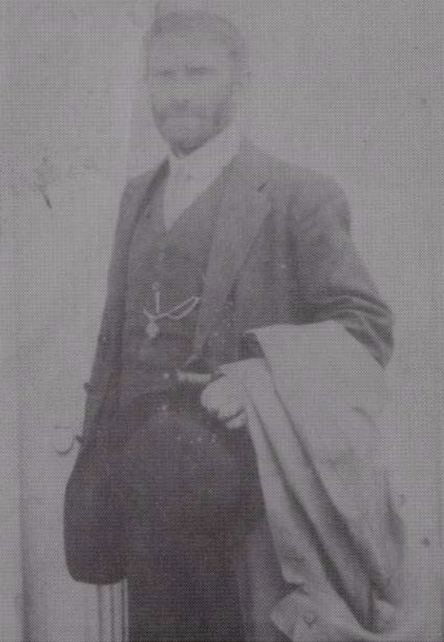
John Joyce. Image courtesy of the Joyce Family, USA

Fast-forward over a century, and we arrive at Fiona Murtagh, who represents the school’s ongoing legacy. Competing in rowing in 2020 in Tokyo, Fiona   made headlines as she returned to the Olympic stage for the second time this year, proudly donning the colours of Ireland in Paris. The tale of Tullokyne School serves as an inspiring reminder that greatness can spring from modest beginnings and the road from a small school can lead to Olympic glory.

John Joyce: John Joyce, born to John Joyce Sr. and Mary Cottingham in Kylemore, Killannin on 22 August 1875, and experienced a turbulent early life marked by both triumph and tragedy. At just 11 years old, Joyce faced the heartbreak of losing his mother after years of her health struggles, an event that would undoubtedly shape his character. Despite the known milestones in Joyce’s youth, such as winning the junior and senior championships of the Cross-Country Association of Ireland in 1899 and winning the Irish Amateur Athletics Association one-mile steeplechase championship, many aspects of his early involvement in athletics remain cloaked. His transition from life in Galway to Dublin, and eventually to emigration, suggests a narrative of ambition and opportunity. 

John Joyce far left at start of 800m in the 1904 Olympics in St Louis. Photo courtesy of Moycullen Heritage

In April 1900, armed with just $10 in his pocket, Joyce set sail for America aboard the SS Etruria, leaving behind his homeland for the promise of a new life in New York. His athletic prowess quickly became evident upon his arrival, as he garnered attention in local newspapers. By early 1901, while part of the Xavier Athletic Association, he secured a title at the Annual Metropolitan Team Championships in Long Island, marking the beginning of an illustrious athletic career.

His remarkable achievements continued as he transitioned to the Pastime Athletic Club in 1902, where he clinched the Junior 5 Mile race at the National Amateur Athletic Union Championship, laying the groundwork for a series of notable victories in subsequent years, such as the American cross-country championship in 1903, and then the American indoor 10-mile titles in 1903, 1904 and 1905. Joyce’s crowning moment in American athletics was his representation of the United States during the 1904 Olympic Games in St. Louis, where he competed in the 800m., although he did not medal amidst a highly competitive field. His personal best came later that year, when he won the American 5-mile title in an impressive 28 minutes and 25.2 seconds.

In May 1905, Joyce won the 3-mile scratch race at the Irish American Athletic Club annual games in Celtic Park, New York. The New York Daily News reported that just a few weeks later, over 18,000 Irishmen attended the games of the Galway Men’s Association at that same venue to witness the great race between Joyce, the American Champion, and his old Tullokyne school comrade from home, Tom Hynes, the Irish Champion. The reporter gives us a great image of Joyce and describes him as walking onto the track unconcerned, as if he were buying an apple, standing at 5 feet 8¼ inches in height, his limbs from the knee down would fascinate a student of anatomy with veins as distinct as the fibrous tracing on oak leaves. The race culminated in a narrow victory for Joyce. However, this professional success was occasionally marred by disciplinary issues within the amateur athletic community, complicating his career.

John Joyce Front Row 3rd from right. Photo courtesy of the Joyce Family, USA

In 1907, Joyce’s dedication again bore fruit when he joined the esteemed Irish-American Athletic Club team, contributing to their victory in the Amateur Athletic Union Cross Country Championship. Beyond athletics, Joyce’s life unfolded in New York, where in 1912 he married Delia Kyne (from Headford, Co Galway) and raised a family of five sons and a daughter. Even after establishing himself as a successful runner, he returned to a more conventional existence as a bricklayer and later owned a saloon/café in New Rochelle. In the 1930s, seeking a quieter life, Joyce moved to a farm in Montgomery, New York, where he lived until his passing on 17 May 1957.

Mathias Hynes: Mathias (Matt) Hynes, one of seven children, was born on 22 January 1883 in Gortmore, Killannin, to James Hynes and Mary Kelly. After his schooling in Tullokyne and some years labouring, Hynes sought new opportunities and emigrated to England, where he enlisted in the London Metropolitan Police on 24 January 1910, under Warrant Number 97883. 

The 1912 Great Britain Olympic Tug of War team. Matt Hynes is in the front row, second from right. Photo courtesy of the Hynes Family, Gortmore

By 1911, he was a constable assigned to K Division at Barking Road, West Ham Police Barracks. His tenure in the police force was not without incident; a report in the Stratford Express newspaper famously described a confrontation in which a man received 21 days of hard labour for throwing a condensed milk can that struck Hynes, causing injury to his ear. Beyond his policing duties, Hynes was deeply involved in amateur sporting events from 1910 to 1925.

Matt Hynes, is third from the front, with Great Britain’s Tug of War team practicing for the Olympics 1912 Stockholm. Photo courtesy of Moycullen Heritage

His speciality was in events such as putting the 16lb Weight and 56lb Weight Flinging, where he gained a reputation for seldom being defeated. Notably, in the two years leading up to his untimely death, he proudly held the title for the Essex Putting the Weight Championship, showcasing both his physical prowess and dedication to the sport. His athletic pursuits extended to a more prestigious stage when, around 1910, he joined a combined team of the City of London Police and K Division Metropolitan Police, ultimately representing Great Britain at the 1912 Olympics in Stockholm, Sweden. This was a notable achievement, as many of his teammates had previously earned Olympic medals in the tug-of-war competition during the 1908 London Olympics. The 1912 Olympic competition came with unforeseen challenges for Hynes and his teammates, as they arrived in Stockholm just before the event to discover they would be competing on a sand pitch – a condition they had never encountered before. The tug-of-war tournament was meant to feature teams from several nations, but many competitors withdrew, which resulted in an unexpected format change.

Great Britain was set to face Bohemia on 7 July 1912, but the Bohemian team opted out, granting Hynes and his fellow competitors a walkover. The competition ultimately boiled down to a single match against the Stockholm Police, where Hynes’ team faced a gripping battle. The first pull saw the Swedish team gain the upper hand, while the second pull turned into a tense stalemate, with exhaustion ultimately leading to disqualification for some British team members. This gripping contest concluded with Hynes and his teammates earning a silver medal, marking a significant highlight in his athletic career.


Obverse side of the 1912 Silver Olympic Medal won by Matt Hynes.  33mm diameter.  Photo courtesy of the Hynes Family, Gortmore

The following year, he played a pivotal role in helping London secure the British Police Tug-of-War Championship, further solidifying his status as both a police officer and an accomplished athlete. Tragically, Hynes’ life was cut short when he died of endocarditis on 9 March 1926, at the age of just 43. He resided at 46 Lansdown Road in Canning Town, a shared accommodation for police officers at the time. Following his passing, a local priest, Fr. Walter Philip Stone, oversaw Hynes’ burial, yet due to a lack of adequate recording, the quest to locate Hynes’ final resting place continues today.

Fiona Murtagh OLY: Fiona Murtagh, a twin who hails from a family of four siblings, was born on 11 July 1995 to Noel Murtagh and Marguerite Hurney. Her early education at Tullykyne National School and the Dominican College, Taylor’s Hill in Galway, laid the groundwork for a life filled with achievement and determination. Starting her rowing journey in 2009 at the Galway Rowing Club, Fiona quickly established herself as a fierce competitor. Her relentless training regime, waking up at 5:15 am to navigate the waters at Woodquay, speaks volumes about her commitment to the sport. Fiona’s efforts bore fruit with her first significant victory in 2011, where she secured first place in the Women’s Novice 8 at the National Rowing Championships. This blossomed into an incredible international achievement when she and her teammates clinched a gold medal at the Home Internationals in Scotland. 

Fiona Murtagh’s homecoming from Tokyo 2020 with bronze Olympic medal. Courtesy Liam Carroll Photography

Her educational journey took her to the National University of Ireland, Galway, for a year before a scholarship opportunity arose at Fordham University in New York. Fiona has often credited her time at Fordham as transformative. In an interview with Alex Wolz, she described the collegiate program as a defining experience that honed her work ethic and set the stage for her future successes. Competing in the prestigious Head of the Charles Regatta, she won two years consecutively and served as captain in 2016. On her 24th birthday, Fiona made waves by clinching four national titles at the Irish Rowing Championships. It was a remarkable achievement that showcased her prowess alongside her NUIG teammates. This moment of glory, however, was only the beginning. After a rigorous training period at the National Rowing Centre in Cork, Fiona’s aspirations turned toward the Tokyo Olympics. 

Aifric Keogh and Fiona Murtagh win Silver, 2024 World Rowing Cup 1, Varese, Italy. Photo Courtesy Rowing Ireland

The onset of the COVID-19 pandemic brought uncertainty, yet Fiona and her crew remained hopeful as they continued to train and compete. Fiona described this as a very competitive time, with eight girls going for the Four spots. Success brought them to the 1st competition in Italy at the European Championships, where they won silver. At the qualification regatta in Switzerland, they were the favourites and winning the silver medal qualified them as the team to represent Ireland at the Tokyo Olympics. Fiona, along with fellow teammates Aifric Keogh, Emily Hegarty and Eimear Lambe, went on to make history, winning a Bronze Medal in the Women’s Four at the 2020 Olympics, which was Irish rowing’s first women’s Olympic Medal. Remarkably, Fiona raced the final with stitches in her arm, having been sliced open while cleaning the boat during the regatta.

Bronze Medal won by Fiona Murtagh in the Women’s 4 Rowing at Tokyo 2020. Courtesy Hazel Morrison

The cheers and celebrations at the Dublin Airport welcomed them home, albeit under muted circumstances due to health restrictions. With Tokyo behind her, Fiona continued to carve her path, balancing her athletic career with academic pursuits. In 2023, she successfully earned her MBA from the University of Galway. Her rowing achievements in 2023 saw her claim 5th place in the Women’s 4- at the European Rowing Championships, but certainly the highlight of the year came when she partnered with Aifric Keogh, and the duo finished 4th in the Women’s 2- at the World Rowing Championships. This remarkable performance not only solidified their place among the world’s elite rowers but also secured qualification for the Paris 2024 Olympic Games. Murtagh and Keogh faced challenging competition in the coxless pair in Paris, and despite not clinching a 2024 Olympic medal; they showcased remarkable determination and skill, finishing second in the B Final with a time of 7:08.88.

Whilst this article recounts the accolades of three Olympians of Tullokyne School, as mentioned at the beginning, it has an extraordinary legacy of athletic talent – graduate Tom Hynes was the winner of Ireland’s first official marathon in 1909, but maybe someone will put pen to paper in a future edition and cover another talented graduate, Patrick Carter AKA ‘The Harrier’.

Fiona Murtagh