The ‘Hole in the Wall’ on Eyre Street is a very popular pub. The origin of the name takes one back to the smuggling trade of the eighteenth century. By this period, the city walls were no longer required for defensive purposes and had been allowed to fall into ruin. Smugglers always took advantage of these situations as it made their work easier, and soon larger holes began to appear in the old town walls. In this manner, they could bring their goods into the town without paying duty or excise on them. It seems that there was a large hole in a section of the town wall just off Eyre Street, through which the smugglers took their contraband to awaiting clients. This story was passed down through generations of local people.
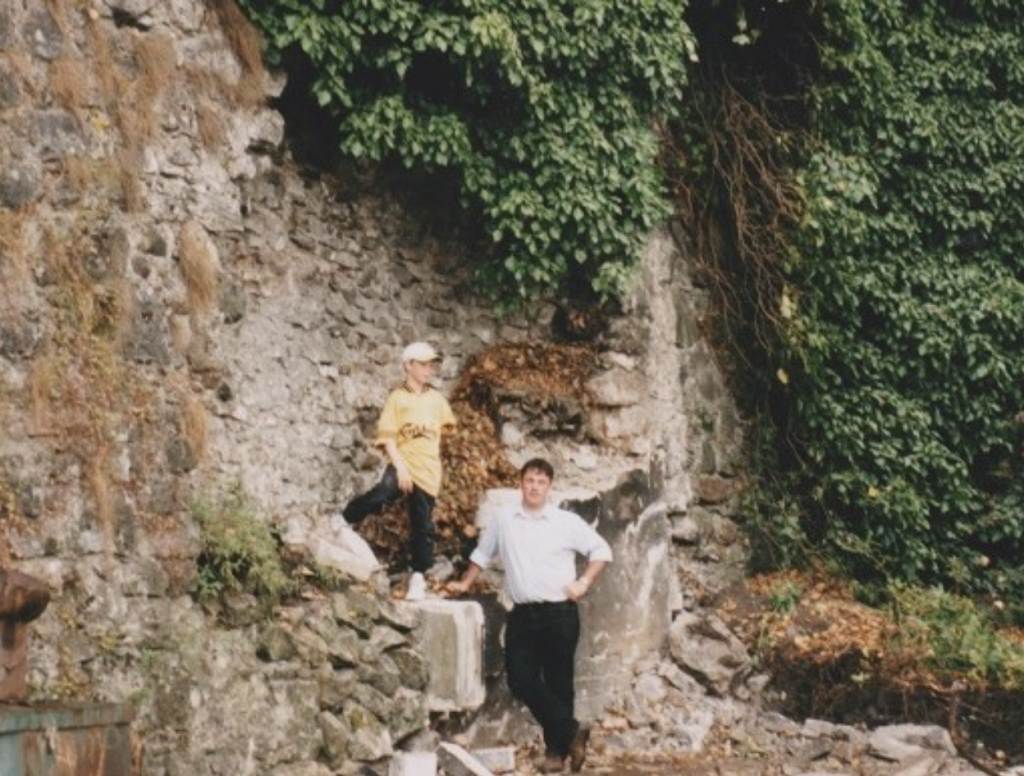
By the late nineteenth century, a thatched pub had been opened in front of the hole. However, by this period the old town wall was no longer visible as buildings were constructed in front of the old wall. Thus, the hole in the wall was consigned to folk memory. The twentieth century saw the name Fitzgerald over the pub, and although the story was long forgotten, it was always known by its nickname, ‘The Hole in the Wall.’ The pub was in the ownership of the Fitzgerald family until the 1970s, when a local businessman, Stephen Fahy, bought the property and officially named it ‘The Hole in the Wall.’ Over the passage of time, many people believed that it was only a legend; a fanciful story of smuggling told over a pint. However, the hole in the old city wall was exposed in the late 1990s during redevelopment work being carried out there. It was located at the rear of Dunne’s Stores, almost directly behind the pub that now bears its name.