An important story came to light in February 1892 regarding the legacy of the battle of Waterloo. It had been reported some weeks earlier that the last survivor of the battle had died. This report triggered local reporters to investigate the validly of the announcement as they were aware of an old soldier living in Galway. People were aware that this man had also fought at Waterloo. Reporters from the Galway Pilot and Tuam Herald successfully approached the man requesting an interview. It wasn’t difficult to find him as he seems to have been well-known around Galway. His name was Patrick O’Hara, and he had been living in Galway from some forty years at the time. He was 91 years of age and living in a state of poverty in a cabin in Sickeen, Woodquay. The man was weak and feeble, partly blind and deaf, but the reporters knew they were in the company of a notable soldier. He was able to walk outside, and answer the questions put to him with clearness and intelligence. They asked if he had seen action at the battle of Waterloo, and he confirmed that he was there and was a bugler in the Duke of Wellington’s army. In fact, he had been wounded by a musket shot to the neck and still bore the scar. He had been attended to by a doctor and didn’t have to leave the battlefield. Even after all the years the wound was plain to be seen. He was just fourteen years old at the time of the battle and one could say that he had been in the army from birth.
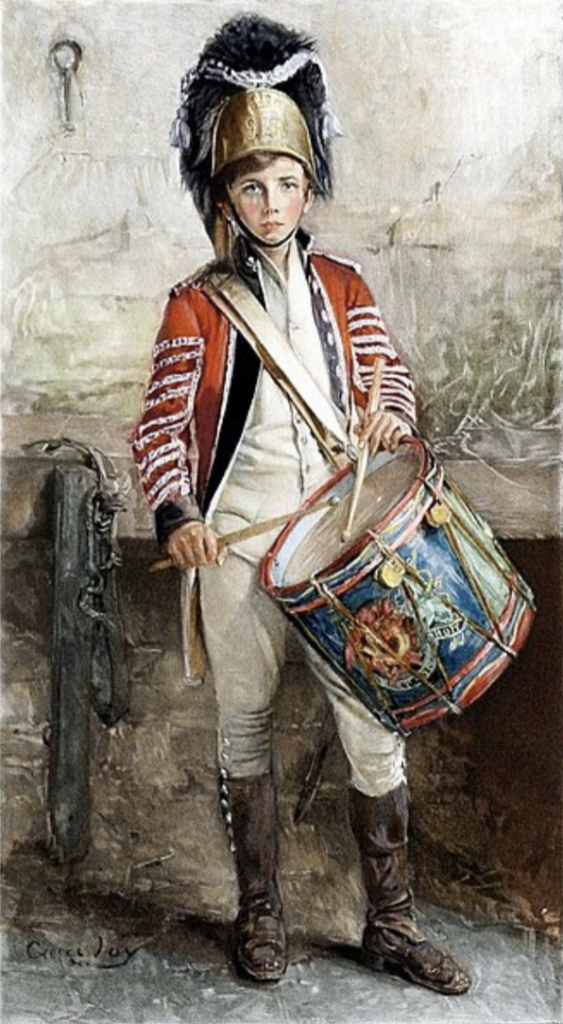
His parents were from County Galway and his father was a soldier, who was sent to Spain in 1801. His mother, Mary Coleman from Loughrea, was pregnant at the time travelled to Spain with her husband, and it was here Patrick was born that same year. He was reared in a military compound and was in reality a boy soldier. His uncle was killed in the Peninsular War. Patrick served as a young bugler with the in the 87th Regiment of Foot, or the Royal Irish Fusiliers. This was a relatively new regiment at the time having been raised in 1793 by General Sir John Doyle. In 1811, the regiment became the 87th The Prince of Wales’s Own Irish Regiment of Foot.
The Battle of Waterloo was fought on Sunday 18 June 1815 near the village of Waterloo in present-day Belgium. Patrick never forgot that day and said that there was much excitement in the ranks just prior to the battle. The night before the battle was very wet with tremendous down-pours of rain. The morning of the battle the rain had stopped, and it was warm and close. Patrick remembered seeing Napoleon that morning riding his splendid white horse Marengo, and he remarked on some of the other soldiers saying ‘There’s Bony’. He also remembered seeing allied Generals Thomas Picton and Joseph Thackwell. Patrick said that the fighting was bitter, and by four in the afternoon they had lost many good men. It was about this time that he was wounded, but remained on the battlefield. He also remembered the Prussians arriving under General von Blucher, whom he said was a well-built man. Patrick’s father was also wounded in the battle, but never recovered from these wounds. All of his father’s comrades were Irish and three of them were also from Galway. They were Burke from Henry Street, Fallon was from Market Street and Browne from Boherbeg. Burke was wounded in the shoulder, Fallon lost an arm and Browne lost his forearm during the battle.
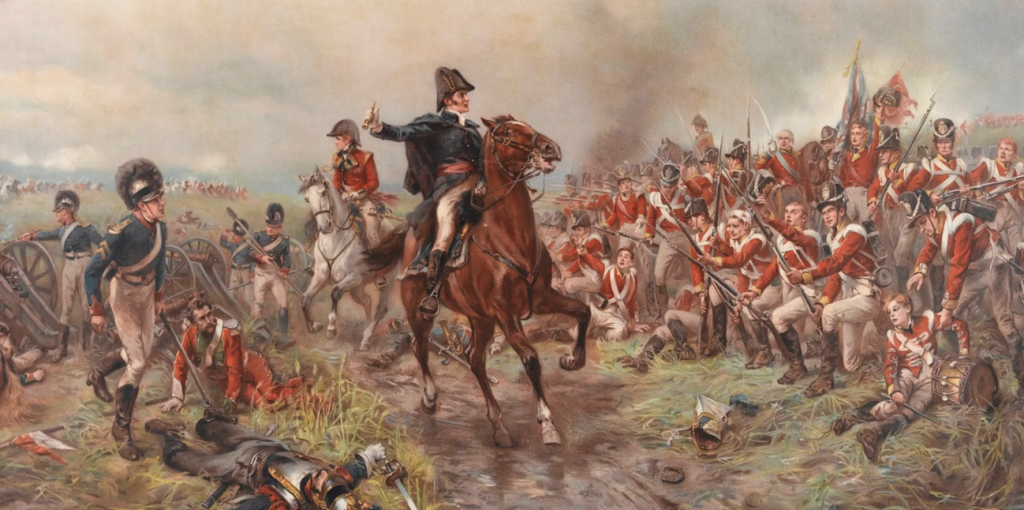
The French army under Napoleon was defeated that day by the Anglo-allied army, commanded by Sir Arthur Wellesley, the Duke of Wellington, and General von Blucher and his Prussian army. Cavalry formations were controlled by some forty different bugle calls, known to the cavalrymen and made easier to remember by the addition of words. This meant that the buglers were often targeted by the enemy, who were keen to thwart their opponent’s strategy. The battle of Waterloo cost the lives of thousands of men on both sides with enormous causalities. It ended Napoleon’s rule as Emperor of the French and marked the end of his Hundred-Day return from exile. Patrick along with hundreds of soldiers remained on the battlefield that night happy to be alive. Many of the soldiers were weeping over their fallen comrades, and he said that Wellington walked among them. Following the battle, Patrick was sent on one of the escort ships that accompanied Napoleon to St Helena. He was one of two boy solders send on the escort, the other being a lad named Coen. Patrick remained on the island for a number of months.
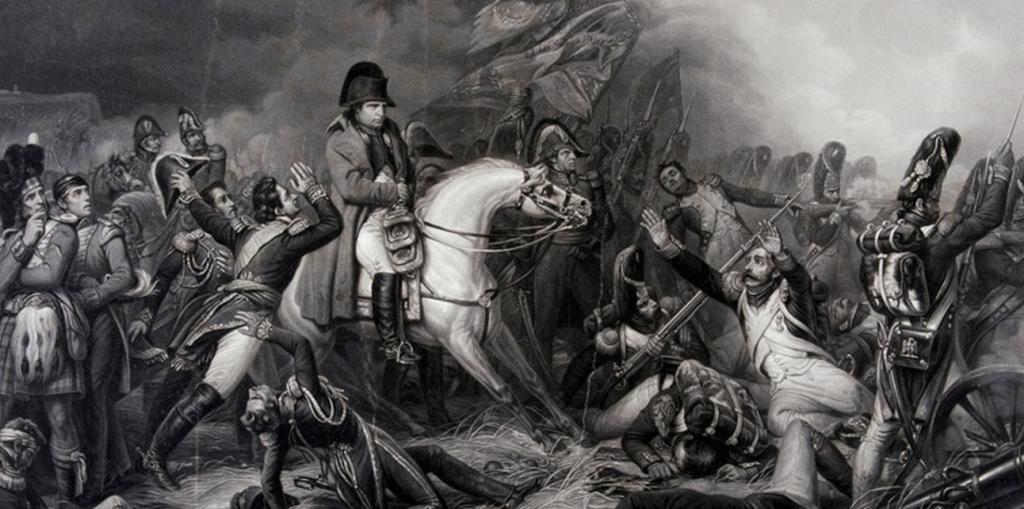
Patrick remained in the army following the battle and his mother had returned to live with her sister in Newtowndaly near Loughrea. Some two years after the famous battle, his mother and aunt managed to raise £21 to buy him out of the army. Patrick returned to Newtowndaly and served an apprenticeship as a carpenter under his uncle-in-law a man named McCoen. After serving his time he continued to work as a carpenter for several years. However, the military was in his blood and after a family quarrel, he left for Limerick where he enlisted in the 61st South Gloucestershire Regiment of Foot. He remained in this regiment for eight year and served in India., where he fought in the first Anglo-Sikh War of 1845-46. He hated the climate, and it was in India he began drinking heavily and smoking, managing to down three bottles of wine and a pint of rum a day. This led to him developing health problems, which forced him to return home. Upon returning, he stopped drinking, but continued to smoke.
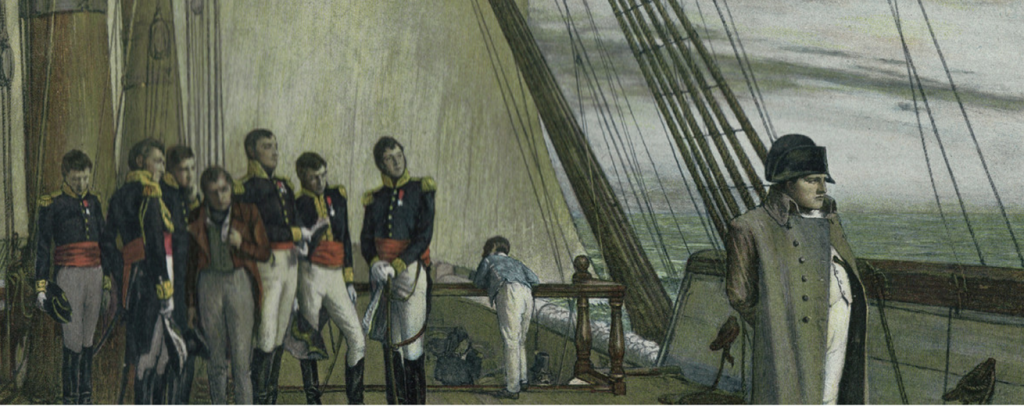
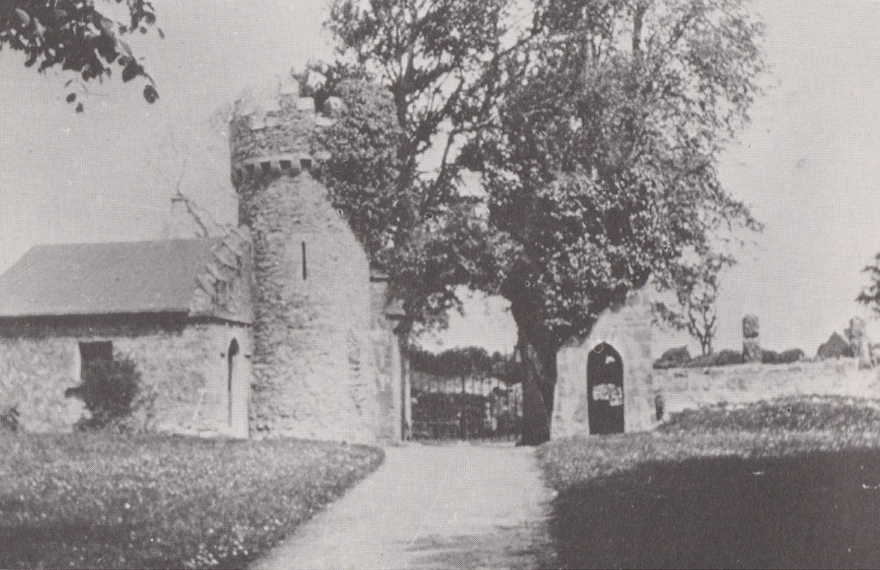
He resigned from the army in July 1850 on nine pence a day pension. He was still on the same pension in 1892. Shortly after resigning from the army he found employment with Sir Thomas Blake of Menlo Castle, and he worked as the gatekeeper at the castle for thirty-one years. He was married, his wife died in 1890, and they had no children. He mentioned how he often met with Burke, Fallon and Browne, all of whom had returned to Galway after the war. They would all meet in the town and talk about the terrible battle all those years earlier.
He explained to the reporters that he was no longer capable of work. Patrick was still only on the nine pence a day pension at the time of the interview and this was his only means of support. When asked how he was managing, he replied “what can you get out of nine pence a day; it would hardly buy a plug of tobacco”. As the interview drew to a close, the reporters thanked him for agreeing to meet with them and paid him for his time. He was very thankful for the small fee he received. They were appalled that a man who had given such military service, served in the army of Wellington at the battle of Waterloo and carried the scars of that dreadful day, was now living in such dire poverty at the end of his life. The fact that he was the last survivor of the famous battle should have been enough to warrant some acknowledge and comfort.
He was interviewed a month later and this time mentioned that he was a drummer boy with his father’s regiment at the battle. Drummer boys were also responsible for beating out vital battle orders and communication signals, and found themselves in the battles lines from the beginning to the end of a battle. One must remember his age at that time and living conditions. There is a possibility that he had been a drummer boy initially, and later a bugler. Nevertheless, young O’Hara served with his father and played his part in one of the most famous battles in history. There were a number of articles written about him over the following months in a bid to draw attention to his living standards, and in some he was described as the ‘Galway Hero’. Despite checking a number of sources, no record could be found of his death.