Life before the big shopping centre
have never been sure where Bohermore (the big road) begins or ends. As a child I used to remember it as a great “dry river” beginning somewhere beyond Castlegar and making its way to Eyre Square in Galway City. As it approached the city it was joined by tributaries like most big rivers, except these took the form of little boreens, laneways and in more recent times, terraces.
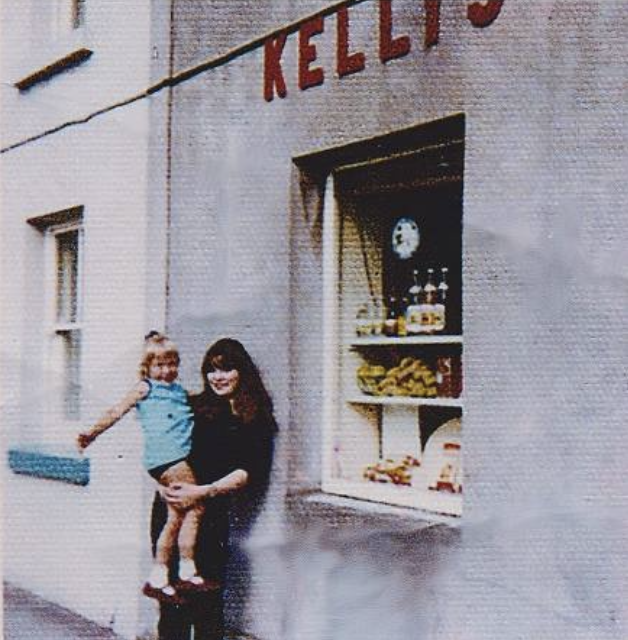
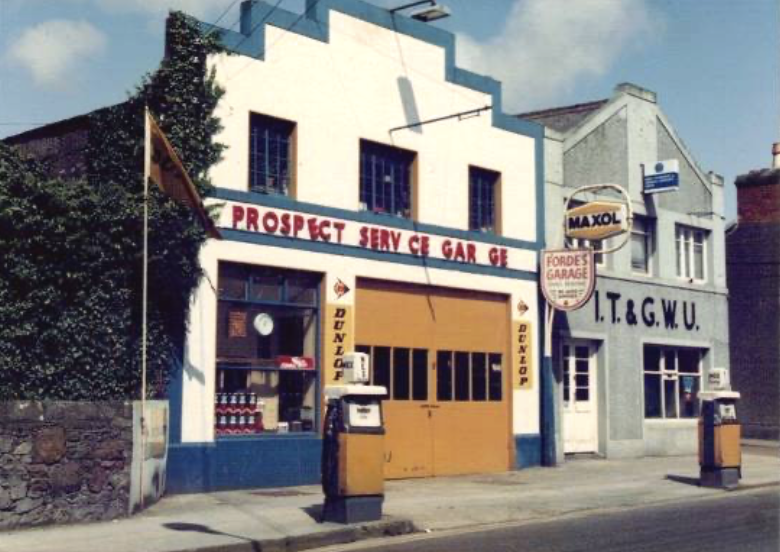
Nowadays, from St Bridget’s Terrace down to Eyre Square is called Prospect Hill. There were a few little shops on the top of the hill before heading up to Bohermore opposite the County Buildings, Ford’s Garage and the Union Hall. There was Kelly’s where you got the thickest penny ice cream in Galway between two half wafers. There was McInerneys, Mary Kate Mahan and the famous Lohan’s Chemist. Many times, Mrs Lohan would see me passing the shop before I would head back to my mission in Liberia and call me in and give me a bottle of Aqua Velva After Shave.
Almost next door there was Tom Duffy the Tailor, who made my first overcoat. And then on the other corner of Biddy’s Lane was Molloy’s Little Shop, neat as a pin.
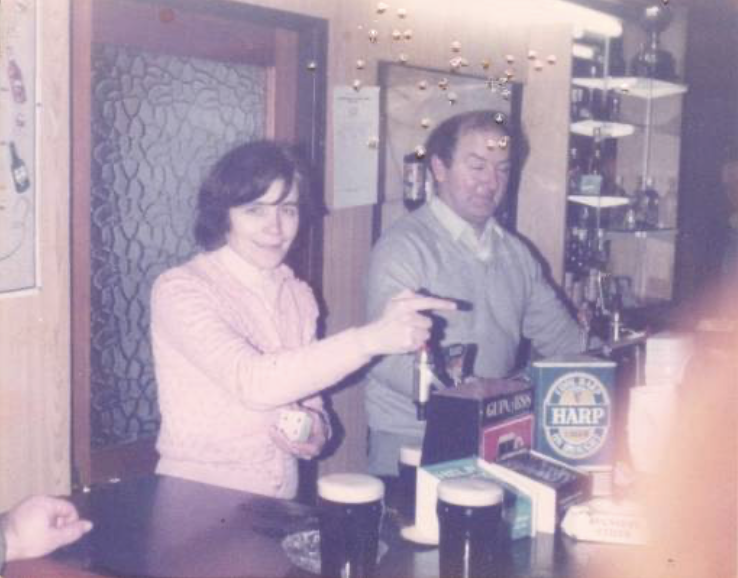
So now we head up Bohermore, still on the right side. Peadar O’Dowd’s aunt’s house is sandwiched between Paddy Hogan’s Pub and Crowe’s Bar. Directly across the road was Doherty’s Pub. The three proprietors were affectionately known locally as the Father, the Son and the Holy Ghost. Every Sunday after the last mass, they stood at their respective half-closed doors in case anyone passing by might like to stop in for a drink. You see, in those days, (if I remember correctly) the pubs were not allowed to open until after three O’clock on Sundays. Bohermore was famous for its nicknames, and all were harmless, some affectionate in nature and some humorous. I never knew who the Father, Son or Holy Ghost was. The kindly gentlemen probably didn’t even know themselves, and if they did, I’m sure they took it all in good sport.
I remember my late brother Gabriel and I coming up Bohermore one evening after serving Benediction in Saint Patrick’s Church with our Sutans thrown over our arms. There were two women chatting outside an open door. One of them was very loud, and we could hear her say to the other, ‘here they come now, the two Cardinals’. We got a great kick out of it. Yes, a sense of humour was a key part of our survival as kids in those days.
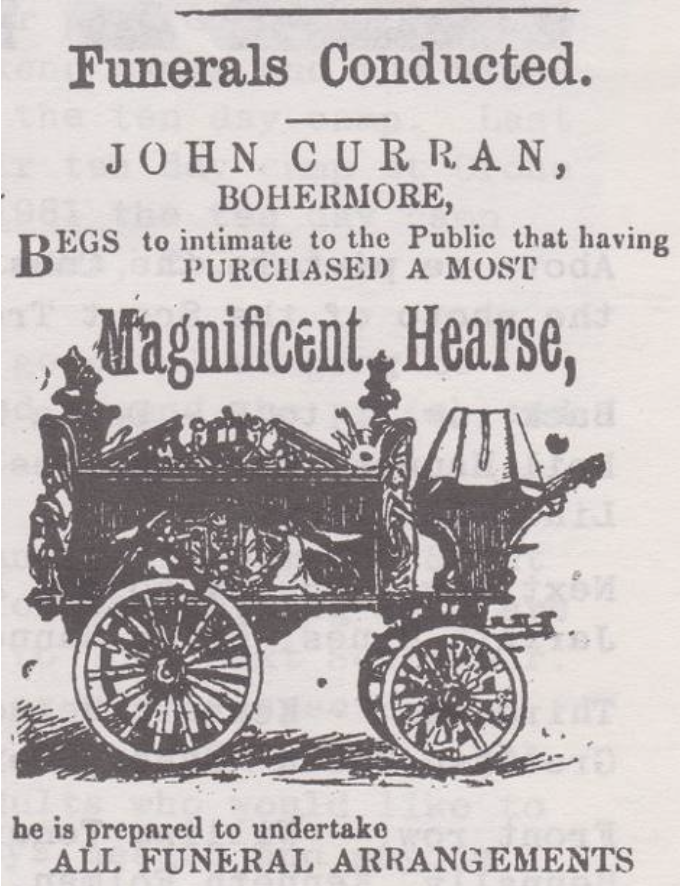
On the right side of the entrance to Water Lane there was another pub called Nelly O’s. I believe her last name was O’Connor, and I don’t recall any activity outside her door on Sunday mornings. Now back on the right side of the road again, almost directly across from Waterlane, was Small’s Shop, which later became Sharkey’s. I vaguely remember a fish and chip shop and even a launderette there somewhere along that row. Mr Cloonan the carpenter had a coffin workshop along there also. I never met a friendlier coffin maker in all my travels. If his door was open when we were passing, being children, we were afraid to look inside in case there might be a fully occupied coffin looking out at us.
Moving along, we pass Killeen’s house. Some of the Killeens went to school with me in the old Saint Brendan’s in Woodquay. Next door was the old house of our local historian, Peadar O’Dowd. Between O’Dowd’s house and O’Leary’s Shop and Post Office there was a tiny house with a half door, locally known as the Shoemaker’s Shop. Leather belts, shoes and boots were all the go in those days. I think his name was Bob Griffin. With laughing eyes and bushy beard and eyebrows and wire rimmed glasses, he looked like a character from a Dickens novel as he leaned over his half door on a summer’s evening, chatting with the people going by. I often wondered if he ever passed that door, because I never saw him step beyond it.
Next door to the cobbler was O’Leary’s Shop, which also housed the local post office. It was a fairly long premises; unusually quite busy, especially on Fridays, which was pension day for the seniors. There was a great rush for postage stamps in the week before Christmas.
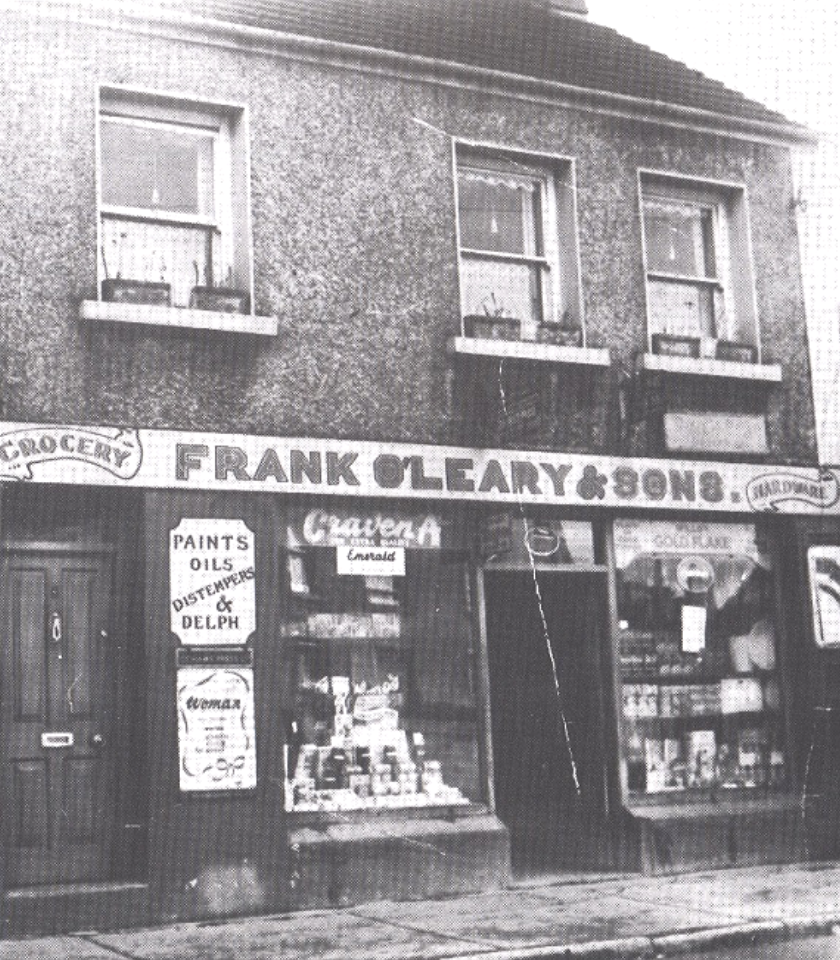
I remember one day as a child, my mother sent me down to O’Leary’s for the paper and a couple of messages. Mrs O’Leary was in deep conversation with a customer while slicing rashers. She stopped for a minute to serve me, but instead of giving me sixpence change, she gave me a two-shilling piece. I went back up home with the messages and more money than I had going down to the shop. My mother said I should go back down to the shop and give the money back to Mrs O’Leary, which I promptly did, but with mixed feelings. Mrs O’Leary was taken aback and kindly gave me a ‘sixpenny bit’ and a small bar of Cadbury’s chocolate for being such an honest child. Although there was the one and only telephone box across the road from the shop, O’Learys, like all other post office shops, had a telephone. One day, when I was a student home on holidays from America, Mrs O’Leary sent a child all the way up to our house on Lydon’s Terrace to tell me that I would be receiving an important phone call from Dublin at one o’clock. I ran all the way down Bohermore and received the call right on time. Oh, how times and phones have changed.
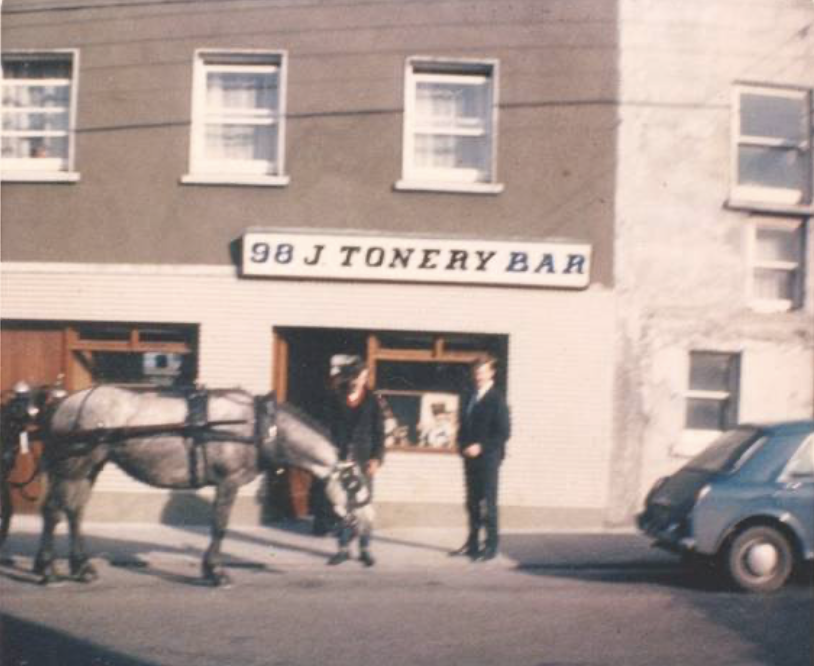
Continuing up along Bohermore, about ten steps from O’Learys, on the same side, was Connelly’s, a tiny neat Little Shop. The old couple had lived in Boston when they were younger, so on my trip’s home from Boston, I enjoyed our little chats when I would pop in. They had three children, a girl and two boys, one of whom served mass with me in Saint Patrick’s years ago. A little further up the road there was a little pub called Martyn’s, where Tonery’s is now. I remember being sent in there one time when I was about 11 years old by an elderly neighbour to buy a small bottle of whiskey, a Baby Powers, for medicinal purposes of course. It was very dark inside and I was scared. There was a paraffin oil lamp burning and the scent filled the dark air. I don’t think there was any electric light in the place. I was served from the little snug, it was like being in an old-fashioned confession box, but without the sins and the penance.
Continuing on up Bohermore, there is a slight dip in the road which takes us to ‘Downtown Bohermore’ where we find the biggest concentration of shops and premises on both sides of the ‘King’s Highway’. On the right was the Dairy Depot, which I believe was run by a Mrs Walsh. Milk and dairy products were delivered to and sold from these premises. I may be wrong, but I think the Renmore Dairy came on the scene at that time, and Mrs Walsh’s place could have been one of the last Galway dairy distributors.
Next door to the dairy depot there was a little gem of a Drapery Shop owned and run by a lovely woman, Mrs Healy. I think she was from Dublin and her husband, Con Healy, had a famous barbershop downtown. When we look back now, we remember there were no Dunne’s Stores, Penney’s or TK Maxx in Ireland in those days. There were only three or four cars in all of Bohermore, so you can imagine what a special blessing this little shop was, especially for people with growing children. The shop next door to Healy’s with Monaghan’s. The couple who owned this shop were very quiet people. They sold mostly sweets, cigarettes, jellies, aspro, and probably Mrs Cullen’s headache powder, lux soap, custard, canned goods, sugar, salt, biscuits and probably snuff (the first is a series of little shops in Bohermore).