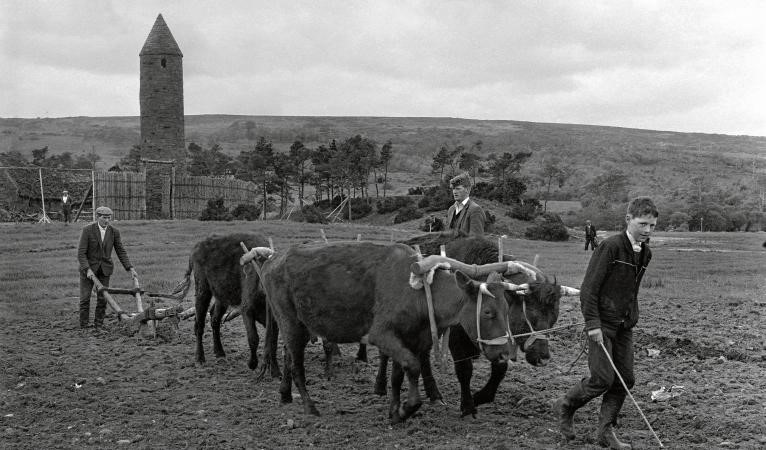
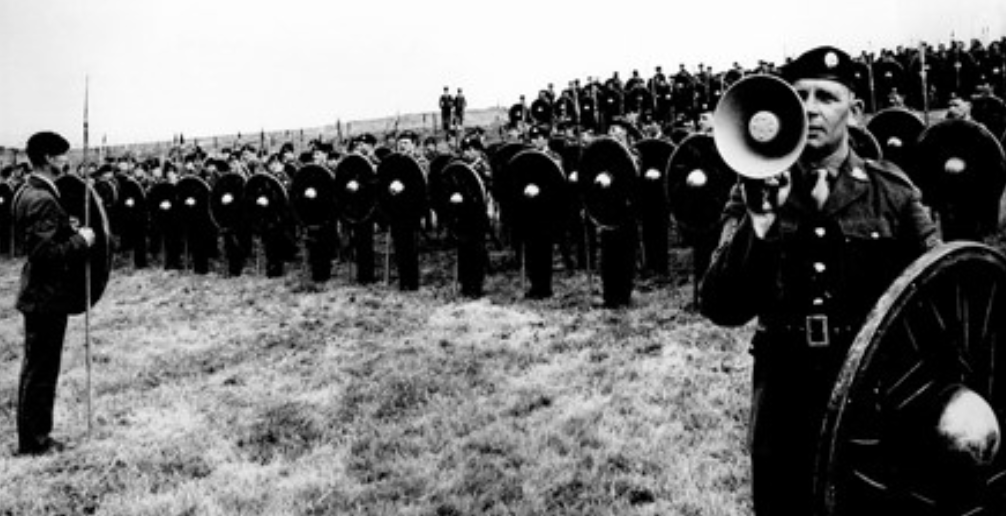
The making of the MGM film Alfred the Great in 1968 has left a lasting impression on those who found themselves involved in the movie. It was filmed in different locations around County Galway including Kilchreest, Ross Lake, Castlehackett and Knockma. It took a vast amount of money to create and depict all aspects of the ninth century (AD 870s), the time period in which the story was based. This meant turning some areas of County Galway into Wessex. The set included having a 200-feet long white horse etched into the Hill at Knockma.
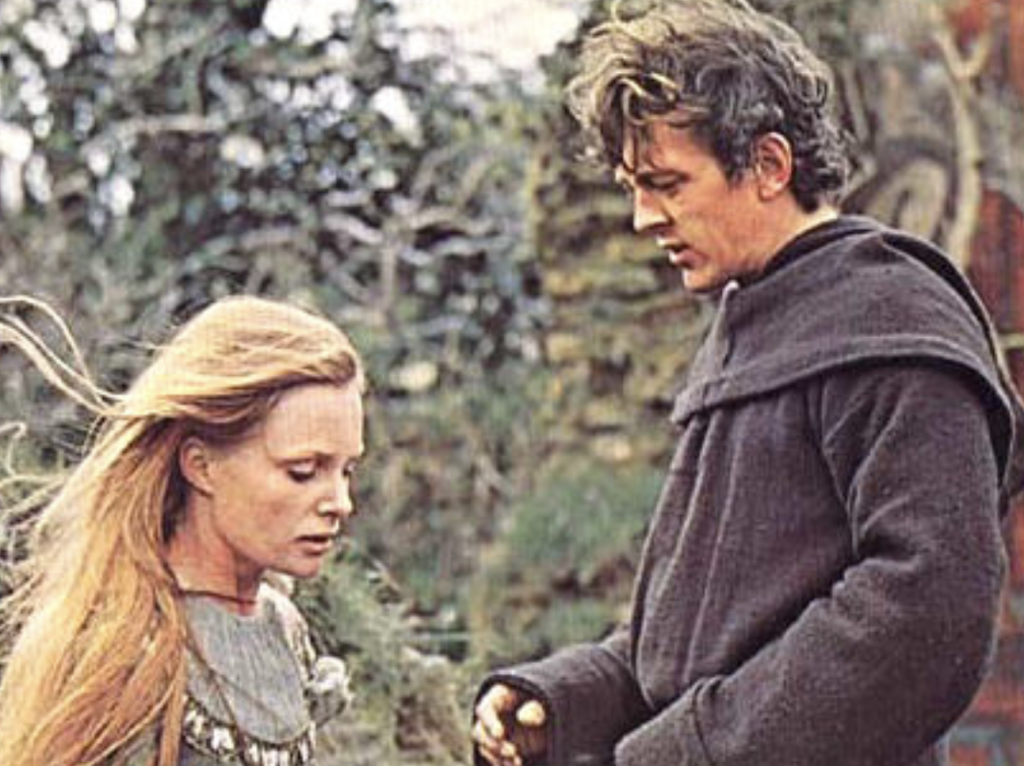
The film portrays the real-life struggle of Alfred the Great in defending his AngloSaxon Kingdom of Wessex against the Danish Viking invasion of the 9th Century. The Danish Viking leader was Guthrum, who ruled the Kingdom of East Anglia.
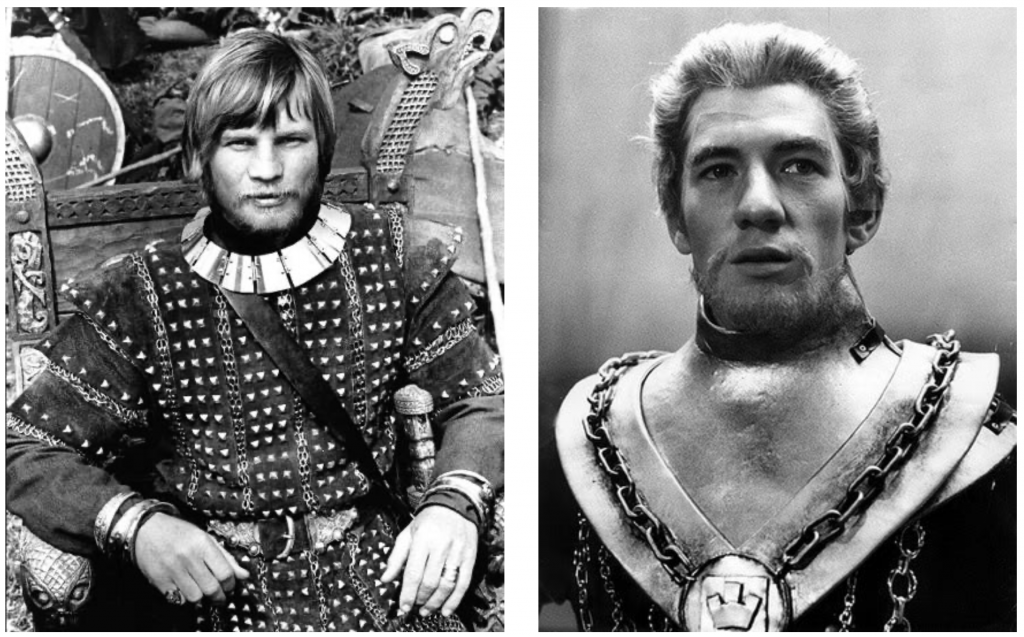
The leading role of Alfred was played by David Hemmings. The leading lady, Prunella Ransome, played Ealhswith, Alfred’s wife. Other noted actors included Ian McKellen, Michael York, Sinead Cusack and Jim Norton. The film was directed by Clive Donner and Lord Killanin was an associate producer. There were some 1,500 extras, many of them local. These also included over 400 soldiers from the Western and Southern Commands; hundreds of students also arrived delighted with the summer work. It was essential to be able to grow a beard for the male roles. The large cast consumed three tons of potatoes every week. It was estimated that 200 gallons of tea was made available every day in some thirty tents that acted as canteens.
Among the extras was Mike Cooley from Wellpark. Mike was born on 6 March 1968 and became Alfred’s baby son for the duration of the film. His parents are Larry and Catherine Cooley. Shortly after Mike was born, a neighbour had some of the cast staying with her. They mentioned that MGM was looking for a newly born baby for the role in the film. Catherine brought her new baby along to the interview, and it seems that Mike proved he had a great pair of lungs during the audition.
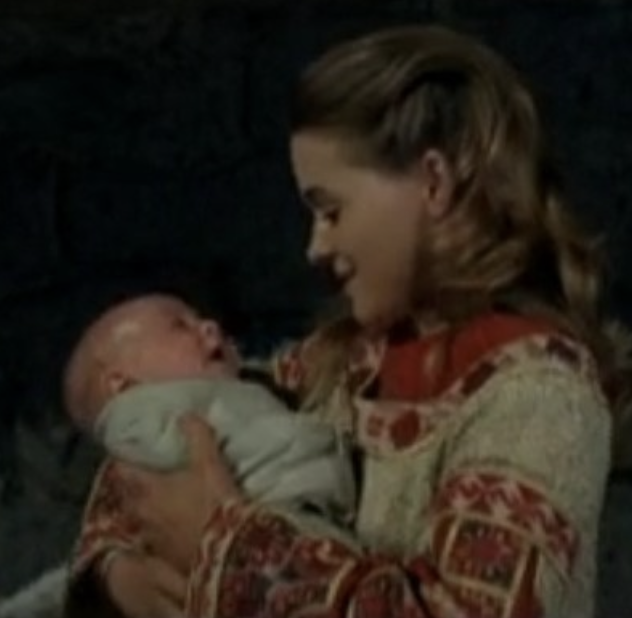
Catherine and baby Mike were collected by car every morning and driven to the film location. There were some fifty hired cars used daily throughout the production. There were also over twenty school buses used, and the extras were collected at the Spanish Arch every morning at 5.00 am. The army looked after its own personnel, using over twenty-five military vehicles. Catherine journeyed out every morning for some six weeks and got to meet all the leading actors. This continued until baby Mike had fulfilled his role as King Alfred’s son, wrapped in ancient looking Irish linen.
The film also generated a lot of business locally as the equipment required included: 4,000 arrows, 1,600 swords (perhaps more, as many souvenirs were taken), 1,800 spears, 1,500 shields, 800 daggers, 300 clubs – axes, 200 saddles and stage furniture also had to be produced. Sixty horses were used during the filming. Albert O’Toole from Galway carved the thrones. Another company made goblets, candlesticks, swords, shields and metal implements. These were produced to the highest level of craftsmanship using authentic drawings and designs from the British Museum. Peter Brady from College Road was the carpenter on the set, along with other tradesmen. Heaney Meats supplied most of the meat to feed the large cast. The enormous barrel used to store water during filming was later used in Heneghan’s Nurseries on the Monivea Road.
Councillor Thomas Tierney, Mayor of Galway invited David Hemmings, Prunella Ransome and a very young Sinead Cusack as special guests to the Mayoral Ball that year. Apart from the filming, David Hemmings took time out to go boating on the River Corrib. One evening as he left Steamer’s Quay a propeller fell off the boat. There were about twenty-five youngsters sitting on the quay, as it was a popular place for swimming. Hemmings looked up at the boys, some of whom were ‘smirking’ at his misfortune. He took a ‘fiver’ from his pocket and holding it up, said, ‘A Fiver for whoever finds my propeller’. Within seconds all the youngsters jumped into the water in search of the propeller. The crystal-clear water turned into muddy brown in seconds. It was later said that even a couple of non-swimmers jumped into the water. Once the propeller was located, that was when the real battle began over who would collect the fiver.
Alfred the Great was born in Oxfordshire in 849 and was the fourth son of Ethelwulf, ruler of Wessex. Alfred is one of the most respected figures in English history, and the only monarch to be called the ‘Great’. He was a devout Christian and made important contributions to law and education. In 868, he married Ealhswith, a Mercian Princess. He became King of Wessex in 871. Alfred supported his brother Ethelred and inflicted a heavy defeat on a marauding Danish army. However, the Danes struck back with a huge army and captured Northumbria and East Anglia. They then proceeded to attack Wessex, and Alfred was forced to make a peace settlement with the Vikings. In 878, the Vikings launched a large-scale surprise attack on Wessex, forcing Alfred to take refuge in the marchlands of Athelney in Somerset. Eventually, Alfred raised an army and inflicted a crucial defeat on the Vikings in Wiltshire. In 886, he captured London and although the Vikings made another attempt to over-run Wessex, they failed. Peace was now assured, and Alfred began to strengthen the defences of his kingdom.
One may well ask what has Alfred the Great to do with Galway, apart from the film. New evidence has highlighted the fact that as a young man, Alfred visited Galway a number of times. This was recorded in a document published during the nineteenth century. The record stated that Alfred the Great, when a student in the Abbey of Clonmacnoise on the Shannon, made periodical visits to Galway. He was surprised to find the mercantile marine port in such an efficient state. Clonmacnoise was one of the great seats of learning in Ireland at that time. Given that Alfred was such a devout man who believed so strongly in education and religion, it is not surprising that he would have spent some time in Clonmacnoise.
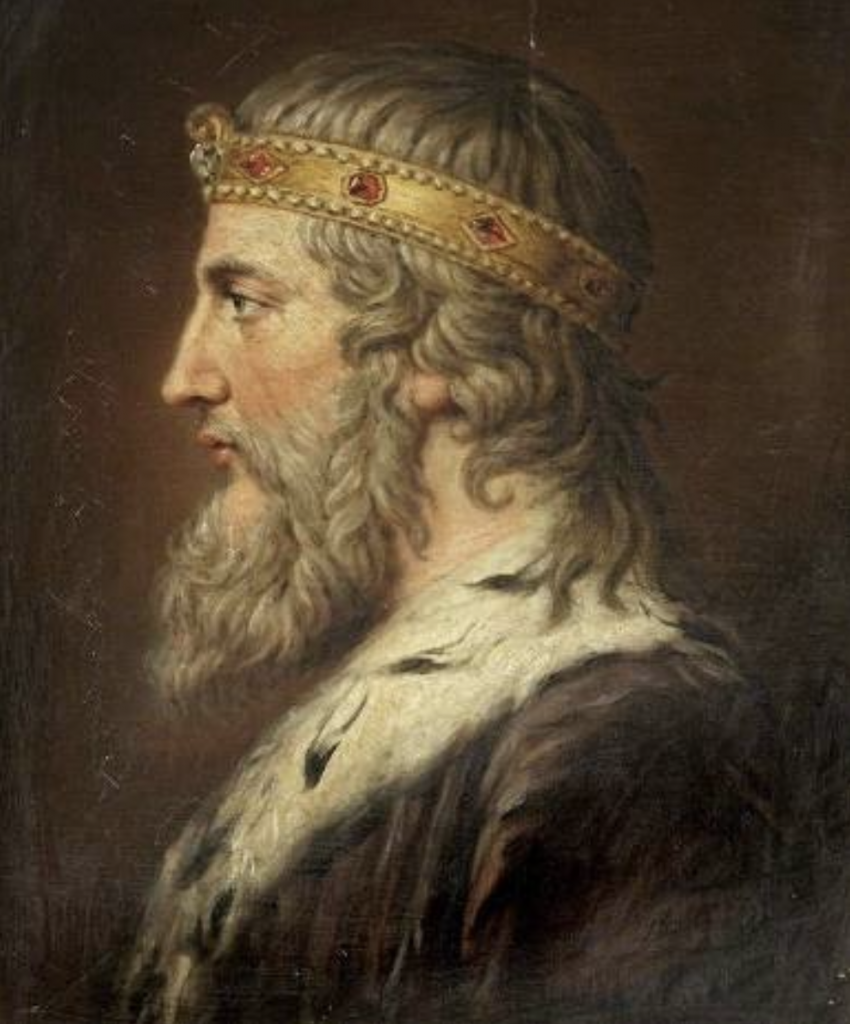
Alfred the Great died on 26 October 899 at Winchester. He was buried in Hyde Abbey, a medieval Benedictine monastery just outside the walls of Winchester, Hampshire, England.