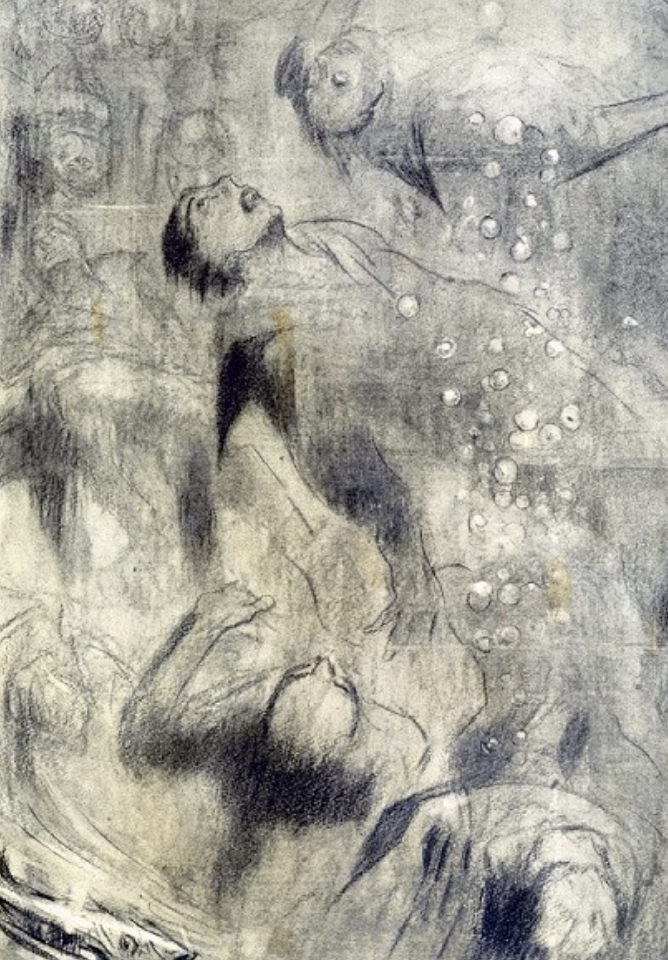
In the early morning of Monday 17 December 1917, a party of four fishermen and a boy left Galway docks on board the fishing trawler Neptune. They were looking forward to a day at sea with hopes of a good catch. Before the trawler left port, the skipper, Henry Connell, an experienced sailor, refused to take the boat out because he felt that there was a danger of mines in Galway Bay. Nevertheless, a short while later, the crew went to sea without him. They included Martin McDonagh, Buttermilk Lane (Age 60: Married); Bartly Gill, Quay Street (Age 50: Married); Stephen Melia, Church Lane, (Age 33: Unmarried) William Walsh, Captain, Quay Street (Age 40: Married) and his son Patrick (Aged 16).
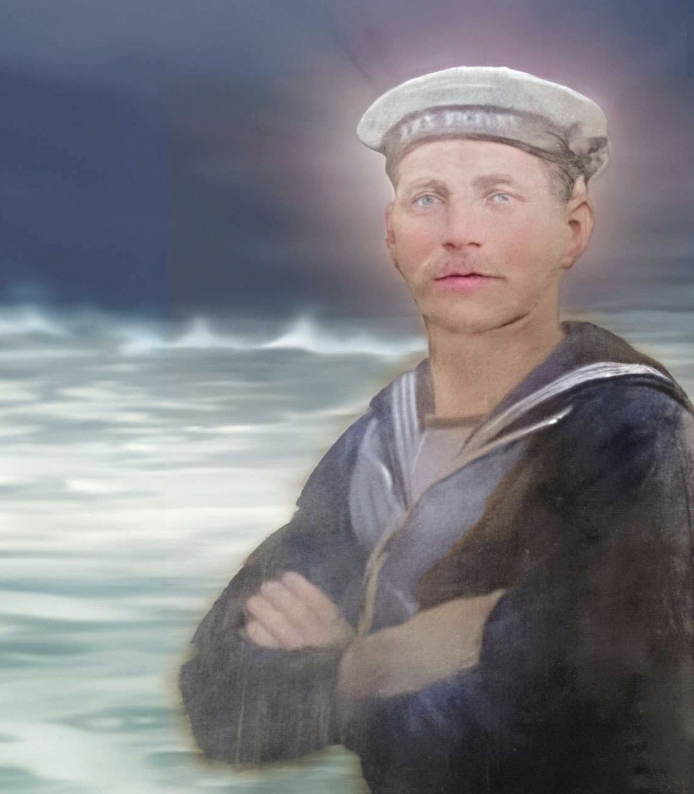
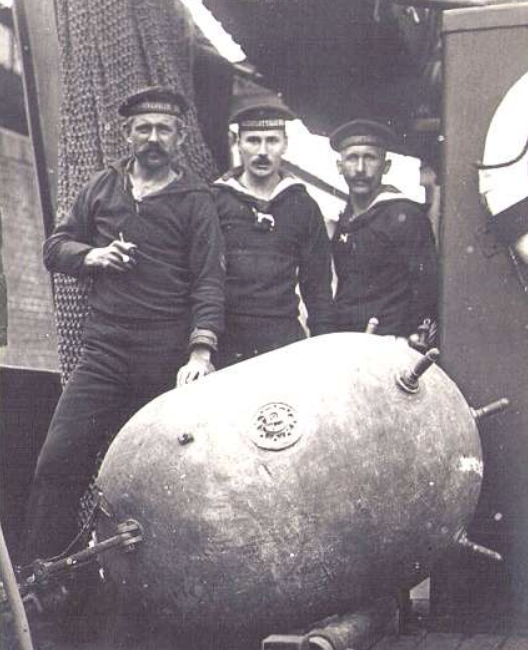
The 40 / 50 ton trawler was described as one of the finest in the Claddagh Fishing Fleet and was owned by Martin Ashe. They reached the designated fishing area at about 11.00 a.m. and began trawling. By 2.00 p.m. they were about three miles off Spiddal and all seemed normal. Suddenly there was a ‘drag’ on the net; it had picked up a mine. The crew were unaware of the danger lurking beneath the waves and continued operations, believing that the additional weight was a piece of old wreckage, which was frequently picked up by fishing trawlers. The crew continued to fish for another hour, by which time they were approximately a mile off the Spiddal coastline. At about 3.30 p.m. they decided to pull in the catch and proceeded to raise the net. When the entangled mine came in contact with the trawler, it exploded with devastating consequences. At the time of the explosion, four of the crew were engaged on the wrench, while young Patrick Walsh stood watching on the deck. The force of the explosion shattered the trawler, splitting the boat in two and hurled the crew into the sea.
There was another trawler in the area that afternoon, and it made its way to the scene of the disaster, but its progress was slow. The skipper of this trawler had caught a glimpse of what happened and later said that the Neptune sank within four minutes. At the time of the explosion, a naval motor launch was patrolling the sea about five miles off the coast. The crew of the launch also heard the explosion and dashed to the scene immediately. Upon reaching the area, they found Martin McDonagh clinging to a piece of wreckage. A dinghy was lowered and he was rescued. Stephen Melia was also supported by wreckage, and he was pulled to safety by the trawler, which had reached the area about the same time as the launch. Martin McDonagh was placed in the officer’s quarters of the motor launch and, despite the best efforts of the crew to save him; he died about thirty minutes later during the return journey to Galway. The rescuers searched in vain for the missing fishermen, but were forced to abandon the search by the oncoming darkness. They were also worried about Stephen Melia, who was in a weakened condition.
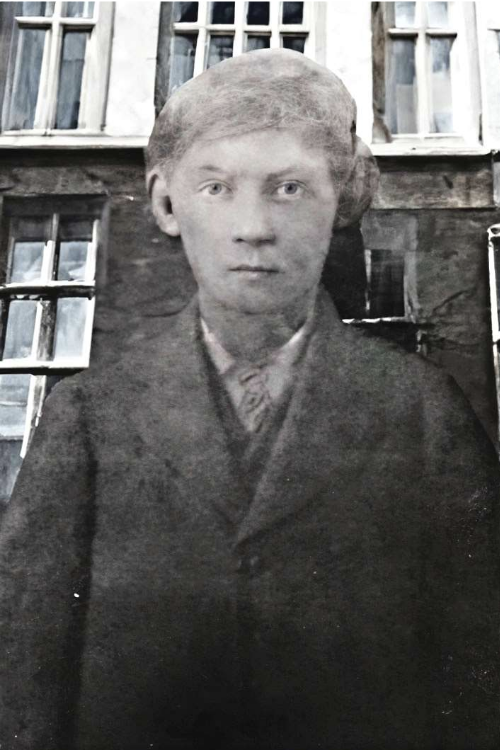
News of the tragedy reached Galway at 7.00 p.m. when the motor launch arrived into the port carrying the remains of Martin McDonagh. Painful and pitiful scenes were witnessed as family members and friends of the crew of the ill-fated Neptune began to gather at the quayside. The trawler arrived at 8.30 p.m. by which time the only survivor, Stephen Melia was now beginning to recover. The crowd surged forward calling out asking what had happened, and where were the others? He was in shock and unable to answer properly. The only information available was the fact that it was an explosion and the other crew members were missing. Was it a mine? This was the question everyone was asking, and who was responsible. The authorities believed that it was a mine and said that there might be more lurking in Galway Bay. Other trawler crews from the Claddagh and Galway were suddenly and shockingly made aware of the danger at sea. Henry Connell’s suspicions of such danger were well-founded. The war was never far away because of all the young men now fighting with the military and naval services, but this was different, this was on the home front, where many people believed they were safe. Almost the entire population of the town waited anxiously for the inquiry into the disaster.
The inquest opened on 18 December 1917 in the offices of the Galway Harbour Board. The following people were sworn in as jury members: Edward Sohan (Foreman); John Maloney; John Smyth; M. O’Halloran; John Walsh; John Tierney; M.J. O’Brien; Edward Taffe; P.J. O’Flaherty; Thomas Carty; John Coyne; Thomas Gallagher and James Walsh. Judge Hildebrand conducted proceedings on behalf of the police, while Mr Cooke of Blake & Kenny Solicitors appeared for Martin Ashe. Mr O’Dea represented the families of the deceased. The Coroner, George Nicholas, opened proceedings by announcing that the business of the jury was to determine the cause of death of Martin McDonagh, because his was the only body recovered. By this time, it had been established beyond doubt that a mine had caused the explosion. The question that needed to be answered was simply; was it German or British? The officer from the motor launch was asked had any of the British mines broke their moorings. He replied, ‘I cannot answer that’. It seemed clear that British mines had been laid across the entrance to Galway Bay, as there was a threat from German U-Boats. He was then asked if any mine warnings had been issued; again he couldn’t answer the question. In fact, the witness was unable to answer any questions regarding the mine with clarity. Commander Francis William Hanan, the British Royal Navy Representative, was then called to give evidence. When asked about the origin of the mine, he informed the inquest that there were no British mines in Galway Bay. He then added that ‘undoubtedly the mine that exploded was a German mine.’
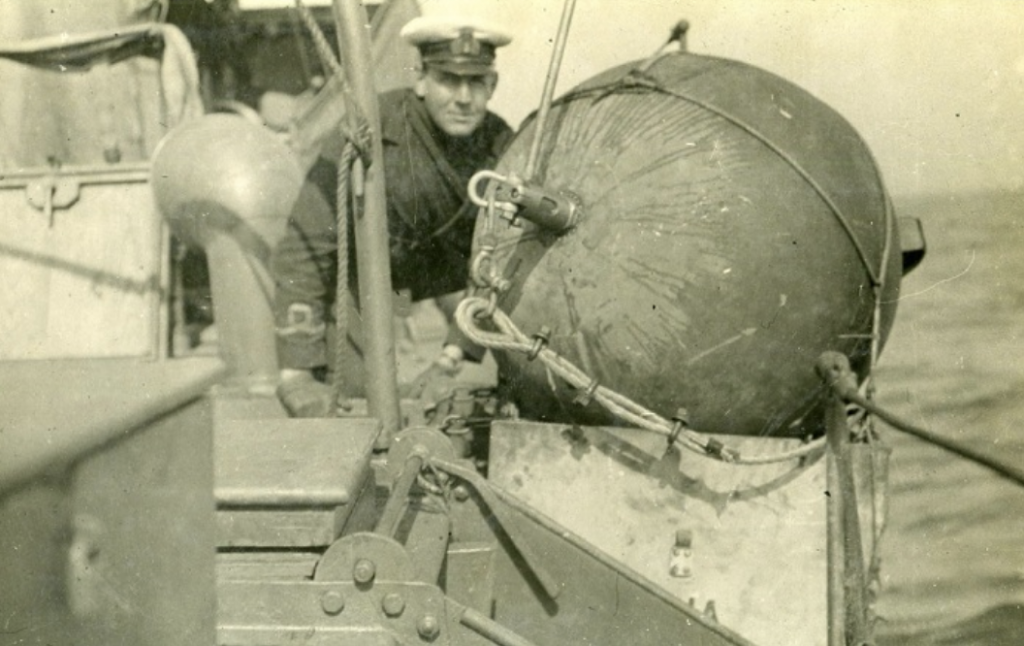
Among the others to give evidence was the skipper of the rescue trawler. He had no knowledge as to the cause of the disaster, except that he had managed to rescue Stephen Melia. He said that although they had spent several hours searching for the other crew members, no trace of them could be found. Stephen Melia could only recall that there was an extra drag on the net, but struggled to remember events after the explosion, except clinging to the piece of wreckage. The jury then retired to discuss the evidence. After a short deliberation, they returned a verdict saying that Martin McDonagh had died from shock and exposure as a result of being thrown into the sea by the explosion. They recommended that his widow and family, two of whom had been already killed in the war, be taken into the ‘kind consideration of the Government’ and compensated. The other families were to be compensated also. They then recommended that the skipper and crew of the rescue trawler be rewarded for their bravery. Although the Royal Navy denied responsibility for the mine, many people believed that it was a British mine that sunk the Neptune. By March 1918, the Galway Bay Mine Disaster Fund had been set up. Stephen Melia lived out his life in Galway and became a well-known character under the nickname ‘Mallogs’. It seems that Henry Connell had served in the Royal Navy; he later became the Dock Gatekeeper.