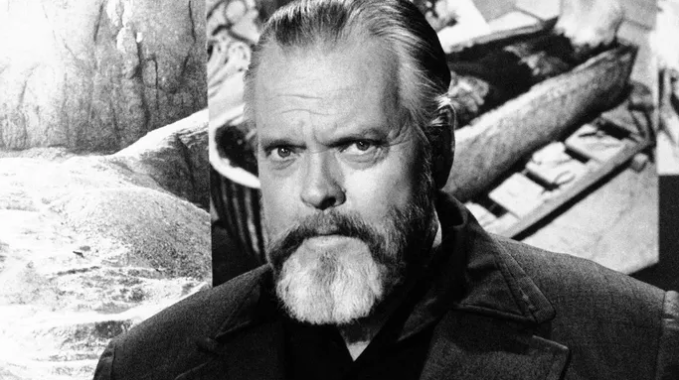
Orson Welles visited Galway after receiving an inheritance following the death of his father. George Orson Welles was a famous American screenwriter, director, actor and producer, who is now remembered for his innovative work in radio, theatre and film. He is considered to be among the greatest and most influential filmmakers of all time. Welles was born in Wisconsin on 6 May 1915 and was described as a child prodigy. His parents were Richard and Beatrice Welles. It seems that he was an orphan at 13 years of age. His idea for the future included being a magician, an actor or a painting and sketch artist.
He was 16 years old when arrived in Galway Bay on board the SS Baltic in August 1931. He landed in Galway without any real knowledge of the city, or indeed, the country. In fact, Welles was expecting to find people living in huts at the estuary. However, after a few days of exploring the town and meeting the people, his views change dramatically. He heard about the famous Irish writer Padraic O’Conaire, who had died in 1928. After inquiring about the man and his literary work, he was told that O’Conaire had travelled the roads of Connemara on a donkey and cart writing about all he saw and encountered. Welles decided he would follow in this man’s footsteps and paint and sketch images of Connemara. However, he first needed to purchase a donkey and cart. One morning while walking along Merchant’s Road, he met a well-dressed man, whom he thought was the ‘Chief Police’.
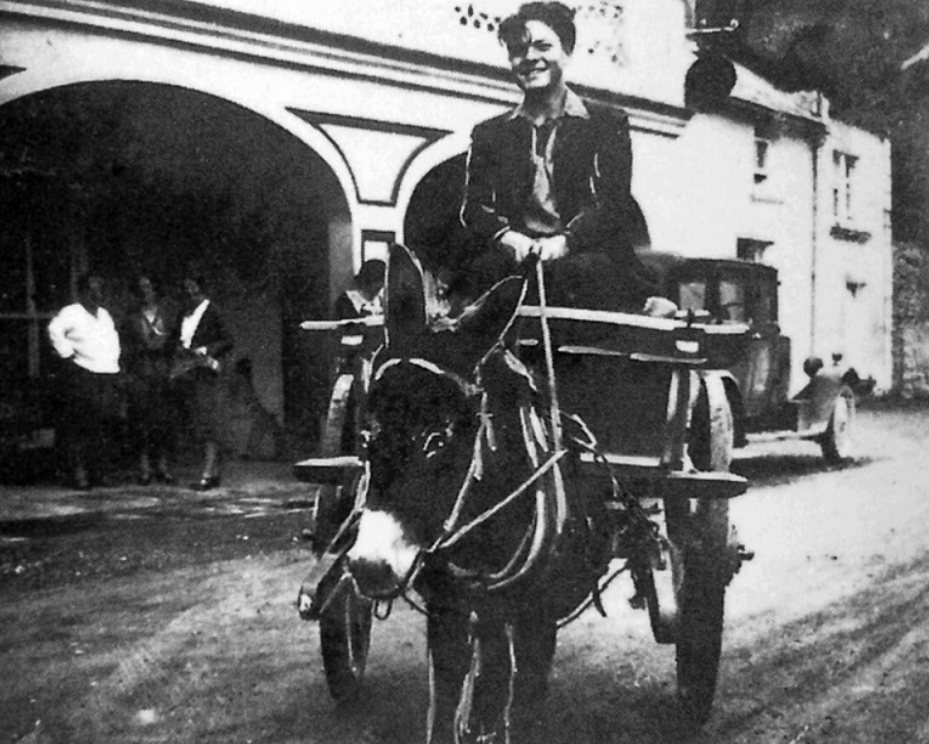
Welles approached the man and told him about his idea and asked him for advice on where to purchase the donkey and cart. The man then introduced himself as Isaac Conroy, the brother of Padraic O’Conaire (Patrick Conroy). Welles spent a number of interesting and pleasant days with Isaac Conroy, during which time he introduced him to his cousin, Michael Conroy. The man took Welles to McDonogh & Sons on Merchant’s Road and he bought the cart. He then brought him away to buy the donkey and Welles was soon ready to travel the Connemara roads.
Welles named the donkey ‘Sheeog’ and set off on his quest around Connemara sketching and writing about his travels. He slept in the open by turf fires if the weather permitted. These must have been somewhat lonely and strange days for an American boy at that time. It was said that his time spent wandering through the Connemara brought him some healing from problems in his earlier life. He eventually reached Clifden and some say that by the time he got there Welles was well fed up of the West of Ireland weather and roads. He sold the donkey and cart in Clifden and then made his way back into Galway by train. After returning to Galway, he visited Inisheer, the smallest and most easterly of the three Aran Islands. While on the island, Welles learned a few steps of Irish dancing and enjoyed his time there.
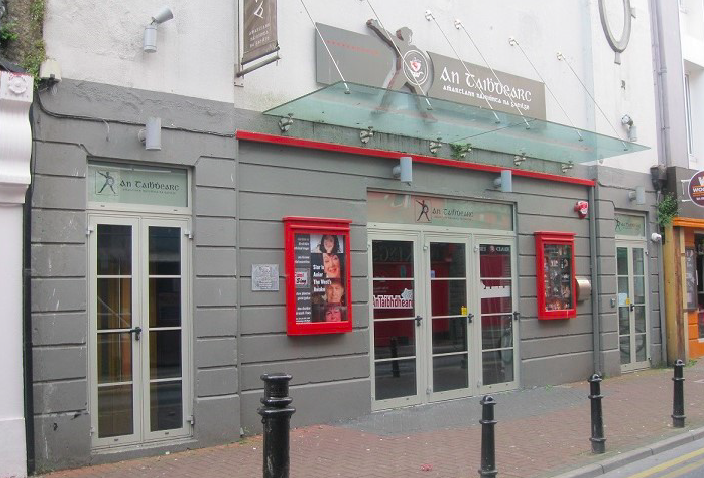
His story doesn’t end there, while in Galway, Welles visited the Taibhdhearc Theatre which had been established in 1928 by Mícheál MacLiammóir and Hilton Edwards. Welles became friends with one of the Galway actors and two months later he found himself in Dublin visiting the Gate Theatre. It seems he left a note for the MacLiammóir and Edwards informing them that Orson Welles, ‘Star of the New York Theatre’ had arrived and would they consider booking him for a part in one of their productions. Welles had never been on a stage in his life, but he certainly wasn’t lacking in self-confidence. They gave him a role in one of their plays and both MacLiammóir and Edwards were captivated by him. He had a natural charisma on stage and Edwards saw in him a great actor in the making. MacLiammóir fell in love with him and was struck by his voice. The response from the audience that first night remained with Welles for the rest of his life.
Welles returned to the United States a different young man. His experiences in Galway remained with him. In 1934, he got his first job on the radio and as they say, the rest is history. He married three times; Virginia Nicholson (1934-1940); Rita Hayworth (1943-1947); Paola Mori (1955-1985). Despite his enormous presence and success he never made any real money from his films. Orson Welles died alone and broke, in a cottage in the Hollywood hills on 10 October 1985.